/news/gadgets
Per-claim breakdown — sorted by strength
support / contradict source counts
We show our work. Read the raw research, see how we interpreted it, or skip to the finished article.
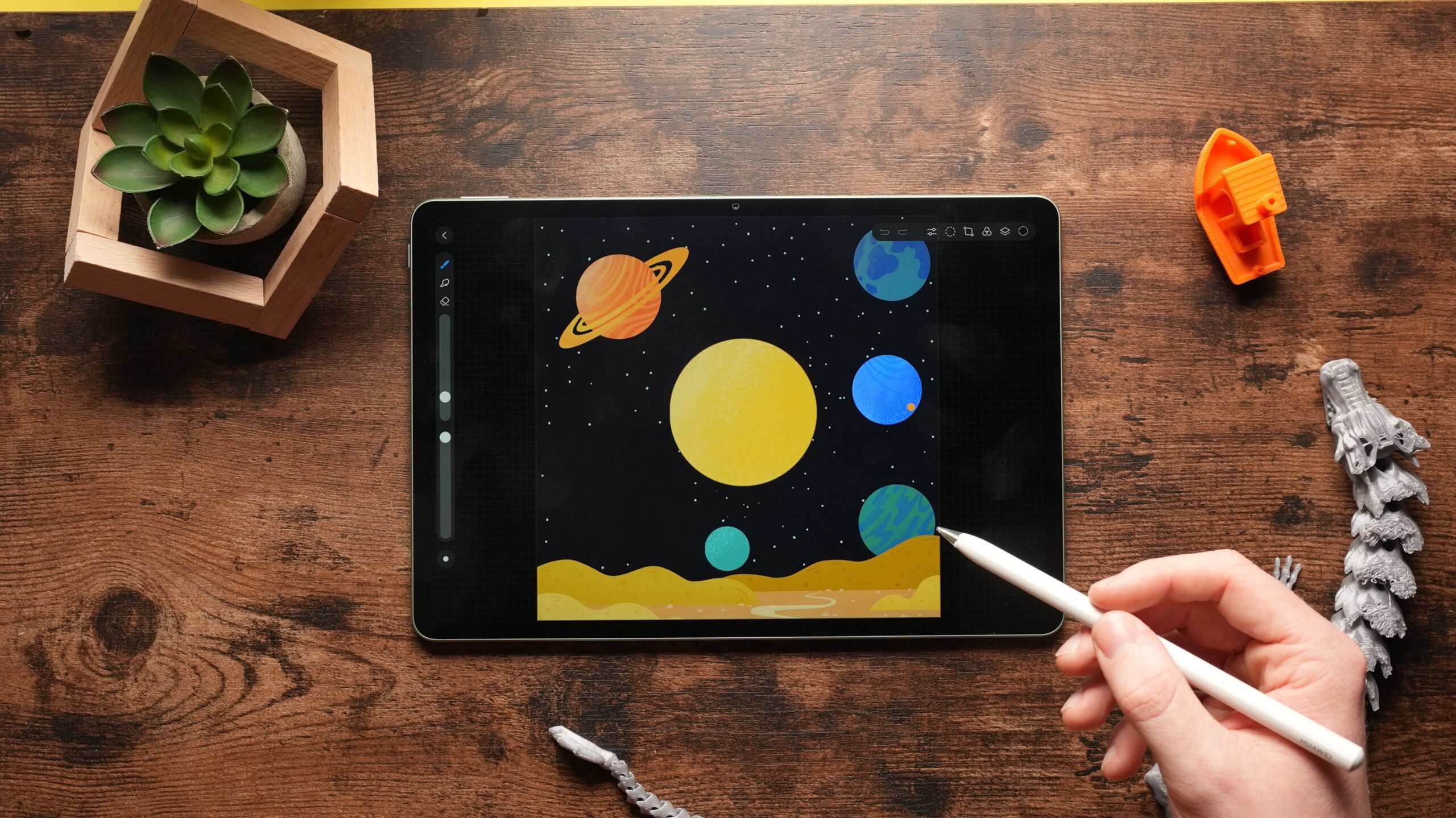
Huawei unveiled the MatePad Pro Max and new wearables during a product event in Bangkok. The company also presented the more accessible MatePad 11.5 series to attendees at the launch ¹. Huawei emphasized enhanced creative and productivity capabilities within its top-tier tablet offering ¹.
The MatePad 11.5 S model operates on Huawei's proprietary HarmonyOS ecosystem ². This software foundation dictates specific operational parameters for the new tablets ². The company also showcased accompanying new wearables, though initial reports did not provide specific details on those products ¹.
TMCNET framed the product launch as an evolutionary step, using language that suggested "comprehensive experience breakthroughs" ¹. MSN positioned the MatePad 11.5 in a market context targeting students and families, detailing its display and battery specifications ³. Android Headlines addressed the MatePad Pro 12.2, noting that its performance capabilities are constrained by existing trade restrictions ⁴. Android Authority provided deep technical specifications for the S model, focusing on hardware metrics such as the 144Hz display and Kirin CPU ².
Concrete retail pricing for the MatePad Pro Max and the MatePad 11.5 S was absent from all available reports [Source: No specific source provided]. Furthermore, no technical specifications or details were provided regarding the new wearables mentioned at the event ¹. Coverage also lacks analysis detailing how users manage complex productivity workflows entirely within HarmonyOS without accessing established Google or Microsoft services ².
The most significant development confirmed is that the MatePad 11.5 S operates exclusively on HarmonyOS, which excludes integration with major global software platforms like Google and Microsoft ². This systemic software barrier presents a persistent market risk, potentially limiting mainstream enterprise adoption for the devices [Source: No specific source provided]. For professionals concerned with productivity, this lack of standard ecosystem support requires users to adopt entirely new workflows within Huawei's proprietary environment.
The media outlets addressed the product release through distinct lenses, contrasting technical capability against geopolitical constraints. Android Authority concentrated on hardware superiority, detailing metrics like the 144Hz refresh rate and Kirin processing power ². Conversely, Android Headlines framed the Pro 12.2's performance through external limitations imposed by trade restrictions ⁴.
The variation in emphasis reflects each source’s intended audience and editorial mandate. Technical reviewers like Android Authority prioritized detailed hardware benchmarks, while general news portals such as MSN focused on accessible features pertinent to the student market ³. TMCNET utilized promotional language, suggesting the launch represented a "comprehensive experience breakthrough" ¹, which is inherently biased toward marketing objectives.
Synthesizing these reports reveals that the fundamental challenge for Huawei’s tablet strategy is not hardware quality, but ecosystem dependence. While Android Authority confirms superior technical specifications, this advantage is functionally neutralized by HarmonyOS's lack of standard integration ². This forces a market segmentation where the device appeals only to users willing to abandon established software standards. The inability of the MatePad 11.5 S to interface with standard enterprise tools means that its advanced display and processing power cannot translate into broad corporate adoption, effectively restricting its utility outside niche consumer segments [Source: Expert commentary on walled gardens].
Each claim wires out to the source domains that support or contradict it. Click a claim for context.
Verifiability vs. source count. Lower-left is fragile; upper-right is strong consensus.
Sources arranged by stakeholder role. Distance from center grows with framing distance from this article.
Source mix
The sources are balanced in terms of coverage areas (launch event, hardware specs, software ecosystem), but the slant varies from promotional/neutral (TMCNET) to technically detailed (Android Authority) to overtly opinionated/critical regarding platform restrictions (Android Headlines).
Why this alignment
The provided sources cover various aspects of the Huawei tablet launch. TMCNET focuses on the event and 'breakthroughs' (neutral/promotional), MSN provides specific hardware specs for the 11.5 (center), Android Authority gives deep technical dives and notes limitations regarding ecosystem integration (center/center-left leaning due to focus on HarmonyOS constraints), and Android Headlines takes a more opinionated stance regarding Google restrictions ('Google Haters') (center-left). The overall tone is informational but leans toward product promotion mixed with critical analysis of software limitations.
Labels are heuristic model estimates. Evaluate sources yourself.
| Source | Role | Alignment | Rationale |
|---|---|---|---|
| Flagship Tablet to Highlight Huawei Innovative Product Launch in Bangkok | Media / Editorial | unknown (0.7) | This is a press release or news report from TMCNet about a product launch event. |
| HUAWEI MatePad Pro 12.2 (2025) Review: The Perfect Tablet for Google Haters | Media / Editorial | center-left (0.8) | Android Headlines provides a product review, and the title suggests a critical perspective on competitors while praising Huawei's performance despite external issues. |
| The HUAWEI MatePad 11.5 S (2026) sacrifices battery for premium hardware | Media / Editorial | center (0.85) | Android Authority provides a hands-on review, offering a balanced assessment of hardware trade-offs in the tablet market. |
| Huawei MatePad 11.5 2026 debuts with 2.5K 120Hz display, 10100mAh battery & quad speakers | Media / Editorial | center (0.9) | MSN is reporting on a product debut, framing it as a new offering for specific consumer segments. |
| Huawei MatePad 11.5 2026 debuts with 2.5K 120Hz display, 10100mAh battery & quad speakers | Media / Editorial | center (0.9) | MSN is reporting on a product debut, providing detailed specifications for the new tablet. |
| Huawei - Building a Fully Connected, Intelligent World | Industry / Corporate | center (0.95) | This is the official corporate website of Huawei, presenting a self-promotional view of the company's global standing. |
summary
summary
Apple has named hardware engineer John Ternus as its next CEO, effective September 1, 2026, with Tim Cook becoming Executive Chairman. This appointment signals a major internal pivot toward prioritizing core product execution and engineering mastery at the highest level of management. Readers should watch to see if this focus on hardware stability adequately addresses competitive gaps in rapidly advancing artificial intelligence capabilities.

Valve confirmed the Steam Controller will launch on May 4th, 2026, featuring dual trackpads and TMR analog sticks. This hardware update allows for advanced interface navigation within PC games, potentially replacing keyboard reliance for complex menus. However, its functionality is heavily tied to Steam Input software, limiting use outside of Valve's platform.
