/news/sport
Per-claim breakdown — sorted by strength
support / contradict source counts
We show our work. Read the raw research, see how we interpreted it, or skip to the finished article.
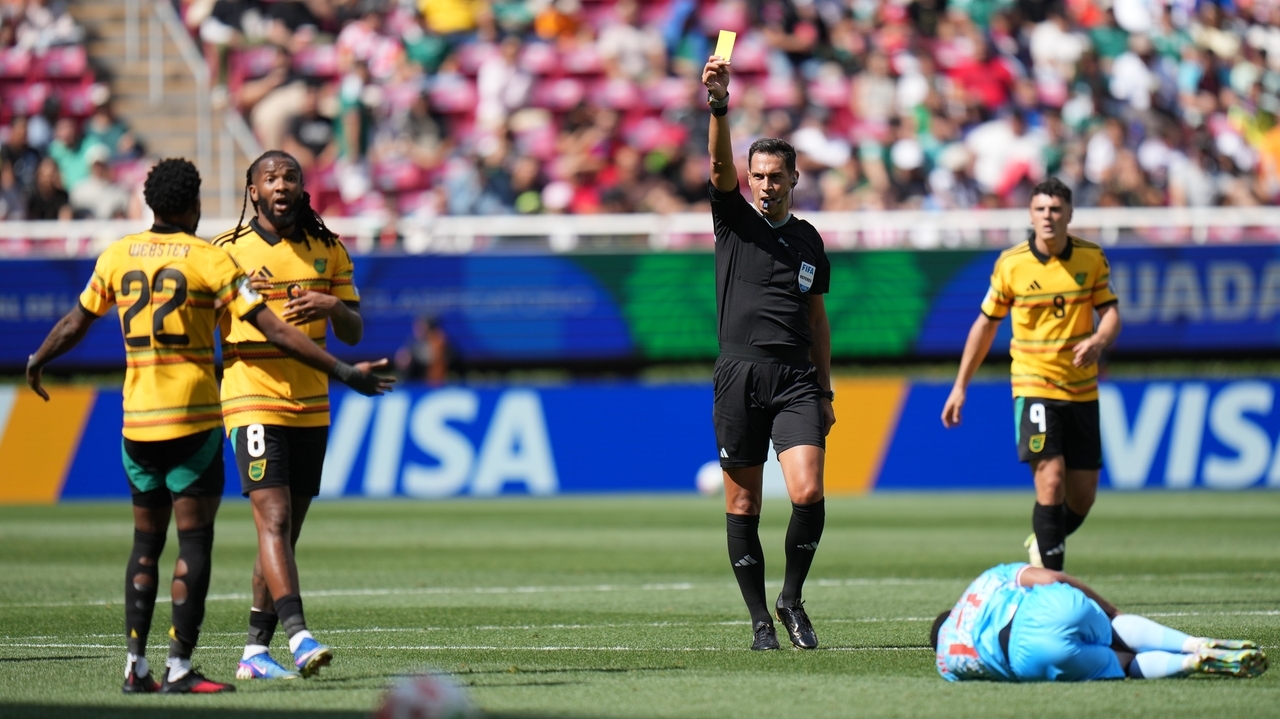
FIFA is proposing a significant regulatory adjustment for the 2026 World Cup, suggesting the implementation of dual yellow card amnesty periods. This proposal would clear disciplinary records not only after the initial group stage but also following the quarterfinals ¹.
The suggestion is directly linked to the tournament's expansion from 32 teams to 48, which necessitates an expanded Round of 32 in the knockout phase ². Proponents of the rule aim to maximize player availability during crucial elimination matches across North America, scheduled for June 11 through July 19 ¹.
The final determination on this disciplinary reset remains pending, as the proposal is slated for review at a FIFA ruling council meeting ².
Newsday frames the change primarily as a mechanism to "help keep players available" during key elimination games, emphasizing maximized athlete participation ¹. The Palm Beach Post confirms the dual amnesty proposal while contextualizing it against the logistical demands created by the expanded tournament format ². Sports Tar (The Hindu) concentrates on the procedural timeline, confirming that this proposal is slated for discussion at a FIFA ruling council meeting ³. MSN News functions as an aggregator, reporting the core concept without introducing unique framing ⁴.
The reporting lacks several critical perspectives necessary for a complete assessment of this policy change:
The most significant development reported is FIFA’s proposal to implement two separate amnesty points during the 2026 World Cup: one after the group stage and a second following the quarterfinals ¹. This modification fundamentally changes how teams manage cumulative disciplinary risk across different tournament phases, moving beyond previous standards where records were typically cleared only after the quarterfinal stage ¹. This shift has immediate implications for sports markets and team preparation, as increased player availability reduces lineup uncertainty ¹. Crucially, the lack of final approval means there is immediate regulatory risk for participating teams until FIFA formally ratifies or rejects this dual mechanism ³.
The available reporting consistently confirms the core mechanism: FIFA’s proposal for dual amnesty points tied to tournament expansion ¹; ². The primary divergence in emphasis lies between the operational benefit and the regulatory status. Newsday focuses on the immediate, positive outcome—the ability to "keep players available" ¹. Conversely, Sports Tar prioritizes the procedural aspect, detailing that this remains a pending item for review by the FIFA ruling council ³.
The analysis suggests that the proposed rule modification is less a fundamental evolution of disciplinary philosophy and more a reactive logistical adjustment necessitated by the 48-team structure ². The introduction of an earlier reset point following the group stage specifically addresses the increased volume of matches inherent in the expanded format ¹.
The broader implication is that betting markets are expected to adjust odds downward for key players due to reduced early-round suspension risk ¹; ³. Furthermore, the fact that this remains a proposal pending council ratification introduces substantial regulatory uncertainty; teams cannot finalize their disciplinary strategies until FIFA officially approves or rejects this dual amnesty mechanism ³.
Synthesized Tactical Impact: From a tactical analyst's perspective, this rule change shifts the risk calculus of aggressive play. By providing an early reset after the group stage, teams are incentivized to adopt higher levels of physical intensity or high-press tactics earlier in the tournament structure than previously risked. This suggests that the threshold for what constitutes "acceptable" aggression might rise temporarily during the initial phase, as cautions no longer carry the immediate threat of knockout elimination.
Competitive Balance Implication: A sports law expert might argue this policy could inadvertently create a tiering effect based on squad depth. Teams with deeper rosters capable of rotating players to manage accumulated cards are positioned to benefit disproportionately from the amnesty structure compared to smaller squads, thereby potentially altering competitive balance in favor of financial stability [Synthesis].
Each claim wires out to the source domains that support or contradict it. Click a claim for context.
Verifiability vs. source count. Lower-left is fragile; upper-right is strong consensus.
Sources arranged by stakeholder role. Distance from center grows with framing distance from this article.
Source mix
The sources are highly balanced in terms of topic coverage, as they all report the same central piece of news. They vary slightly in emphasis—some focus on the logistical reason (tournament expansion), while others focus on the practical outcome (player availability)—but none introduce a strong political or ideological slant.
Why this alignment
All provided sources report on the same core factual event: FIFA proposing a dual yellow card amnesty for the 2026 World Cup. The framing across all articles is neutral, focusing on reporting the proposal and its context (tournament expansion, player availability) without strong partisan bias. The language used by the news outlets is objective and informational.
Labels are heuristic model estimates. Evaluate sources yourself.
| Source | Role | Alignment | Rationale |
|---|---|---|---|
| FIFA proposes new World Cup rule on yellow cards to help avoid player bans in knockout rounds | Media / Editorial | center (0.9) | Newsday is a general news outlet that reports on sports developments, framing the story neutrally around FIFA's proposed rule change. |
| FIFA to change yellow card suspension rules for 2026 World Cup | Media / Editorial | center (0.95) | Palm Beach Post is a regional news outlet covering sports, reporting on the reported changes by citing other media sources like The Athletic and BBC. |
| FIFA proposes yellow-card rule change to reduce World Cup suspensions | Media / Editorial | center (0.9) | The Hindu is an established Indian newspaper that reports on international sports governance decisions neutrally. |
| FIFA adding another yellow card amnesty for World Cup: Report | Media / Editorial | center (0.9) | MSN is a major news aggregator that reports on the FIFA Council's meeting regarding rule changes for the expanded tournament. |
| FIFA adding another yellow card amnesty for World Cup: Report | Media / Editorial | center (0.9) | MSN is a major news aggregator reporting on the FIFA Council's discussions about rule changes for the expanded World Cup. |
| FIFA Considering New Yellow Card Rule for 2026 World Cup | Media / Editorial | center (0.9) | MSN reports on the consideration of new rules, framing it as part of the broader changes for the 2026 tournament. |
Manchester United secured a spot in the UEFA Champions League after defeating Liverpool 3-2 at Old Trafford. This victory ends a two-year absence from top European competition, which analysts suggest will boost the club's short-term commercial value and global visibility.

Jared St. Laurent, formerly of Major League Wrestling, has been named President of Lingerie Fighting Championships (LFC). This hire signals a strategic move by the league to professionalize its operations for global scaling through expertise in talent acquisition and sponsorship development. Readers should note this suggests LFC is prioritizing business structure alongside its reported high viewership figures.

The Cleveland Browns traded their 2026 No. 148 draft pick to the Seattle Seahawks for a fourth-round selection in the 2027 NFL Draft. This move signals the team's strategy of prioritizing future asset flexibility over immediate positional gains, aligning with broader league trends valuing upcoming quarterback prospects highly.
UConn guard Braylon Mullins has chosen to remain at the university for his sophomore season, citing a desire to pursue a national championship. His decision highlights how elite performance and NIL opportunities are shaping player career choices in college sports. This move signals increased influence of external market forces on top collegiate athletes.
