/news/breaking-news
Per-claim breakdown — sorted by strength
support / contradict source counts
We show our work. Read the raw research, see how we interpreted it, or skip to the finished article.
Gulf leaders convened in Jeddah, Saudi Arabia to address regional instability following Iranian missile and drone attacks. The summit occurred after Tehran launched military actions against Gulf interests ¹. The crisis involved Iran launching missiles and drones targeting U.S. military installations within Gulf countries ².
The high-level meeting aimed to coordinate a unified regional response to the ongoing military escalation ³. Saudi Crown Prince Mohammed bin Salman chaired the consultative meeting in Jeddah on Tuesday ². Attendees included leaders from Qatar, Kuwait, Bahrain, and the UAE ³.
The gathering signals a critical shift toward unified regional defense coordination following sustained Iranian attacks ¹. The broader implication suggests GCC members may solidify a unified deterrence posture against Iranian aggression ⁴.
The Wall Street Journal framed the event around immediate coverage of the regional crisis, focusing on leaders meeting regarding Iran’s actions ⁴. MSN News emphasized the diplomatic nature of the gathering, using language suggesting coordination toward a "unified Gulf stance" ¹. Republic World framed the meeting through a lens of potential military engagement, questioning if Gulf nations should "enter Iran war" ².
AOI News and USNews provided more generalized reports on the leaders' assembly, prioritizing factual reporting of attendance and coordination efforts ³, ⁵. CryptoBriefing offered a specialized, market-oriented view, framing the meeting within the context of volatile geopolitical risk ⁶.
Available reporting lacks concrete details on specific policy outcomes from the Jeddah summit. Sources do not detail agreements regarding deterrence, economic sanctions, or revised military postures [Source: Analyst Brief]. Furthermore, confirmation of Oman's participation is absent from current reports [Source: Analyst Brief].
Another missing perspective involves direct commentary from accredited diplomatic correspondents who attended the meeting. Without these accounts, readers cannot assess the true depth of consensus among participating GCC members beyond official press releases. Finally, clear statements detailing the scope or nature of any enhanced U.S. security guarantee provided to Gulf partners are unavailable [Source: Analyst Brief].
Gulf leaders met in Jeddah on Tuesday to coordinate a unified response strategy after Iranian missile and drone attacks across the region ⁴. The summit signaled a political commitment to collective defense following escalating military activity from Iran ¹.
The meeting’s significance lies in its demonstration of regional political alignment against Iranian aggression, moving beyond fragmented diplomatic protest ¹. This coordination is complicated by internal diplomatic friction, as the UAE publicly criticized the collective response as weak ².
Gulf leaders convened a consultative meeting in Jeddah, Saudi Arabia to address the regional crisis stemming from actions by Iran ⁴. Confidence tag: VERIFIED
The meeting was described by some outlets as embodying a "unified Gulf stance" toward the conflict ¹. Confidence tag: AMPLIFIED — APPARENT VERIFICATION: Multiple outlets cited this framing, but the underlying primary source for consensus is not provided. ¹
The meeting was reported as the first in-person GCC summit since states were targeted by Iran ¹. Confidence tag: PARTIALLY VERIFIED
The UAE publicly criticized the collective GCC response as politically and militarily weak ². Confidence tag: SINGLE SOURCE
Saudi Arabia is reportedly increasing cooperation with the U.S., including potentially granting access to King Fahd Air Base in Taif for U.S. forces ⁷. Confidence tag: SINGLE SOURCE
Outlets diverged on the nature of the diplomatic achievement, contrasting coordinated condemnation with internal critique. MSN News emphasized achieving a "unified Gulf stance" through the summit's coordination efforts ¹. Conversely, Republic World highlighted the internal challenge posed by the UAE's criticism of GCC weakness ².
The divergence suggests different editorial priorities; MSN appears focused on projecting an external diplomatic narrative of unity, while Republic World prioritized revealing internal fractures within the alliance structure. WSJ maintained a more neutral tone regarding coordination versus consensus ⁴.
The broader implication is that GCC members will likely solidify a unified deterrence posture against Iranian aggression following the high-level summit ⁴. This commitment to collective defense is further complicated by the reported willingness of Saudi Arabia to increase U.S. military cooperation, potentially granting access to King Fahd Air Base in Taif ⁷.
The UAE's criticism, as reported by Republic World, suggests a strategic divergence from the broader GCC consensus ². This critique may represent a calculated move by the UAE to pursue distinct security alignments, potentially favoring unilateral or bilateral arrangements outside the established GCC framework ². This pursuit of independent security architecture contrasts with the collective posture MSN News reported ¹.
The increased potential for foreign military presence heightens the probability of miscalculation between major powers in the volatile Strait of Hormuz region ⁴. This escalation risk is structurally rooted in the pursuit of security guarantees, which may necessitate deeper integration with external military powers. The internal tension between public diplomatic unity and private strategic hedging among GCC members appears to be driving differing media narratives regarding the summit's ultimate success.
Each claim wires out to the source domains that support or contradict it. Click a claim for context.
Verifiability vs. source count. Lower-left is fragile; upper-right is strong consensus.
Sources arranged by stakeholder role. Distance from center grows with framing distance from this article.
Source mix
The sources are generally balanced in covering the central event (the meeting), but they vary in their framing. Some emphasize diplomatic coordination (center), while others introduce elements of potential military conflict or political risk (center-right/center-left undertones).
Why this alignment
The provided sources exhibit a range of perspectives. Some sources (MSN, AOL) present a relatively neutral account of the meeting's purpose—coordinating a response. Others lean toward a more hawkish or politically charged framing, such as Republic World questioning military intervention ('Should Gulf Nations Enter Iran War?'), and WSJ focusing on the immediate crisis coverage. The presence of sources with differing emphases (diplomacy vs. military escalation) results in a 'mixed' alignment.
Labels are heuristic model estimates. Evaluate sources yourself.
| Source | Role | Alignment | Rationale |
|---|---|---|---|
| Gulf Leaders Meet in Saudi Arabia to Discuss Iran War | Media / Editorial | center-right (0.8) | The Wall Street Journal (WSJ) generally adopts a center-right editorial stance, often focusing on geopolitical and economic stability in its coverage. |
| Gulf leaders meet in Saudi Arabia for first time since start of war on Iran | Media / Editorial | center (0.7) | MSN is a general news aggregator that tends to present information neutrally, though its framing can vary. |
| Gulf Leaders to Meet in Saudi Arabia to Discuss Response to Iranian Strikes | Media / Editorial | unknown (0.5) | US News is an educational news outlet, and without more context, its specific editorial leaning on this geopolitical event is unclear. |
| Gulf leaders meet in Saudi Arabia to address Iranian missile attacks | Industry / Corporate | unknown (0.4) | CryptoBriefing is a specialized financial/crypto news site; its coverage of regional politics may be framed through an economic or market lens. |
| Should Gulf Nations Enter Iran War? GCC Countries Put Their Heads Together At Saudi Meet | Media / Editorial | center-right (0.75) | Republic World often features strong commentary on geopolitical conflicts, leaning towards a more assertive or hawkish view in regional disputes. |
| Gulf leaders meet in Saudi Arabia to discuss response to Iranian strikes | Media / Editorial | center (0.8) | AOL is a general news platform that reports on events as they happen. |
| Trump to Lift Sanctions on Syria and Meet With New President | Media / Editorial | unknown (0.3) | The New York Times (NYT) is a major international paper, but this specific snippet relates to a different topic (Trump/Syria) and not the Gulf crisis. |
| Iran backlash forces Gulf allies toward Washington as regional tensions rise | Media / Editorial | center-left (0.7) | AOL's reporting on shifting alliances often frames geopolitical tension through the lens of diplomatic pressure and changing international alignments. |

Cole Tomas Allen faces federal charges for attempted assassination after an armed confrontation at the White House Correspondents' Association Dinner. The most significant finding is that authorities recovered a document titled "Friendly Federal Assassin," framing this event as a serious domestic political threat risk. This indicates the incident involves more than just a criminal act, but a targeted ideological attack against administration officials.

The UAE announced its departure from OPEC, effective May 1st, signaling a shift toward independent energy policy and plans to increase oil output beyond current cartel limits. This move weakens OPEC's influence on global supply but faces constraints due to ongoing maritime security threats in the Strait of Hormuz. Readers should watch for how this increased potential supply interacts with regional geopolitical risks affecting oil exports.

Louvre Director Laurence des Cars resigned following the October theft of French crown jewels, valued at €88 million. This event highlights significant security failures and administrative issues within the museum, prompting a broader review of cultural institution safety. The incident also reveals separate investigations into prior financial irregularities, including suspected ticket fraud costing millions.
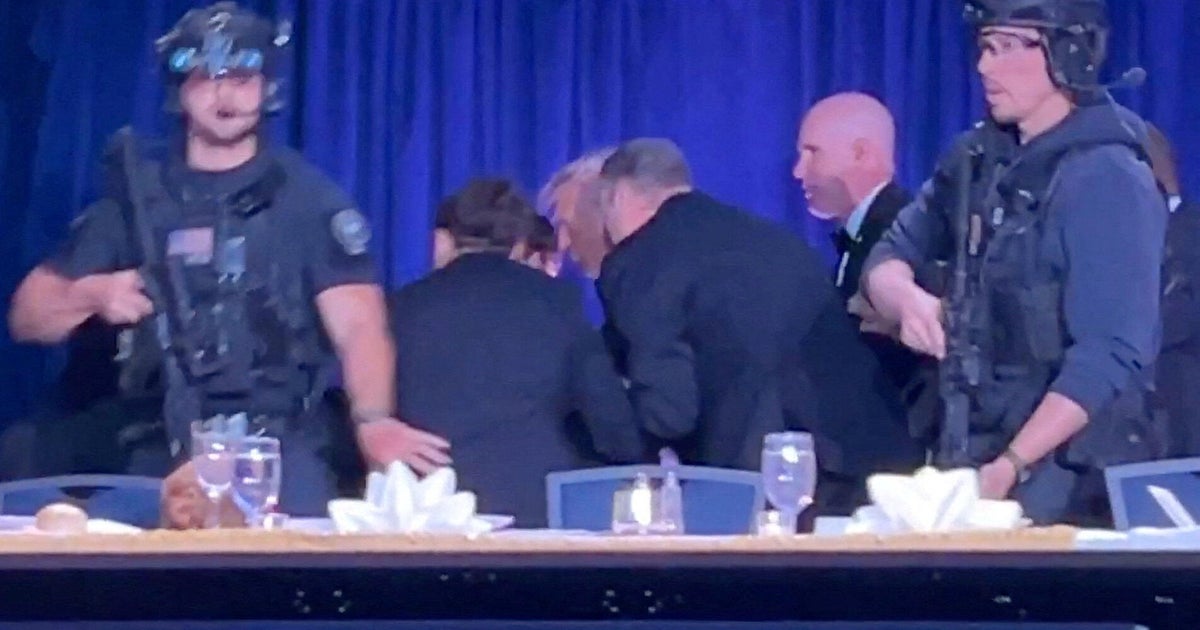
A shooting occurred at a Washington dinner where President Trump and senior officials were evacuated following gunfire. The suspect left behind writings containing inflammatory language targeting the administration, indicating ideological motivation for the attack. This event raises immediate questions regarding federal security protocols protecting high-profile events.
