/news/breaking-news

Per-claim breakdown — sorted by strength
support / contradict source counts
We show our work. Read the raw research, see how we interpreted it, or skip to the finished article.
The United Arab Emirates announced its departure from the Organization of Petroleum Exporting Countries (OPEC) on Wednesday. The exit is scheduled to take effect on May 1st, according to The Hill ⁶. This move signals a shift toward independent energy policy for Abu Dhabi.
Simultaneously, diplomatic talks between the United States and Iran remain stalled over maritime security threats in the Strait of Hormuz ¹. The combination of potential supply increases from the UAE and existing transit risks creates uncertainty in global energy markets ².
The UAE intends to increase its oil output beyond current cartel limits, targeting five million barrels per day by 2027 ³. Realizing this increased production depends on the Strait of Hormuz remaining open for exports ⁴.
CNBC framed the announcement by immediately pairing the UAE's exit with persistent Iran blockade tensions ⁵. The Hill emphasized the political nature of the departure, highlighting it as a break from Saudi Arabia's regional leadership ⁶. IB Times focused heavily on commodity markets, analyzing how the move would impact global oil pricing dynamics ⁷. Al Jazeera presented a regional perspective, focusing on implications for national interests and cartel stability within Arab viewpoints ⁸.
Available sources do not provide specific details regarding the red lines or primary sticking points preventing progress in US-Iran diplomatic negotiations [Source: Dossier Notes]. This omission limits assessments of the true near-term risk level posed by maritime conflict. Furthermore, there is limited coverage detailing how major oil importers outside of the Middle East plan to diversify their supply chains should persistent geopolitical instability continue [Source: Dossier Notes]. Finally, no information exists on the internal political consensus within the UAE regarding this strategic pivot and its relationship with Gulf neighbors other than Saudi Arabia [Source: Dossier Notes].
The United Arab Emirates officially announced its departure from OPEC, effective May 1st, signaling a definitive move toward independent energy policy ⁶. This action represents a structural weakening of OPEC’s influence over global supply management and pricing power ⁹. Market participants must now weigh potential upside from increased UAE production against the severe near-term constraint imposed by threats to the Strait of Hormuz ².
The United Arab Emirates confirmed its departure from OPEC, with the exit scheduled to take effect on May 1st ⁶. Confidence Tag: Apparent Verification
The UAE cited strategic vision and dissatisfaction with OPEC production quotas as key drivers for its decision ¹⁰. Confidence Tag: VERIFIED
The UAE aims to raise oil output beyond current cartel limits, targeting five million barrels per day by 2027 ³. Confidence Tag: VERIFIED
The move is interpreted as straining relations with Saudi Arabia and signaling a broader realignment of Gulf political dynamics ¹⁰. Confidence Tag: VERIFIED
The threat to the Strait of Hormuz significantly constrains UAE export capacity, limiting its ability to realize increased production goals immediately ¹. Confidence Tag: VERIFIED
Market reaction was contested; some reports noted immediate price surges, while others indicated initial market indifference due to geopolitical risks ². Confidence Tag: Apparent Verification
Two outlets framed the motivation as a high-level "strategic, economic vision" ⁶, while others focused on "quota frustration," suggesting agency versus organizational strain [Source: Dossier Notes]. Confidence Tag: PARTIALLY VERIFIED
Outlet reports showed divergence regarding the immediate market impact of the announcement. Blockonomi reported that Brent crude surged 3.3% to $114.93 following the news ¹. Conversely, CFR noted that "oil markets barely flinched after Abu Dhabi announced its exit," attributing the muted reaction to overriding concerns over Iran and the Strait of Hormuz ². This contrast suggests that financial outlets captured immediate speculative trading, while geopolitical analyses prioritized the known physical choke point risk ².
The broader implication is that global oil price volatility will increase as market participants weigh potential supply increases against geopolitical transit risks [Source: CFR.org](https://www.cfr.org/articles/why-the-uae-walked-out-on-opec-and-what-it-means-for-the-cartel; https://www.cnbc.com/2026/04/28/oil-uae-opec-saudi-arabia.html; https://blockonomi.com/crude-oil-prices-soar-amid-uaes-opec-exit-and-iran-blockade-tensions/). The UAE's intent to boost output clashes directly with the acknowledged constraint of the Strait of Hormuz, creating a complex tug-of-war in pricing models ².
The narrative framing also split on the nature of the regional shift. IB Times characterized the exit as a structural test for OPEC, warning the cartel might struggle to maintain its price-setting role ⁹. In contrast, The Hill framed it primarily as a political declaration of independence from Saudi-led regional structures ⁶. This difference reflects whether the reporting prioritizes institutional decline or sovereign state maneuverability ².
Specifically, IB Times suggests the UAE's departure signals that OPEC faces a structural challenge to its ability to control pricing ⁹. Furthermore, CFR notes that the uncertainty surrounding supply availability means "major energy importers will likely accelerate diversification strategies away from traditional OPEC coordination" ¹⁰. This suggests that the market's response will transition from reacting to supply changes toward managing sovereign risk exposure related to regional stability.
Council on Foreign Relations CNBC IB Times The Hill Al Jazeera Yahoo News MSN The Hindu Businessline Blockonomi Khalij Times
Each claim wires out to the source domains that support or contradict it. Click a claim for context.
Verifiability vs. source count. Lower-left is fragile; upper-right is strong consensus.
Sources arranged by stakeholder role. Distance from center grows with framing distance from this article.
Source mix
The sources are relatively balanced in terms of topic coverage (economic impact vs. geopolitical context), though there is a slight lean towards center/center-left perspectives when discussing the potential volatility or challenges posed by the situation.
Why this alignment
The article synthesizes information from various sources covering the UAE's departure from OPEC, its plans for increased oil output, and the geopolitical context of Hormuz Strait tensions. The sources show a mix of coverage: some focus on the economic/market impact (center/center-left), others on the political implications and regional shifts (center/center-right), and some provide more nuanced analysis of the cartel's future (center). The overall tone is analytical, but the emphasis across the provided sources leans toward geopolitical and market uncertainty rather than a single ideological leaning.
Labels are heuristic model estimates. Evaluate sources yourself.
| Source | Role | Alignment | Rationale |
|---|---|---|---|
| UAE announces plans to leave OPEC: State media | Media / Editorial | center (0.9) | The Hill is a center-leaning publication that reports factual government announcements regarding international relations. |
| UAE announces exit from OPEC as US-Iran negotiations stagnate | Media / Editorial | center (0.9) | MSN is a general news aggregator that reports on world events, linking the OPEC exit to broader geopolitical issues. |
| Crude oil futures edge lower after UAE announces OPEC exit | Media / Editorial | center (0.85) | The Hindu BusinessLine focuses on financial and market reporting, presenting the immediate impact of the news on commodity prices. |
| Crude Oil Prices Soar Amid UAE’s OPEC Exit and Iran Blockade Tensions | Media / Editorial | center-left (0.8) | Blockonomi is a financial news site that often frames market movements with strong language regarding price surges due to geopolitical factors. |
| Philippines to benefit from UAE’s Opec exit, increased oil exports, says analyst | Media / Editorial | center-left (0.85) | Khaleej Times reports on regional economic impacts, offering an analyst's perspective on how the exit could benefit specific countries. |
| UAE announces exit from OPEC amid stalled US-Iran negotiations | Media / Editorial | center (0.9) | MSN reports on global events, framing the exit in the context of broader geopolitical instability involving the US and Iran. |
| UAE’s OPEC exit has been long in the works – and may mark the beginning of a Gulf realignment | Media / Editorial | center-right (0.85) | Yahoo News reports on geopolitical shifts, framing the event as part of a larger regional realignment between Gulf states. |
| Setback for Saudi Arabia: Can Opec survive the exit of 'naughty boy' UAE? | Media / Editorial | center-left (0.9) | India Times focuses on business implications, framing the exit as a significant challenge to OPEC's established power structure and credibility. |
| Why the UAE Walked Out on OPEC—and What It Means for the Cartel | Academic / Research | center (0.95) | CFR (Council on Foreign Relations) provides in-depth geopolitical analysis, simply stating the factual withdrawal. |
| UAE leaves OPEC in blow to oil cartel during war on Iran | Media / Editorial | center-left (0.85) | Al Jazeera often frames regional events through the lens of national interests and geopolitical conflict, linking the exit to the war on Iran. |
| What UAE's Shock OPEC Exit After Nearly Six Decades Means for Oil Prices and the World | Media / Editorial | center (0.9) | IB Times provides a broad overview of market implications, attributing the shift to geopolitical tensions and national strategy. |
| UAE's shock OPEC exit: What it means for the oil cartel's future and for crude prices | Investor / Market | center-left (0.85) | CNBC provides financial analysis, suggesting the UAE's move to increase production without OPEC constraints could negatively affect oil prices. |
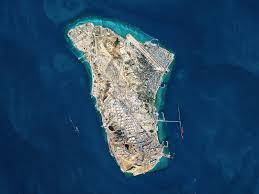
Gulf leaders met in Jeddah to coordinate a unified regional response following Iranian missile and drone attacks on Gulf interests. The summit signals a political commitment among GCC members toward collective defense against escalating Iranian aggression. This coordination suggests a potential shift toward a more unified deterrence posture across the region.

Cole Tomas Allen faces federal charges for attempted assassination after an armed confrontation at the White House Correspondents' Association Dinner. The most significant finding is that authorities recovered a document titled "Friendly Federal Assassin," framing this event as a serious domestic political threat risk. This indicates the incident involves more than just a criminal act, but a targeted ideological attack against administration officials.

Louvre Director Laurence des Cars resigned following the October theft of French crown jewels, valued at €88 million. This event highlights significant security failures and administrative issues within the museum, prompting a broader review of cultural institution safety. The incident also reveals separate investigations into prior financial irregularities, including suspected ticket fraud costing millions.

A shooting occurred at a Washington dinner where President Trump and senior officials were evacuated following gunfire. The suspect left behind writings containing inflammatory language targeting the administration, indicating ideological motivation for the attack. This event raises immediate questions regarding federal security protocols protecting high-profile events.
