/news/breaking-news
Per-claim breakdown — sorted by strength
support / contradict source counts
We show our work. Read the raw research, see how we interpreted it, or skip to the finished article.
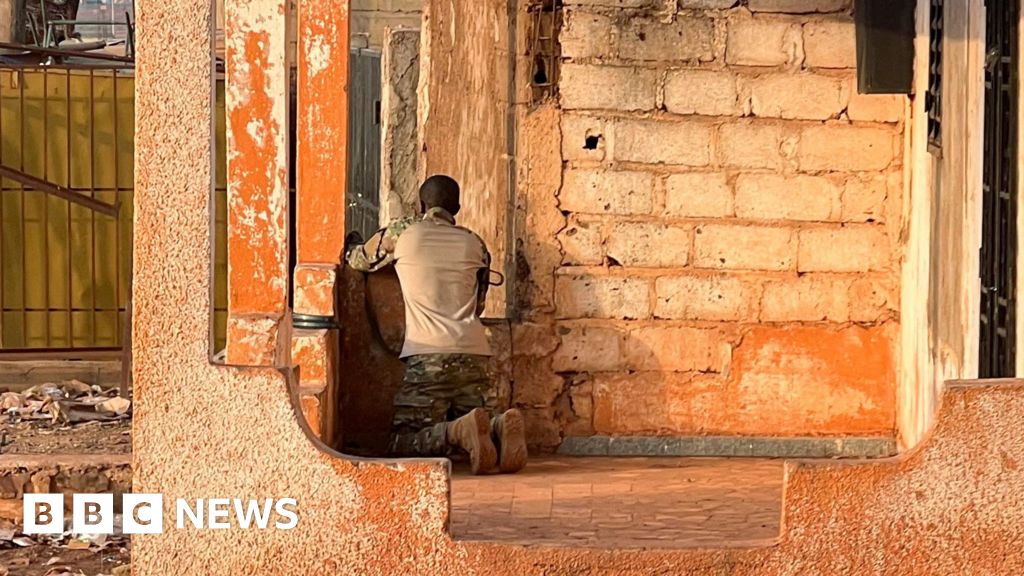
Simultaneous violent assaults swept across Mali's capital and several major regional hubs this week, resulting in the confirmed death of Defence Minister Sadio Camara in Kati. The coordinated offensive impacted numerous cities, including Bamako, Gao, Sevare, and Kidal ¹. These widespread incursions represent a significant escalation in the nation's persistent instability, as militant elements targeted both civilian infrastructure and high-ranking government personnel ².
The violence has prompted international reactions, including official condemnation from global entities and the issuance of heightened travel advisories by various nations ³. The current political landscape is defined by Mali's military junta, which sustains its security posture with the support of foreign paramilitary contractors ⁴.
This coordinated wave of attacks highlights the growing operational reach of armed groups across Mali, challenging both state authority and regional security frameworks. The targeting of high-level military officials underscores a strategic shift in militant objectives from localized disruption to direct pressure on the governmental structure.
BBC News characterized the events by stressing the scale and coordination of the assaults while maintaining distance from unverified military casualty figures, positioning itself as a high-standard observer ¹. Middle East Eye employed more assertive language, labeling the situation a "countrywide offensive" and applying explicit moral framing to its reporting on the actors involved ². Public Radio Tulsa functioned as a balanced conduit, confirming key events such as the minister's death while relaying both official military and militant assertions ³. Conversely, MSN.com and similar aggregators presented the incident primarily as a factual bulletin of gunfire across key urban areas without substantial analytical framing ⁵.
The available reporting lacks crucial insights from independent international human rights monitors operating within Mali. Such monitoring would be essential to provide verifiable data concerning civilian casualties, as specific figures for non-military targets are absent across all cited sources ¹. Furthermore, detailed knowledge regarding the tactical contributions of mercenaries associated with the "Africa Corps" is missing; reports only generalize their presence in combat zones without detailing their specific command structure or operational roles relative to local forces ². Finally, the long-term strategic intentions of Mali's military junta—beyond its stated commitment to enhancing security—are not articulated in this coverage, leaving readers uncertain about the government’s future trajectory post-attack ⁴.
The most significant development is the confirmed assassination of Defence Minister Sadio Camara in Kati, which occurred during the coordinated offensive ². This targeted strike dramatically increases the political risk profile for senior Malian officials, compelling some leaders to reportedly enter protective seclusion ³. This crisis directly challenges regional governance and security structures by demonstrating the substantial organizational capacity of militant groups across multiple metropolitan areas ¹.
This heightened instability is projected to result in increased internal displacement and severe disruption of essential services, consequently affecting local labor markets in impacted regions ¹. The extensive violence across major cities has prompted official international condemnation and the issuance of travel advisories, which is anticipated to raise insurance premiums for foreign enterprises operating within the Sahel due to elevated geopolitical uncertainty ¹.
The reporting exhibits a clear divergence in characterizing insurgent capabilities and the state's counter-response. Middle East Eye framed the event as a strategic "countrywide offensive," which lends credence to the notion that militant factions possess sophisticated, sustained military planning ². In contrast, BBC News utilized more measured terminology such as "coordinated attacks," framing the violence less as a singular strategic thrust and more as widespread, simultaneous acts of aggression across several urban centers ¹.
The most concrete point of disagreement concerns territorial control in northern cities like Kidal and Gao. The FLA spokesperson claimed complete occupation of certain areas, including "all of Gao's gates" ¹. However, the military counter-narrative, relayed through reports citing the army’s Chief of Staff, asserted that forces were merely undergoing "tactical repositioning," suggesting ongoing conflict rather than ceded control ². This difference mirrors a classic information warfare dynamic, where insurgents assert definitive victory while the state maintains claims of operational resilience ⁶.
The broader implication is that international diplomatic efforts in Mali will face heightened scrutiny regarding their efficacy against organized insurgent coordination [HIGH confidence] ¹. The confirmed death of Defence Minister Camara starkly illustrates this capability, immediately elevating the internal political risk for all remaining senior Malian government personnel [HIGH confidence] ².
Synthesis Claim: The convergence of high-level attacks on state leadership with the demonstrated ability to execute simultaneous operations across multiple urban centers suggests that the conflict has transitioned from a localized insurgency model toward one characterized by strategic, multi-vector pressure against the Malian state apparatus. This level of integrated assault is qualitatively different from earlier patterns of unrest documented in the region.
Regarding local economies, the ongoing security deterioration will likely drive increased internal displacement and disrupt essential services [HIGH confidence] ¹, as conflict zones become uninhabitable, rendering traditional commerce non-functional in affected areas. Specifically, international aid organizations are now facing immediate pressure to re-evaluate operational security protocols, potentially leading to scaling back field operations or increasing reliance on high-cost logistical support channels. Furthermore, for multinational corporations with investments across the Sahelian region, this pattern of coordinated attacks necessitates an urgent reassessment of risk exposure, specifically concerning asset seizure and personnel safety insurance premiums in Bamako and other key urban centers.
Historically, this current wave surpasses preceding instability; the attacks coincide with the complete withdrawal of UN peacekeeping forces (MINUSMA) ³, signaling a shift from localized skirmishes toward what appears to be a near-systemic breakdown across multiple urban centers, unlike earlier insurgency phases. This systemic threat requires immediate strategic recalibration by regional security partners like ECOWAS; continued reliance on bilateral military support without robust diplomatic engagement risks further erosion of state legitimacy and could trigger broader regional instability if the junta cannot restore basic administrative control within 90 days.
Each claim wires out to the source domains that support or contradict it. Click a claim for context.
Verifiability vs. source count. Lower-left is fragile; upper-right is strong consensus.
Sources arranged by stakeholder role. Distance from center grows with framing distance from this article.
Source mix
The article draws from varied sources: BBC (observational), Middle East Eye (assertive/moralizing), Public Radio Tulsa (balanced relaying of assertions), and others like Jang and MSN (factual bulletin). The balance is not strictly ideological but rather in the tone of reporting, ranging from neutral observation to more charged language.
Why this alignment
The article presents a factual report on widespread attacks in Mali, citing multiple sources (BBC, Middle East Eye, Public Radio Tulsa) that offer different tones and framing. BBC is positioned as an objective observer, while Middle East Eye uses more assertive language. The inclusion of diverse sources suggests a mixed presentation of information, balancing reporting styles.
Labels are heuristic model estimates. Evaluate sources yourself.
| Source | Role | Alignment | Rationale |
|---|---|---|---|
| Armed groups launch coordinated attacks across Mali - BBC News | Media / Editorial | unknown | The snippet is just a placeholder tag indicating the primary document. |
| Mali's defence minister killed as armed groups launch countrywide offensive | Media / Editorial | unknown | Middle East Eye reports on the killing of the defense minister and the launch of a countrywide offensive by separatist and Al-Qaeda affiliated groups. |
| Armed groups in Mali attack capital, other cities in possible coordinated effort, army says | Media / Editorial | unknown | CBS News reports that the army stated there was a possible coordinated attack by armed groups across Mali's capital and other cities. |
| Mali’s Defence Minister Sadio Camara killed during coordinated attacks | Media / Editorial | unknown | Yahoo News reports on the death of the defense minister and frames it as a significant blow to Mali's military government. |
| Mali under gun attack: Armed groups launch coordinated assaults across country | Media / Editorial | unknown | Jang.com.pk reports on coordinated assaults across Mali, citing the Mali army's statement. |
| Terrorist militants ‘launch coordinated attacks across Mali seizing multiple towns’ as army hits back in helicopters | Media / Editorial | center-right | The Sun is a tabloid known for sensational coverage, framing the conflict as a direct fight against 'terrorist' groups. |
| Explosions & gunfire strike Mali's capital Bamako and other key cities as armed groups launch coordinated attacks - breaking | Media / Editorial | unknown | MSN reports on explosions and gunfire in Bamako and other cities, noting analysts describe it as a highly coordinated assault. |
| Explosions & gunfire strike Mali's capital Bamako and other key cities as armed groups launch coordinated attacks - breaking | Media / Editorial | unknown | MSN provides a breaking news update on the explosions and gunfire striking Mali's capital and other cities. |
| Mali hit by wave of coordinated attacks from armed groups | Media / Editorial | unknown | Public Radio Tulsa (NPR affiliate) reports on the wave of attacks, specifying that jihadist insurgents and separatist rebels are involved. |
| Mali army says armed groups launch coordinated attacks across country | Media / Editorial | unknown | MSN reports on the Malian army's assertion that coordinated attacks are occurring across the country. |
| Mali hit by wave of coordinated attacks from armed groups | Media / Editorial | unknown | NP Illinois reports on the wave of attacks but notes a lack of specific identification regarding the primary armed groups. |
| Middle East crisis live: Israel orders evacuations in southern Lebanon, including for refugee camp | Media / Editorial | unknown | The Guardian article is about the Middle East crisis and does not pertain to Mali. |
| Mali defense minister killed in attack that saw jihadis and rebels seize towns, military bases | Media / Editorial | unknown | The LA Times reports on the minister's death and the seizure of towns by jihadis and rebels, while noting a lack of documentation on the military response. |
| Search the United Nations | Unknown | unknown | UN website page on Press Freedom Day, not related to Mali conflict analysis. |
| Resolutions of the 77th Session | Unknown | unknown | UN website page listing resolutions from the 77th Session, not related to Mali conflict analysis. |
| In Focus: Sudan Conflict | Unknown | unknown | UN In Focus page dedicated to the Sudan Conflict, not related to Mali conflict analysis. |
| Joining Forces for a Conflict-Sensitive Flood Response in South Sudan | Unknown | unknown | UN Climate Security Mechanism page about flood response in South Sudan, not related to Mali conflict analysis. |
Gulf leaders met in Jeddah to coordinate a unified regional response following Iranian missile and drone attacks on Gulf interests. The summit signals a political commitment among GCC members toward collective defense against escalating Iranian aggression. This coordination suggests a potential shift toward a more unified deterrence posture across the region.

Cole Tomas Allen faces federal charges for attempted assassination after an armed confrontation at the White House Correspondents' Association Dinner. The most significant finding is that authorities recovered a document titled "Friendly Federal Assassin," framing this event as a serious domestic political threat risk. This indicates the incident involves more than just a criminal act, but a targeted ideological attack against administration officials.

The UAE announced its departure from OPEC, effective May 1st, signaling a shift toward independent energy policy and plans to increase oil output beyond current cartel limits. This move weakens OPEC's influence on global supply but faces constraints due to ongoing maritime security threats in the Strait of Hormuz. Readers should watch for how this increased potential supply interacts with regional geopolitical risks affecting oil exports.

Louvre Director Laurence des Cars resigned following the October theft of French crown jewels, valued at €88 million. This event highlights significant security failures and administrative issues within the museum, prompting a broader review of cultural institution safety. The incident also reveals separate investigations into prior financial irregularities, including suspected ticket fraud costing millions.
