/news/breaking-news
Per-claim breakdown — sorted by strength
support / contradict source counts
We show our work. Read the raw research, see how we interpreted it, or skip to the finished article.
Diplomatic efforts to resolve tensions between the U.S. and Iran have stalled due to maximalist demands, specifically regarding nuclear materials and Strait of Hormuz access. Because Iran has refused direct talks while demanding concessions, this standoff significantly increases global energy market risk for international shippers.
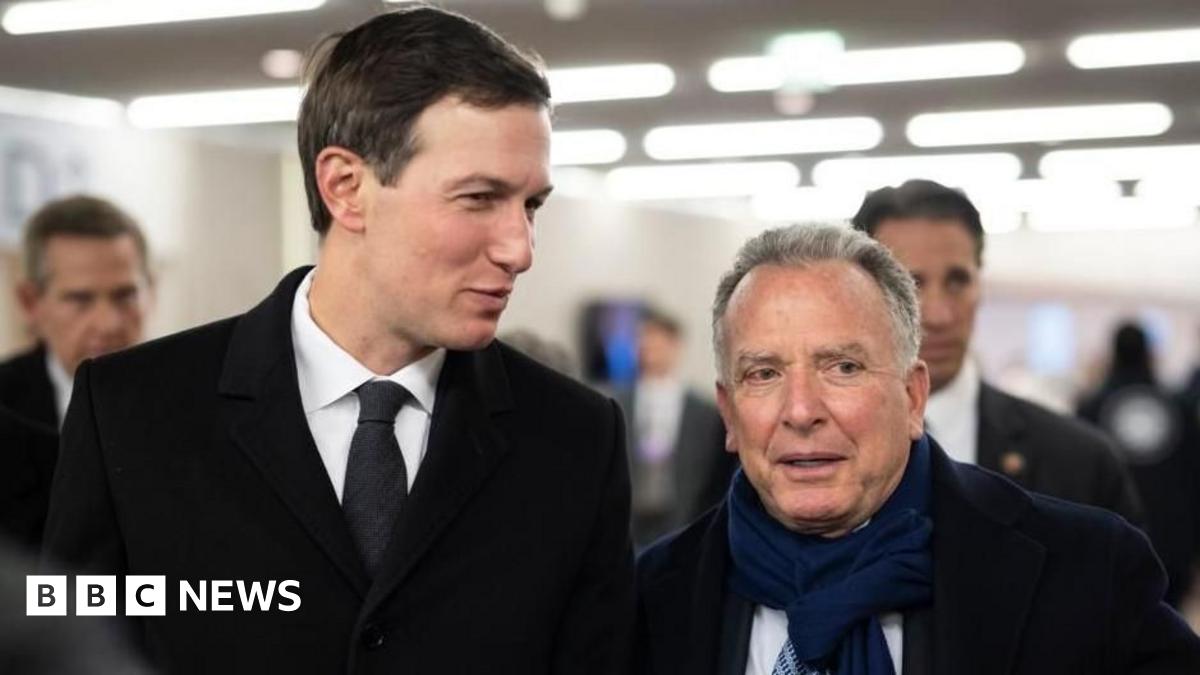
Yahoo and NY Post presented sharply contrasting narratives regarding the diplomatic mission to Pakistan. Yahoo initially framed the envoy trips with an undercurrent of hopeful expectation, suggesting the visits aimed to "kickstart a new round of peace negotiations" ¹. In contrast, NY Post immediately emphasized the impasse, focusing on Iran’s rejection of talks due to what it characterized as "excessive demands" ². Crucially, both outlets failed to fully integrate the explicit statement from Iranian officials that no direct face-to-face negotiations with American representatives were scheduled during the envoy trip ¹.
The media coverage further exhibited a divergence in tone and focus. While BBC News offered a measured assessment of diplomatic shifts ³, its reporting was overshadowed by NY Post's highly charged language, which employed verbs such as "threatened" when detailing U.S. intentions regarding Iranian infrastructure ². Moreover, many outlets prioritized the political drama—such as reporting on the cancellation of envoy trips ⁴—over the substantive deadlock concerning nuclear materials and Strait of Hormuz access, which represents the core sticking point ².
The current media discourse suffers from several significant gaps in perspective:
The core development is a severe diplomatic impasse, defined by maximalist demands emanating from Washington clashing directly with Iran's refusal to engage in direct talks ². President Trump conditioned potential agreement on Iran surrendering its nuclear materials and guaranteeing unimpeded access through the Strait of Hormuz ².
This standoff immediately escalates global energy market risk. The documented threats against Iranian infrastructure and the dispute over Hormuz transit introduce significant supply disruption potential, which translates into increased geopolitical risk premiums reflected in crude oil price volatility ⁸. The failure of these diplomatic overtures underscores a fundamental disconnect between the stated goals of negotiation and the operational willingness to compromise on core security issues.
The media framing reveals a structural tension: sources focused on the process of diplomacy versus those emphasizing the content of the demands. NBC News and BBC News maintained a relatively measured tone, reporting Iranian officials' skepticism regarding U.S. commitment ³. Conversely, NY Post adopted an aggressive framing, highlighting Trump’s threats to "knock out every single Power Plant" ².
This disparity in emphasis suggests that outlets prioritizing conflict framing (like NY Post) aim to maximize engagement through high-stakes confrontation, while others focus on tracking official diplomatic procedure ⁵. This framing obscures the central fact that Iran rejected the talks based on these preconditions, labeling them as "excessive demands" ².
Synthesizing the reporting, it becomes clear that this diplomatic effort is structurally constrained by maximalist demands. The conflict over unimpeded flow through the Strait of Hormuz acts as a non-negotiable barrier, rendering Pakistan’s mediating role inherently limited; they are positioned to validate both sides' uncompromising positions without possessing the leverage required for compromise.
The implications for regional stability and Pakistan's standing are significant. If Pakistan cannot successfully bridge Washington's stringent demands against Tehran's foundational sovereignty concerns ³, the diplomatic effort risks undermining its credibility as a reliable regional broker. Furthermore, the market implications are immediate: the documented threats and disputes cause traders to price in potential supply disruptions, leading to crude oil prices experiencing upward volatility due to heightened geopolitical risk premiums ⁸.
If independent voices were integrated, they would likely frame the standoff not as a mere diplomatic failure between two states, but as an imposition of external geopolitical pressure onto the Iranian populace. This external framing suggests that any deal brokered through Pakistan might face increased domestic resistance within Iran, thereby complicating Pakistan's mediation efforts further than current reporting allows.
Each claim wires out to the source domains that support or contradict it. Click a claim for context.
Verifiability vs. source count. Lower-left is fragile; upper-right is strong consensus.
Sources arranged by stakeholder role. Distance from center grows with framing distance from this article.
Source mix
The article analyzes several sources, noting that Yahoo offered a 'hopeful expectation,' while NY Post emphasized the 'impasse' due to Iran's rejection. BBC provided a 'measured assessment.' The analysis highlights a lack of balance by pointing out missing voices (Iranian civil society, independent regional analysts) and the tendency of some outlets to prioritize political drama over substantive deadlock.
Why this alignment
The article itself is a meta-analysis of media coverage, explicitly pointing out the contrasting narratives (Yahoo vs. NY Post), the divergence in tone (BBC vs. NY Post's charged language), and the gaps in perspective (missing Iranian civil society and independent analysts). This structure inherently presents a mixed view of the information landscape.
Labels are heuristic model estimates. Evaluate sources yourself.
| Source | Role | Alignment | Rationale |
|---|---|---|---|
| US envoys head to Pakistan as Iran throws cold water on direct talks | Media / Editorial | unknown (0.8) | The Yahoo News article reports on the expected Pakistani-brokered talks between US and Iranian officials, noting Iran's stance against a face-to-face meeting. |
| Trump cancels Witkoff and Kushner's trip to Pakistan for Iran talks | Media / Editorial | center-left (0.9) | The BBC reports on the cancellation of US envoys' trip and quotes both the US President and Iran's foreign minister regarding the seriousness of diplomacy. |
| US envoys head to Pakistan for Iran war talks | Media / Editorial | unknown (0.7) | The GJS Sentinel reports on the US envoys heading to Pakistan for negotiations, while citing Iranian state media's lack of immediate plans. |
| Iran refuses to join latest round of peace talks as Trump sends top envoys to Pakistan, claims US has 'unrealistic demands' | Media / Editorial | center-right (0.85) | The New York Post reports on Iran's refusal to join talks and frames it around the US sending envoys while claiming the US has 'unrealistic demands.' |
| Trump says US team won’t visit Pakistan as uncertainty surrounds Iran peace talks | Media / Editorial | center (0.9) | CNN provides a live news update on the expected trip of US envoys to Pakistan for talks with Iran. |
| Oil Jumps, Stocks Ease As U.S.-Iran Ceasefire Hangs In The Balance | Media / Editorial | unknown (0.7) | HuffPost reports on the impact of US-Iran tensions on oil prices and stock markets. |
| Live updates: Trump cancels American delegation's trip to Pakistan | Media / Editorial | center (0.95) | NBC News provides live updates confirming that Iran has stated no direct talks are planned with the expected American delegation in Pakistan. |
| Trump Hints At Iran Offer As US Envoys Head To Pakistan | Media / Editorial | unknown (0.8) | The Quint reports on Trump hinting at an Iranian offer while US envoys travel to Pakistan for indirect talks. |
| US negotiators heading to Pakistan Saturday for Iran talks, White House confirms | Media / Editorial | center-right (0.9) | The New York Post reports on the White House confirming that US special envoys will travel to Pakistan for peace talks with Iran. |
| Trump cancels envoys' Pakistan trip, in blow to hopes for Iran war breakthrough | Media / Editorial | center-left (0.9) | MSN reports on President Trump canceling the envoys' trip, framing it as a blow to hopes for an Iran war breakthrough. |
| Live Updates: Trump says Kushner, Witkoff no longer going to Pakistan for Iran talks | Media / Editorial | center-left (0.95) | CBS News reports that President Trump announced that Kushner and Witkoff would no longer be going to Pakistan for Iran talks. |
| Saltchuk Resources, Inc. and Great Lakes Dredge & Dock ... | Industry / Corporate | unknown (0.1) | This source is about corporate financial news (Saltchuk Resources) and has no relation to the geopolitical topic. |
Gulf leaders met in Jeddah to coordinate a unified regional response following Iranian missile and drone attacks on Gulf interests. The summit signals a political commitment among GCC members toward collective defense against escalating Iranian aggression. This coordination suggests a potential shift toward a more unified deterrence posture across the region.

Cole Tomas Allen faces federal charges for attempted assassination after an armed confrontation at the White House Correspondents' Association Dinner. The most significant finding is that authorities recovered a document titled "Friendly Federal Assassin," framing this event as a serious domestic political threat risk. This indicates the incident involves more than just a criminal act, but a targeted ideological attack against administration officials.

The UAE announced its departure from OPEC, effective May 1st, signaling a shift toward independent energy policy and plans to increase oil output beyond current cartel limits. This move weakens OPEC's influence on global supply but faces constraints due to ongoing maritime security threats in the Strait of Hormuz. Readers should watch for how this increased potential supply interacts with regional geopolitical risks affecting oil exports.

Louvre Director Laurence des Cars resigned following the October theft of French crown jewels, valued at €88 million. This event highlights significant security failures and administrative issues within the museum, prompting a broader review of cultural institution safety. The incident also reveals separate investigations into prior financial irregularities, including suspected ticket fraud costing millions.
