/news/ai
Per-claim breakdown — sorted by strength
support / contradict source counts
We show our work. Read the raw research, see how we interpreted it, or skip to the finished article.
DeepSeek V4, an open-source model with a one million token context length, directly challenges US AI giants by offering highly capable alternatives at a fraction of the cost. This development significantly alters the economic landscape for enterprise buyers, providing low-cost options to compete with premium proprietary systems.
CNET framed DeepSeek V4 as a product requiring assessment of "potential risk" ¹, while InvestorPlace focused exclusively on the narrative that it represents "good news for AI stocks" ². MSN aggregated the launch by emphasizing the competitive challenge against US giants through open-source availability ³. The coverage across multiple outlets largely frames the launch as a significant competitive shift in the AI landscape ¹, ⁴.
The perspective of end-users in non-developer applications is notably absent from the current reporting. While one source noted that an associated app achieved a significant download milestone on Apple's App Store ⁴, the coverage does not detail how everyday consumers are integrating this model into daily life. The current reporting cannot answer questions regarding typical latency or ease of use for a non-technical user base.
Furthermore, regulatory bodies in Western markets remain unrepresented in these reports. CNET mentioned "potential risk" related to governance ¹, but no official documentation or commentary from agencies regarding AI imports, data sovereignty, or technology transfer is provided. This absence prevents readers from assessing the actual legal hurdles this model might face globally.
Finally, researchers focused on open-source deployment logistics are missing from the narrative. While AndroidSage detailed technical specs, there is no discussion of the practical challenges for small businesses or academic labs attempting to deploy and fine-tune a 1.6 trillion parameter model locally ⁴. This omission leaves the practical barrier to entry for enterprise adoption unclear despite the model being open-weight.
DeepSeek launched an open-source V4 model featuring two versions, 1.6T Pro and 284B Flash, both supporting a one million token context length ³. This release introduces a direct, low-cost competitor to proprietary systems like OpenAI’s offerings. The model's architecture utilizes Mixture-of-Experts techniques, allowing the larger Pro version to activate only 49 billion parameters during inference ⁴.
This development significantly alters the economic model of AI service provision, as highly capable models are now available for local execution at a fraction of subscription costs [Source: decrypt.co/365455/deepseek-v4-launch-pro-version-costs-less-gpt-5-pro]. For enterprise technology buyers and developers, the availability of this low-cost, open-weight alternative directly challenges the premium pricing power held by established US AI providers [Source: decrypt.co/365455/deepseek-v4-launch-pro-version-costs-less-gpt-5-pro].
Outlet coverage diverges sharply on whether to emphasize economic disruption or geopolitical friction posed by DeepSeek V4’s release. InvestorPlace framed the narrative around financial upside, highlighting that the model's affordability is "good news for AI stocks" ². This financial lens prioritizes market shifts over technical detail. In contrast, CNET adopted a more cautious tone, balancing performance claims with warnings about regulatory exposure and potential censorship ¹.
The technical community, represented by AndroidSage, focused on the architectural innovation itself; it detailed how DeepSeek achieves efficiency by activating only a fraction of its total parameters ⁴. This technical focus provides the mechanism behind the cost advantage, explaining how a 1.6T model can compete economically with smaller proprietary offerings ⁴. MSN’s reporting served to amplify the core competitive angle, using its platform to confirm that open sourcing directly challenges established US market leaders ³.
The availability of highly capable, low-cost open-source models will severely erode the premium pricing power of proprietary AI services [Source: decrypt.co/365455/deepseek-v4-launch-pro-version-costs-less-gpt-5-pro]. The ability for organizations to utilize this model locally without sending data through third-party APIs allows them to maintain greater control over operational expenditure and data sovereignty [Source: decrypt.co/365455/deepseek-v4-launch-pro-version-costs-less-gpt-5-pro]. This capability shifts the industry benchmark toward efficiency in model design rather than sheer scale alone [Source: decrypt.co/365455/deepseek-v4-launch-pro-version-costs-less-gpt-5-pro].
The integration of Huawei Ascend chips suggests a deliberate strategy to circumvent existing U.S. export controls ⁸. This hardware integration implies that the competitive threat extends beyond software licensing into national technology supply chains. The divergence in coverage reflects a tension between market liberalization and state competition. Because DeepSeek leverages restricted hardware for cost efficiency, EU regulators may view this as an act of economic coercion rather than simple open-source innovation. Consequently, US regulatory bodies might focus on export compliance while European agencies could prioritize data flow sovereignty implications arising from the model's origin [Synthesis].
Each claim wires out to the source domains that support or contradict it. Click a claim for context.
Verifiability vs. source count. Lower-left is fragile; upper-right is strong consensus.
Sources arranged by stakeholder role. Distance from center grows with framing distance from this article.
Source mix
The sources are not perfectly balanced. There is a clear divergence in focus: financial optimism (InvestorPlace), technological comparison/advocacy (AndroidSage, VentureBeat), general market positioning (MSN), and risk assessment (CNET). The article itself attempts to synthesize these while highlighting the gaps in coverage.
Why this alignment
The article presents a mixed view of the DeepSeek V4 launch. It acknowledges the competitive shift in the AI landscape (MSN, CNET), which is a neutral/objective observation. However, it contrasts this with specific biases: InvestorPlace focuses solely on positive financial outcomes ('good news for AI stocks'), while CNET introduces a cautionary note about 'potential risk.' The latter half of the article critically points out significant omissions—lack of end-user perspective, regulatory commentary, and practical deployment logistics—which prevents a balanced assessment, thus leading to a mixed framing.
Labels are heuristic model estimates. Evaluate sources yourself.
| Source | Role | Alignment | Rationale |
|---|---|---|---|
| China's DeepSeek V4 challenges US AI giants with open-source model | Media / Editorial | unknown (0.8) | MSN is a general news aggregator, and the snippet focuses on a competitive technological development. |
| China's DeepSeek V4 challenges US AI giants with open-source model | Media / Editorial | unknown (0.8) | MSN is a general news aggregator, and the snippet focuses on a competitive technological development. |
| DeepSeek V4 is here: How it compares to ChatGPT, Claude, Gemini | Media / Editorial | unknown (0.9) | This article directly compares the new model's pricing to established US models (ChatGPT, Claude, Gemini). |
| DeepSeek Drops Cheaper V4 AI as Huawei Jumps In | Media / Editorial | unknown (0.85) | TechRepublic reports on the technical launch and its implications for global competition, mentioning Huawei. |
| DeepSeek V4 Released: A Better AI Alternative to ChatGPT | Media / Editorial | center-left (0.95) | AndroidSage frames the event as a significant shift in global leadership, suggesting a move away from American dominance, which aligns with a center-left perspective on geopolitical shifts. |
| Why the DeepSeek Breakthrough Is Good News for AI Stocks | Investor / Market | unknown (0.6) | InvestorpLace is an investment platform, and this snippet suggests a positive outlook for AI stocks based on the breakthrough. |
| DeepSeek V4 arrives with near state-of-the-art intelligence at 1/6th the cost of Opus 4.7, GPT-5.5 | Media / Editorial | center-left (0.9) | VentureBeat highlights the benefit of open models for 'the entire planet of potential AI users,' emphasizing accessibility and cost reduction, a common theme in pro-open-source/pro-consumer tech commentary. |
| What Is DeepSeek? Everything to Know About the New Chinese AI Tool | Media / Editorial | unknown (0.7) | CNET provides a general overview of the tool, framing it as a new Chinese AI offering. |
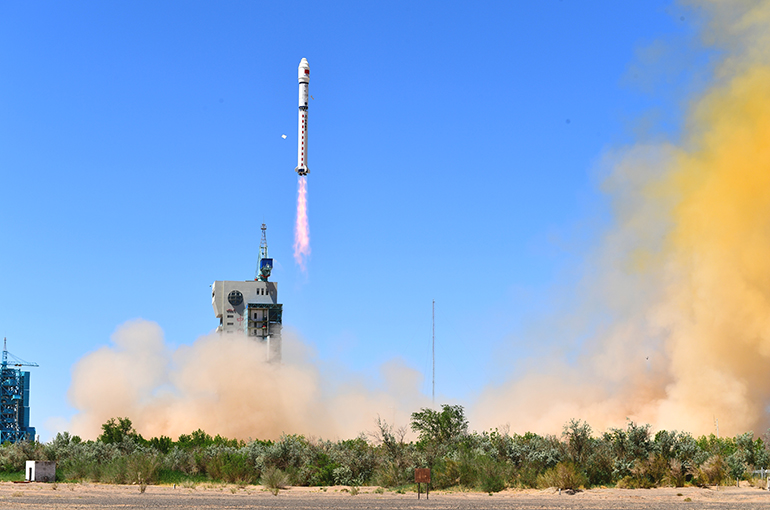
China's ADAspace is deploying a 2,800-satellite network to perform advanced AI processing directly in orbit. This system aims to bypass latency issues associated with ground infrastructure by handling massive data tasks outside of Earth. The development signals a new global race for orbital computing capabilities alongside competing plans from U.S. firms like SpaceX.
DeepSeek released its open-source V4 AI model, which features a 1 million token context window and significantly reduced operational costs. This launch directly challenges market leaders by offering high technical capacity at a lower price point, signaling an escalation in the global AI competition.
OpenAI CEO Sam Altman apologized after the Tumbler Ridge mass shooting, admitting his company failed to notify authorities about a high-risk user's AI interactions. The core issue is that internal policies did not require external reporting at the time of the incident, raising questions about current AI safety standards versus public safety mandates. This places immediate scrutiny on how large tech platforms handle dangerous content generation.

Insilico Medicine has nominated a drug candidate, ISM0387, which is currently only in the preclinical stage despite promotional claims of being fully developed. This highlights that while AI models are advancing drug discovery, regulatory validation and independent scientific review remain crucial steps before any treatment can reach patients.
