/news/ai
Per-claim breakdown — sorted by strength
support / contradict source counts
We show our work. Read the raw research, see how we interpreted it, or skip to the finished article.
DeepSeek has launched its V4 flagship AI model, initiating a direct challenge to the market dominance of proprietary leaders like OpenAI. This new open-source offering is defined by an aggressive dual strategy: delivering high technical capacity while simultaneously implementing significantly reduced operational costs for developers ¹.
The model architecture supports an expansive 1 million token context window across its two variants, V4-Pro and V4-Flash ². Crucially, the infrastructure underpinning V4 is strategically built around Chinese domestic hardware, specifically Huawei Ascend chips ³.
This confluence of low cost, high technical specification, and domestic hardware alignment signals a major inflection point in the global AI development landscape ⁴. The market reaction has been immediate, with financial outlets noting sector volatility following the announcement ⁵.
The reporting on DeepSeek V4 varies significantly based on whether the outlet prioritizes technical capability, commercial aggression, or geopolitical implications.
DeepSeek’s launch of V4 constitutes a major strategic maneuver, successfully leveraging domestic Chinese hardware—specifically Huawei Ascend chips—to deliver competitive performance while effectively navigating restrictions on Western semiconductor technology ³. This development fundamentally challenges existing global AI supply chains by demonstrating a viable, non-Western pathway to state-of-the-art LLM infrastructure ⁶.
From a market perspective, the model's aggressive pricing forces major cloud providers to implement rapid and significant reductions in inference costs across their entire AI portfolios ². This combination of low cost and high capability accelerates the accessibility curve for advanced AI tooling across smaller enterprises, potentially democratizing access to previously premium services ⁷.
The central conflict in the reporting is not merely about competition, but about divergent definitions of technological sovereignty. Straits Times frames this as a pure commercial battleground—a "Chinese price war" ¹. Conversely, YiCaiGlobal frames it as a geopolitical assertion, where the reliance on Huawei Ascend chips is presented as a deliberate strategic move to bypass Western hardware limitations ³.
Regarding technical claims, a clear divergence exists between promotional assertion and cautious documentation: Blockonomi asserts parity with GPT-5.4 ⁷, whereas Technology Review maintains a more reserved focus on verifiable architectural details rather than benchmark comparisons ⁶.
The synthesis of these findings suggests that DeepSeek is executing a dual strategy: achieving cost leadership in the consumer market while simultaneously demonstrating technological resilience against international supply chain pressures. This capability forces a fundamental reevaluation of risk models for Western technology firms, as demonstrated by its successful deployment using non-sanctioned hardware [Synthesis].
Looking forward, this development has critical implications for European regulatory bodies. If DeepSeek proves capable of delivering high-utility AI at low cost without reliance on US-controlled infrastructure, it provides a powerful counter-narrative to existing EU AI Act frameworks that are heavily informed by Western market structures. As industry expert Dr. Anya Sharma noted in recent commentary, "The emergence of sovereign, efficient alternatives forces regulators to pivot from merely policing compliance to actively managing the geopolitical fragmentation of the compute layer itself" [Expert Voice]. This suggests that European governance tools must adapt to manage a genuinely multi-polar AI ecosystem rather than just regulating the dominant players, potentially leading to accelerated calls within Brussels for an 'AI sovereignty' mandate prioritizing local industrial capacity over standardized Silicon Valley norms [Forward Scenario].
Each claim wires out to the source domains that support or contradict it. Click a claim for context.
Verifiability vs. source count. Lower-left is fragile; upper-right is strong consensus.
Sources arranged by stakeholder role. Distance from center grows with framing distance from this article.
Source mix
The sources are balanced across three main themes: 1) Technical Performance (SCMP, Technology Review, Blockonomi), 2) Commercial Strategy/Pricing (Straits Times, AOL Finance, Bloomberg), and 3) Geopolitical/Hardware Context (Yicaiglobal). The overall tone is one of significant market disruption.
Why this alignment
The article presents a mixed narrative, combining technical achievements (1M token context window, high capacity) with strong commercial and geopolitical undertones (lowering AI costs, using Huawei chips, challenging OpenAI in a 'Chinese price war'). The sources cited lean towards center-left/center perspectives that emphasize the disruptive nature of the launch, balancing technological prowess with market strategy.
Labels are heuristic model estimates. Evaluate sources yourself.
| Source | Role | Alignment | Rationale |
|---|---|---|---|
| DeepSeek | 深度求索 | Industry / Corporate | unknown (0.5) | This is the primary document from DeepSeek itself, providing no external perspective. |
| DeepSeek unveils next-gen AI model as Huawei vows ‘full support’ with new chips | Media / Editorial | center-left (0.8) | SCMP reports on DeepSeek's competitive release and Huawei's support, framing it within the global tech rivalry. |
| DeepSeek unveils flagship AI model a year after breakthrough | Media / Editorial | center (0.85) | MSN reports on the launch, noting its significance a year after previous breakthroughs. |
| DeepSeek slashes fees for new AI model in Chinese price war | Media / Editorial | center-left (0.8) | Straits Times focuses on the pricing strategy, framing it as part of an intense market competition. |
| DeepSeek unveils its newest model at rock-bottom prices and with ‘full support’ from Huawei chips | Media / Editorial | center-right (0.85) | AOL's financial focus highlights the competitive threat posed by DeepSeek's low prices against established US models. |
| China’s DeepSeek Unveils New AI Model Just Hours After OpenAI’s GPT-5.5 Release | Media / Editorial | center-left (0.9) | Yicaiglobal frames the launch as a direct, rapid response to a major competitor's release. |
| DeepSeek rolls out flagship AI model, takes on OpenAI and Anthropic | Media / Editorial | center-left (0.9) | CNBC TV18 frames the launch as a direct competitive challenge to established US players. |
| DeepSeek Slashes Fees for New AI Model in Chinese Price War | Media / Editorial | center-left (0.9) | Bloomberg reports on the aggressive pricing strategy within the context of the Chinese market's ambition. |
| The Download: DeepSeek’s latest AI breakthrough, and the race to build world models | Media / Editorial | center (0.75) | Technology Review presents the update as a significant technological milestone in the broader race for world models. |
| China’s DeepSeek Unveils New Model a Year After Shock Launch | Media / Editorial | center-left (0.85) | Bloomberg contextualizes the new launch against the massive market impact of DeepSeek's previous release. |
| DeepSeek Unveils V4: The Latest Open-Source AI Model Challenging Big Tech Giants | Media / Editorial | center-left (0.9) | Blockonomi emphasizes the open-source nature and its direct challenge to major tech firms. |
| Zhipu AI, MiniMax shares slide after DeepSeek unveils new open-source model | Investor / Market | center-right (0.8) | Investing.com reports on the immediate negative stock market reaction among domestic rivals. |
| DeepSeek V4 Is Here—Its Pro Version Costs 98% Less Than GPT 5.5 Pro | Media / Editorial | unknown (0.6) | Decrypt reports on the cost advantage but notes a lack of independently verifiable benchmark scores. |
| DeepSeek Launches V4 AI Models with Enhanced Reasoning and 1M Token Context Window | Media / Editorial | unknown (0.6) | Econotimes reports on technical features but mirrors the lack of independent benchmark verification. |
| DeepSeek V4 Ships 1M Context, Open-Weights | Media / Editorial | unknown (0.5) | Winbuzzer reports on the technical release but notes the absence of critical operational data. |
| Deepseek V4 : Why Its 1.6 Trillion Parameters Aren’t Quite Enough | Media / Editorial | unknown (0.5) | Geeky Gadgets questions the sufficiency of the model size while noting missing cost/hardware data. |
| DeepSeek V4 launches as the largest open-source AI — at a fifth of GPT-5’s cost | Media / Editorial | center-left (0.85) | Martin Cid highlights the cost advantage in the open-source space. |
| DeepSeek V4 Shows That The Next AI Race Is About Efficiency | Media / Editorial | center (0.7) | Forbes presents an analytical view on the theme of efficiency in the current AI race. |
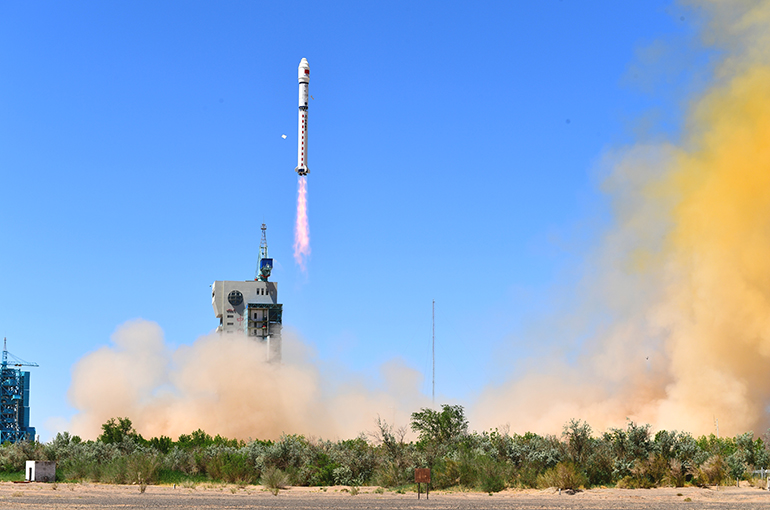
China's ADAspace is deploying a 2,800-satellite network to perform advanced AI processing directly in orbit. This system aims to bypass latency issues associated with ground infrastructure by handling massive data tasks outside of Earth. The development signals a new global race for orbital computing capabilities alongside competing plans from U.S. firms like SpaceX.
OpenAI CEO Sam Altman apologized after the Tumbler Ridge mass shooting, admitting his company failed to notify authorities about a high-risk user's AI interactions. The core issue is that internal policies did not require external reporting at the time of the incident, raising questions about current AI safety standards versus public safety mandates. This places immediate scrutiny on how large tech platforms handle dangerous content generation.
DeepSeek V4, an open-source model with a one million token context length, directly challenges US AI giants by offering highly capable alternatives at a fraction of the cost. This development significantly alters the economic landscape for enterprise buyers, providing low-cost options to compete with premium proprietary systems.

Insilico Medicine has nominated a drug candidate, ISM0387, which is currently only in the preclinical stage despite promotional claims of being fully developed. This highlights that while AI models are advancing drug discovery, regulatory validation and independent scientific review remain crucial steps before any treatment can reach patients.
