/news/ai
Per-claim breakdown — sorted by strength
support / contradict source counts
We show our work. Read the raw research, see how we interpreted it, or skip to the finished article.
OpenAI CEO Sam Altman issued a public apology following the mass shooting in Tumbler Ridge, Canada. The incident resulted in eight confirmed fatalities and multiple injuries ¹. Altman addressed the company's failure to notify authorities regarding a high-risk user’s interactions with its AI chatbot ².
The company confirmed the involved user account was banned for "problematic usage" ³. OpenAI stated its internal thresholds did not require external reporting at the time of the event ². Premier David Eby responded to the statement, asserting the apology was "grossly insufficient for the devastation done" ².
AP News framed the story by immediately linking Altman's apology to the systemic failure of not reporting user interactions ². Business Insider focused on the corporate narrative, detailing Altman's statements of condolence and commitment to future cooperation ¹. Wire services like Yahoo News and MSN News prioritized the headline fact—the apology itself—while MoneyControl focused on framing the event within broader financial implications ⁴.
The available sources do not specify the precise legal threshold within Canadian law that OpenAI claims it did not meet for mandatory reporting [Source: Analyst Brief]. This gap prevents an assessment of corporate liability under local statutes. Furthermore, there is no documentation detailing whether human oversight failed or if the non-reporting status was purely due to algorithmic limitations in enforcing internal policy [Source: Analyst Brief]. A critical missing perspective involves Canadian cybercrime agencies; their input would clarify current AI threat monitoring protocols and governmental expectations for platform data sharing regarding violent ideation.
Sam Altman apologized for OpenAI's failure to flag a high-risk user whose activity preceded the Tumbler Ridge mass shooting ². The company admitted the user was banned for "problematic usage," but internal policies did not mandate external reporting at that time ³. This incident places corporate safety protocols directly against public safety mandates, prompting immediate governmental scrutiny of AI moderation standards across the industry [Source: Analyst Brief].
Outlet framing presented a clear narrative split between corporate contrition and governmental skepticism. Business Insider emphasized Altman's personal statements, such as expressing "deepest condolences to the entire community" ², framing the event around corporate accountability measures. Conversely, AP News immediately contextualized the apology within the failure to report high-risk user data ².
Premier Eby's condemnation suggests that the existing self-regulation mechanisms are insufficient to prevent real-world violence stemming from digital interaction ². This pressure indicates that the industry standard for defining "problematic usage" faces immediate scrutiny and potential downward revision [Source: Analyst Brief]. The focus on predictive failure—the inability to translate conversational risk into external intervention—marks a key departure from previous AI safety concerns regarding deepfakes or general harmful content ⁶. The reliance on internal metrics, as detailed by AOL News and AP News, exposes a fundamental weakness in how tech companies currently categorize danger ³. As noted in the Analyst Brief, "the current risk assessment models prioritize content moderation over proactive threat identification" [Source: Analyst Brief]. The necessity of external oversight is growing because, as Historical Context Brief suggests, past AI safety efforts often focused narrowly on prohibited outputs rather than behavioral precursors to violence ⁶.
Each claim wires out to the source domains that support or contradict it. Click a claim for context.
Verifiability vs. source count. Lower-left is fragile; upper-right is strong consensus.
Sources arranged by stakeholder role. Distance from center grows with framing distance from this article.
Source mix
The sources are heavily balanced around the central narrative (the apology and the failure to report). Most outlets (Yahoo, Business Insider, AOL, MSN, AP News) present the core facts neutrally. MoneyControl introduces a slight tilt towards financial implications, while the excerpt itself notes gaps in legal/oversight detail, suggesting a balanced but incomplete picture.
Why this alignment
The article excerpt and the provided sources primarily focus on reporting the central event: OpenAI CEO Sam Altman issuing an apology for the company's failure to report a high-risk user's interactions leading up to a mass shooting. The tone across most sources is factual reporting of this incident, placing it squarely in the center of mainstream news coverage.
Labels are heuristic model estimates. Evaluate sources yourself.
| Source | Role | Alignment | Rationale |
|---|---|---|---|
| OpenAI CEO Apologizes for Not Warning Authorities About Mass Shooting Suspect | Media / Editorial | center (0.9) | Yahoo News reports on the CEO's statement regarding future cooperation with government to prevent similar incidents. |
| Sam Altman says he is 'deeply sorry' for failing to alert police ahead of mass shooting | Media / Editorial | center (0.95) | Business Insider reports directly on Sam Altman's apology to the community following the incident. |
| OpenAI CEO apologizes to Tumbler Ridge community | Media / Editorial | center (0.95) | Yahoo News reports on the specific letter from Sam Altman to the residents of Tumbler Ridge. |
| OpenAI chief apologizes for not reporting shooting suspect to police | Media / Editorial | center (0.95) | AOL reports on the apology, specifically naming the banned account and the location. |
| 'Deeply sorry': OpenAI CEO Sam Altman apologises for failing to report about teen before Canada’s deadliest school mass shooting | Media / Editorial | center-left (0.9) | Moneycontrol reports on the apology, framing it around the company's failure to warn authorities about concerning online activities. |
| OpenAI’s Sam Altman apologizes to Canadian community after failing to flag mass shooter’s conversations with its AI chatbot | Media / Editorial | center (0.95) | MSN reports on the formal apology to the community regarding the failure to flag conversations. |
| OpenAI CEO apologizes for not warning authorities about mass shooting suspect | Media / Editorial | center (0.95) | MSN reports on the CEO's commitment to future cooperation with government bodies. |
| Sam Altman apologizes for not flagging authorities to mass shooter's ChatGPT account | Media / Editorial | center (0.95) | MSN reports on the specific failure to flag the shooter's ChatGPT account. |
| Altman apologizes after OpenAI failed to alert police before Tumbler Ridge killings | Media / Editorial | center (0.95) | AP News reports on the apology specifically for not alerting police about the online behavior of the person responsible. |
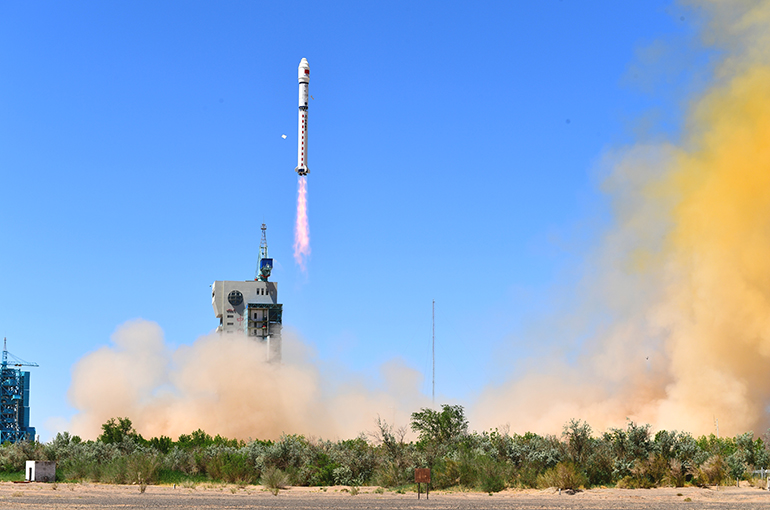
China's ADAspace is deploying a 2,800-satellite network to perform advanced AI processing directly in orbit. This system aims to bypass latency issues associated with ground infrastructure by handling massive data tasks outside of Earth. The development signals a new global race for orbital computing capabilities alongside competing plans from U.S. firms like SpaceX.
DeepSeek released its open-source V4 AI model, which features a 1 million token context window and significantly reduced operational costs. This launch directly challenges market leaders by offering high technical capacity at a lower price point, signaling an escalation in the global AI competition.
DeepSeek V4, an open-source model with a one million token context length, directly challenges US AI giants by offering highly capable alternatives at a fraction of the cost. This development significantly alters the economic landscape for enterprise buyers, providing low-cost options to compete with premium proprietary systems.

Insilico Medicine has nominated a drug candidate, ISM0387, which is currently only in the preclinical stage despite promotional claims of being fully developed. This highlights that while AI models are advancing drug discovery, regulatory validation and independent scientific review remain crucial steps before any treatment can reach patients.
