/news/ai

Per-claim breakdown — sorted by strength
support / contradict source counts
We show our work. Read the raw research, see how we interpreted it, or skip to the finished article.
OpenAI launched GPT-5.5, a "High" risk model capable of amplifying harm, alongside specialized defense tools like GPT-5.4-Cyber. This dual release signals that while general AI is broadly accessible, potent cyber capabilities are being reserved for strictly vetted enterprise use. Readers should note this shift suggests future regulatory focus may move toward monitoring access protocols rather than just broad model safety.
The launch of OpenAI's GPT-5.5 and its specialized counterparts has been framed by media outlets as a fundamental conflict between inherent risk and strategic defense capability. CNBC positioned the release primarily through a regulatory lens, noting that while GPT-5.5 is classified as "High" risk, it possesses the capacity to "amplify existing pathways to severe harm" ¹. In contrast, Forbes framed the announcement not as a safety disclosure but as a competitive technological escalation, focusing heavily on how specialized tools like GPT-5.4-Cyber "raises the stakes for AI and security" ². This divergence establishes the core narrative tension: whether the focus should be on mitigating generalized danger or leveraging specialized, high-impact defensive tools.
Beyond this primary conflict, coverage segmented into functional and governmental narratives:
The current reporting landscape lacks several critical perspectives necessary for a balanced assessment of this deployment strategy:
OpenAI has introduced GPT-5.5 alongside highly specialized defensive tools such as GPT-5.4-Cyber, which reportedly possesses the capability to analyze compiled software for malware without requiring source code access ². This release signals a strategic adoption of dual deployment: making the general model available to subscribers while rigorously restricting advanced cyber defense capabilities behind strict vetting programs ³.
This strategic bifurcation is significant for markets and security professionals because it demonstrates a clear segmentation of AI power: generalist tools are broadly accessible, while potent, specialized applications are reserved for controlled enterprise environments. This suggests that future regulatory focus may shift away from broad model safety toward monitoring the access protocols surrounding these high-impact cyber tools.
Outlet coverage demonstrates a significant divergence in narrative focus: whether the primary subject is risk assessment or strategic control. This difference reflects two distinct, competing market concerns: general consumer safety and specialized enterprise security needs.
The reporting also reveals a tension regarding OpenAI’s access philosophy, clearly separating the general model from specialized tools:
Conclusion: The evidence strongly indicates that the media coverage presents a deliberate dichotomy: broad general capability is made available to the public sphere via GPT-5.5, while highly potent applications are deliberately segmented and reserved for controlled, vetted enterprise environments via models like GPT-5.4-Cyber. Furthermore, Yahoo's reporting ⁵ confirms state-level interest in these specialized releases, validating the technical scope detailed by Forbes and TechTimes, though this governmental reporting lacks the deep technical focus found in InfoSecurity Magazine's analysis ⁴.
Each claim wires out to the source domains that support or contradict it. Click a claim for context.
Verifiability vs. source count. Lower-left is fragile; upper-right is strong consensus.
Sources arranged by stakeholder role. Distance from center grows with framing distance from this article.
Source mix
The provided sources are relatively balanced in their coverage of the topic (GPT-5.5/Cyber Tools) but lean toward a 'center' to 'center-right' perspective regarding the technology's capabilities and strategic deployment. CNBC is regulatory/risk-aware (center), Forbes is technologically optimistic/competitive (center-right), TechTimes/InfoSecurity Magazine are technical implementations (center), and Yahoo focuses on geopolitical management (center). The article itself highlights a lack of critical, independent voices, suggesting an imbalance in the overall media landscape it describes.
Why this alignment
The article itself presents a 'mixed' view by detailing a core tension: the conflict between inherent risk (CNBC framing) and strategic defense capability/technological escalation (Forbes framing). It then segments coverage into functional (TechTimes, InfoSecurity Magazine) and governmental (Yahoo) narratives. However, the final section strongly advocates for a critical perspective, pointing out missing voices (independent researchers, infrastructure operators), which introduces a strong element of skepticism or caution that balances the initial reporting.
Labels are heuristic model estimates. Evaluate sources yourself.
| Source | Role | Alignment | Rationale |
|---|---|---|---|
| OpenAI announces GPT-5.5, its latest artificial intelligence model | Media / Editorial | center (0.9) | CNBC is a major financial news outlet that generally maintains a centrist stance on technology and business developments. |
| OpenAI briefs US agencies, Five Eyes on new cybersecurity product, Axios reports | Media / Editorial | center (0.85) | Yahoo News reports on the briefing of US agencies and Five Eyes members, indicating a focus on government and security implications. |
| OpenAI Unveils Its New, More Powerful Model | Media / Editorial | center-left (0.9) | The New York Times covers major technology developments with a focus on societal impact and accessibility, often framing corporate actions within a broader context. |
| OpenAI Unveils GPT-5.5 to Field Tasks With Limited Instructions | Media / Editorial | center (0.9) | Bloomberg is a prominent financial and business news service that covers corporate strategy, positioning this report as competitive market maneuvering. |
| OpenAI Debuts GPT-5.4-Cyber That Specializes in Cybersecurity—Is It for Public Use? | Media / Editorial | center (0.85) | TechTimes focuses specifically on technology news, reporting on the specialized nature of the new cybersecurity model and its accessibility. |
| OpenAI Unveils GPT-5.4-Cyber for Improving Cyber Defense With AI | Media / Editorial | center (0.8) | InfoSecurity Magazine targets the cybersecurity industry, framing the release in direct comparison to competitor moves. |
| OpenAI’s New GPT-5.4-Cyber Raises The Stakes For AI And Security | Media / Editorial | center-right (0.85) | Forbes often features commentary from industry leaders and analysts, framing the release as a significant escalation in the competitive landscape of AI security. |
| How OpenAI's Secure AI Shields Financial Giants From Threats | Industry / Corporate | center-left (0.8) | FinTech Magazine focuses on the intersection of finance and technology, highlighting the protective applications of the AI for large financial institutions. |
| OpenAI MYTHOS, Gemini Agents & Anthropic’s New Strategy Explained | Media / Editorial | center (0.8) | Geeky Gadgets provides general tech commentary, framing the development as part of a broader strategic move by OpenAI. |
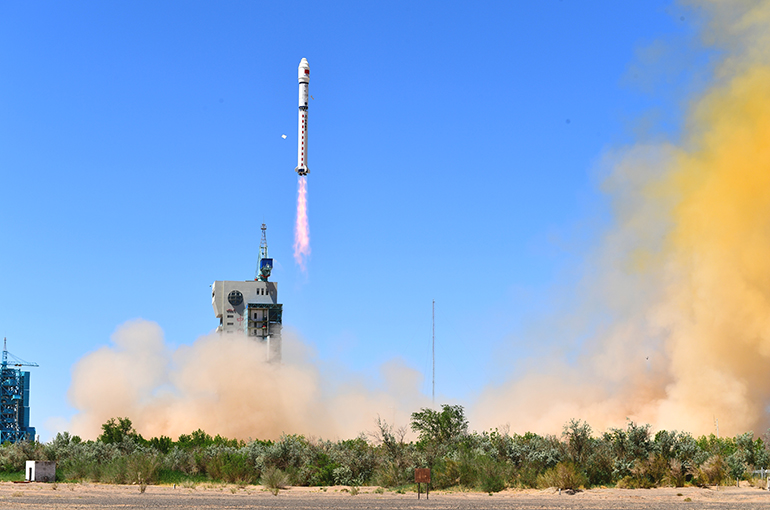
China's ADAspace is deploying a 2,800-satellite network to perform advanced AI processing directly in orbit. This system aims to bypass latency issues associated with ground infrastructure by handling massive data tasks outside of Earth. The development signals a new global race for orbital computing capabilities alongside competing plans from U.S. firms like SpaceX.
DeepSeek released its open-source V4 AI model, which features a 1 million token context window and significantly reduced operational costs. This launch directly challenges market leaders by offering high technical capacity at a lower price point, signaling an escalation in the global AI competition.
OpenAI CEO Sam Altman apologized after the Tumbler Ridge mass shooting, admitting his company failed to notify authorities about a high-risk user's AI interactions. The core issue is that internal policies did not require external reporting at the time of the incident, raising questions about current AI safety standards versus public safety mandates. This places immediate scrutiny on how large tech platforms handle dangerous content generation.
DeepSeek V4, an open-source model with a one million token context length, directly challenges US AI giants by offering highly capable alternatives at a fraction of the cost. This development significantly alters the economic landscape for enterprise buyers, providing low-cost options to compete with premium proprietary systems.
