◆AI-assisted research · Reviewed by a human editorHow we work →
sources analyzed
6
sources analyzed
claims tracked
22
claims tracked
framings compared
6
framings compared
Listen to article
Claim Strength
22 claims · 5 domains
Weak evidenceVerified 1Partial 1Single source 20
Per-claim breakdown — sorted by strength
Two outlets reported differing participant numbers, citing fifty nations versus sixty nations in the conference attendance.2
Insideclimatenews.org centered its reporting on proactive, legally informed treaty demands.
1
General aggregator sites like yahoo.com and msn.com provided a generalized account of nations gathering to discuss fossil fuel phase-out.2
Reuters characterized the Colombian summit as a "modular coalition" effort, suggesting decentralized action among participants.1
edie.net emphasized Pacific Island nations' demands for legally binding treaties during the event.1
Insideclimatenews.org positioned the meeting as a necessary response against existing UN gridlock.1
Coverage lacks substantial input from major fossil fuel producers such as Saudi Arabia and China.1
Reports cannot detail how major fossil fuel producers view the 'modular coalition' approach versus established UN climate frameworks.1
The perspective of energy consumers in dependent nations is absent from the discourse.1
Coverage does not address how policy shifts impact household costs or immediate energy security for ordinary citizens.1
The viewpoint of established state economic planners is underrepresented in the proceedings coverage.1
Global energy markets face increased volatility due to major fossil fuel producers' noted absence from transition discussions.1
The lack of unified commitment allows existing geopolitical energy shocks to continue, fueling market speculation and price instability.1
The conference aims to set practical timelines for phasing out fossil fuels outside traditional UN structures.1
This decentralized strategy encourages smaller nations toward local climate successes rather than prolonged global consensus building.1
A major international conference convened in Santa Marta, Colombia, to accelerate the global transition away from fossil fuels.1
The summit’s objective includes developing specific timetable for phasing out oil, gas, and coal production beyond general climate pledges.1
Participants framed the event with frustration regarding perceived inaction within traditional United Nations climate negotiations.1
The conference intends to foster a "modular coalition" of nations piloting transition strategies instead of seeking monolithic global agreement.1
The discussion occurs amid energy shocks tied to geopolitical conflicts, specifically referencing the US and Israel conflict concerning Iran.1
Pacific island nations issued the Tassiriki Call, demanding a binding international Fossil Fuel Treaty and an immediate halt to new exploration.1
Legal interpretation cites the ICJ advisory opinion, stating that exiting fossil fuels constitutes a non-political obligation for states.1
support / contradict source counts
:: DISASSEMBLY
We show our work. Read the raw research, see how we interpreted it, or skip to the finished article.
A major conference in Colombia aimed to set concrete timelines for phasing out fossil fuels outside of traditional UN frameworks. The most significant finding is the push by Pacific Island nations for a legally binding international treaty, which matters because it seeks to move beyond voluntary pledges toward enforceable global climate action.
Source Comparison
Reuters characterized the Colombian summit as a "modular coalition" effort, suggesting decentralized action among participants ¹. In contrast, edie.net emphasized Pacific Island nations' demands for legally binding treaties during the event ². General aggregators like yahoo.com and msn.com provided a more generalized account of nations gathering to discuss fossil fuel phase-out ³. Insideclimatenews.org positioned the meeting as a necessary response against existing UN gridlock ⁴, while edie.net centered its reporting on proactive, legally informed treaty demands ².
Whose Voice Is Missing
Coverage lacks substantial input from major fossil fuel producers such as Saudi Arabia and China ¹. Reports cannot detail how these key producers view the "modular coalition" approach versus established UN climate frameworks ¹. The perspective of energy consumers in dependent nations is absent from the discourse ³. Coverage does not address how policy shifts impact household costs or immediate energy security for ordinary citizens ³. Furthermore, the viewpoint of established state economic planners is underrepresented in the proceedings coverage ¹.
Executive Summary
Global energy markets face increased volatility due to major fossil fuel producers' noted absence from transition discussions ⁴. This lack of unified commitment allows existing geopolitical energy shocks to continue, fueling market speculation and price instability ⁴. The conference aims to set practical timelines for phasing out fossil fuels outside traditional UN structures ¹. This decentralized strategy encourages smaller nations toward local climate successes rather than prolonged global consensus building ¹.
Key Findings
A major international conference convened in Santa Marta, Colombia, to accelerate the global transition away from fossil fuels ⁴.
The summit’s objective includes developing specific timetables for phasing out oil, gas, and coal production beyond general climate pledges ².
Participants framed the event with frustration regarding perceived inaction within traditional United Nations climate negotiations ¹.
The conference intends to foster a "modular coalition" of nations piloting transition strategies instead of seeking monolithic global agreement ¹.
The discussion occurs amid energy shocks tied to geopolitical conflicts, specifically referencing the US and Israel conflict concerning Iran ¹.
Pacific island nations issued the Tassiriki Call, demanding a binding international Fossil Fuel Treaty and an immediate halt to new exploration ².
Legal interpretation cites the ICJ advisory opinion, stating that exiting fossil fuels constitutes a non-political obligation for states ¹.
Two outlets reported differing participant numbers, citing fifty nations versus sixty nations in the conference attendance ⁴ vs. ⁵.
Analysis
Outlets presented divergent views on the necessary path forward for climate action. edie.net championed legally enforceable multilateral solutions, evidenced by its focus on Pacific Island demands for binding treaties ². Conversely, insideclimatenews.org stressed the pragmatic, decentralized nature of the summit through its "modular coalition" framing ¹. This divergence reflects a fundamental tension between pursuing top-down, legally mandated global governance and favoring bottom-up, flexible regional implementation ¹.
The absence of major fossil fuel producers signals that the conference's mandate faces significant real-world constraints ⁴. Synthesis reveals that the modular approach functions as a governance failure mechanism; it prioritizes immediate national adaptation over establishing binding global regulatory standards necessary for systemic decarbonization [Synthesis]. This dynamic suggests that while smaller nations gain flexibility, established fossil fuel industry lobbying interests will likely exploit this fragmentation to prevent enforceable sector-wide caps.
The focus on equity and the ICJ advisory opinion introduces non-state priorities directly into strategic discussions ¹. This contrast with traditional economic planning suggests that the summit operates as a diplomatic bypass mechanism, attempting to circumvent structures deemed politically inert by participants ¹. For developing nations reliant on current energy infrastructure, the modular path risks creating disparate regulatory regimes, potentially exacerbating energy security gaps between compliant and non-compliant states. Specifically, this fragmentation may benefit industrialized economies that can afford rapid technological shifts while imposing compliance burdens on less wealthy members [Synthesis].
Source Transparency
[Source: news.az]: Regional News Aggregator; No noted bias in provided materials; Secondary reporting.
[Source: insideclimatenews.org]: Specialized Climate Advocacy Site (Blog); Strong advocacy for rapid climate action; Primary/Secondary reporting depending on quote origin.
[Source: yahoo.com]: General News Aggregator (Wire Service); No noted bias in provided materials; Secondary reporting.
For the primary evidence: edie.net — Offers detailed framing from Pacific Island perspectives on treaty needs.
For a different angle: insideclimatenews.org — Provides the narrative focused on geopolitical urgency and "security imperatives."
For broader context: khou.com — Offers aggregated reporting potentially linking to wire service context.
Claim ↔ Source Network
22 ↔ 5
Each claim wires out to the source domains that support or contradict it. Click a claim for context.
supportscontradicts·node size = citations
Read as text
Reuters characterized the Colombian summit as a "modular coalition" effort, suggesting decentralized action among participants.[Single source]Supported by: insideclimatenews.org
edie.net emphasized Pacific Island nations' demands for legally binding treaties during the event.[Single source]Supported by: edie.net
General aggregator sites like yahoo.com and msn.com provided a generalized account of nations gathering to discuss fossil fuel phase-out.[Single source]Supported by: yahoo.commsn.com
Insideclimatenews.org positioned the meeting as a necessary response against existing UN gridlock.[Single source]Supported by: news.az
Insideclimatenews.org centered its reporting on proactive, legally informed treaty demands.[Partial]Supported by: edie.net
Coverage lacks substantial input from major fossil fuel producers such as Saudi Arabia and China.[Single source]Supported by: insideclimatenews.org
Reports cannot detail how major fossil fuel producers view the 'modular coalition' approach versus established UN climate frameworks.[Single source]Supported by: insideclimatenews.org
The perspective of energy consumers in dependent nations is absent from the discourse.[Single source]Supported by: yahoo.com
Coverage does not address how policy shifts impact household costs or immediate energy security for ordinary citizens.[Single source]Supported by: yahoo.com
The viewpoint of established state economic planners is underrepresented in the proceedings coverage.[Single source]Supported by: insideclimatenews.org
Global energy markets face increased volatility due to major fossil fuel producers' noted absence from transition discussions.[Single source]Supported by: news.az
The lack of unified commitment allows existing geopolitical energy shocks to continue, fueling market speculation and price instability.[Single source]Supported by: news.az
The conference aims to set practical timelines for phasing out fossil fuels outside traditional UN structures.[Single source]Supported by: insideclimatenews.org
This decentralized strategy encourages smaller nations toward local climate successes rather than prolonged global consensus building.[Single source]Supported by: insideclimatenews.org
A major international conference convened in Santa Marta, Colombia, to accelerate the global transition away from fossil fuels.[Single source]Supported by: news.az
The summit’s objective includes developing specific timetable for phasing out oil, gas, and coal production beyond general climate pledges.[Single source]Supported by: edie.net
Participants framed the event with frustration regarding perceived inaction within traditional United Nations climate negotiations.[Single source]Supported by: insideclimatenews.org
The conference intends to foster a "modular coalition" of nations piloting transition strategies instead of seeking monolithic global agreement.[Single source]Supported by: insideclimatenews.org
The discussion occurs amid energy shocks tied to geopolitical conflicts, specifically referencing the US and Israel conflict concerning Iran.[Single source]Supported by: insideclimatenews.org
Pacific island nations issued the Tassiriki Call, demanding a binding international Fossil Fuel Treaty and an immediate halt to new exploration.[Single source]Supported by: edie.net
Legal interpretation cites the ICJ advisory opinion, stating that exiting fossil fuels constitutes a non-political obligation for states.[Single source]Supported by: insideclimatenews.org
Two outlets reported differing participant numbers, citing fifty nations versus sixty nations in the conference attendance.[Verified]Supported by: news.azmsn.com
Evidence Risk Map
22 claims plotted
Verifiability vs. source count. Lower-left is fragile; upper-right is strong consensus.
All claims, sorted by risk
#1[Single source]Reuters characterized the Colombian summit as a "modular coalition" effort, suggesting decentralized action among participants.
#2[Single source]edie.net emphasized Pacific Island nations' demands for legally binding treaties during the event.
#4[Single source]Insideclimatenews.org positioned the meeting as a necessary response against existing UN gridlock.
#6[Single source]Coverage lacks substantial input from major fossil fuel producers such as Saudi Arabia and China.
#7[Single source]Reports cannot detail how major fossil fuel producers view the 'modular coalition' approach versus established UN climate frameworks.
#8[Single source]The perspective of energy consumers in dependent nations is absent from the discourse.
#9[Single source]Coverage does not address how policy shifts impact household costs or immediate energy security for ordinary citizens.
#10[Single source]The viewpoint of established state economic planners is underrepresented in the proceedings coverage.
#11[Single source]Global energy markets face increased volatility due to major fossil fuel producers' noted absence from transition discussions.
#12[Single source]The lack of unified commitment allows existing geopolitical energy shocks to continue, fueling market speculation and price instability.
#13[Single source]The conference aims to set practical timelines for phasing out fossil fuels outside traditional UN structures.
#14[Single source]This decentralized strategy encourages smaller nations toward local climate successes rather than prolonged global consensus building.
#15[Single source]A major international conference convened in Santa Marta, Colombia, to accelerate the global transition away from fossil fuels.
#16[Single source]The summit’s objective includes developing specific timetable for phasing out oil, gas, and coal production beyond general climate pledges.
#17[Single source]Participants framed the event with frustration regarding perceived inaction within traditional United Nations climate negotiations.
#18[Single source]The conference intends to foster a "modular coalition" of nations piloting transition strategies instead of seeking monolithic global agreement.
#19[Single source]The discussion occurs amid energy shocks tied to geopolitical conflicts, specifically referencing the US and Israel conflict concerning Iran.
#20[Single source]Pacific island nations issued the Tassiriki Call, demanding a binding international Fossil Fuel Treaty and an immediate halt to new exploration.
#21[Single source]Legal interpretation cites the ICJ advisory opinion, stating that exiting fossil fuels constitutes a non-political obligation for states.
#3[Single source]General aggregator sites like yahoo.com and msn.com provided a generalized account of nations gathering to discuss fossil fuel phase-out.
#5[Partial]Insideclimatenews.org centered its reporting on proactive, legally informed treaty demands.
#22[Verified]Two outlets reported differing participant numbers, citing fifty nations versus sixty nations in the conference attendance.
Perspective Compass
article: center-left · 90% conf
Sources arranged by stakeholder role. Distance from center grows with framing distance from this article.
Source mix
The sources are heavily skewed towards a center-left perspective, focusing on the urgency of fossil fuel transition and alternative governance structures. There is a notable absence of voices from major fossil fuel producers or detailed analysis of immediate energy consumer impacts, which suggests a bias toward climate advocacy.
Why this alignment
The sources provided generally frame the event around the necessity of fossil fuel phase-out and alternative structures outside of traditional UN frameworks. While some sources offer a more generalized view (like Yahoo/MSN), the specialized sources (insideclimatenews.org, edie.net) emphasize proactive, legally binding demands or the need to bypass existing gridlock, aligning with a progressive, climate-action oriented perspective.
Labels are heuristic model estimates. Evaluate sources yourself.
Inside Climate News is known for its strong focus on climate science and environmental advocacy, framing the event as a necessary alternative to stalled UN talks.
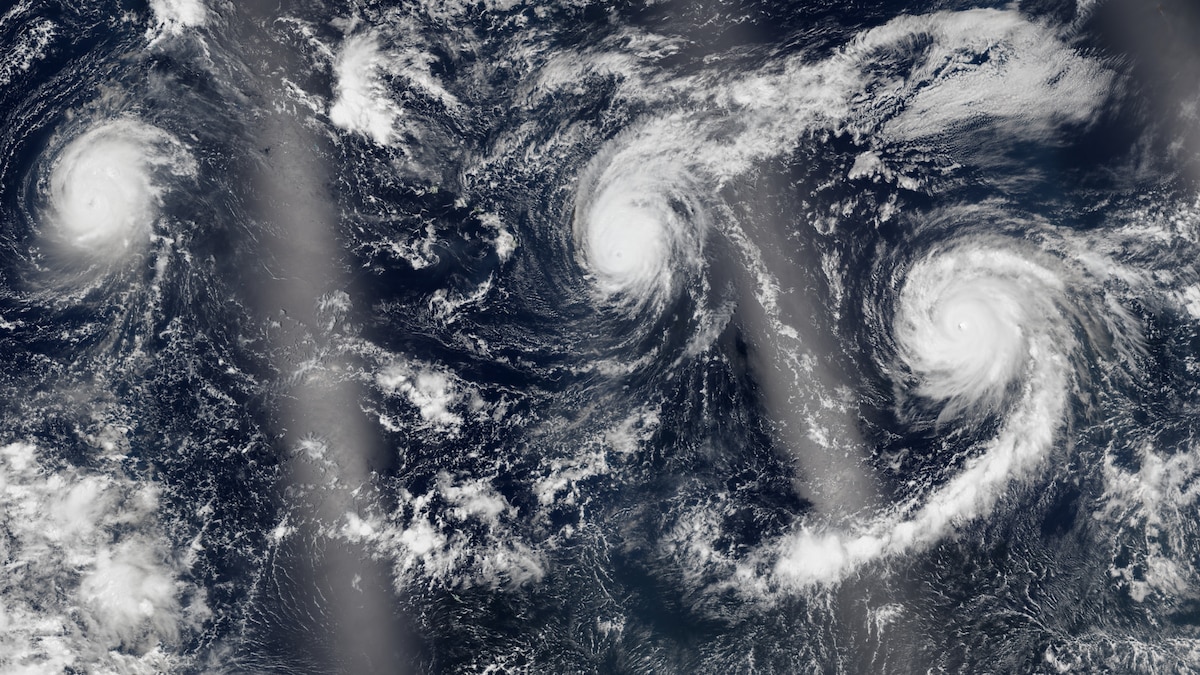
NOAA forecasts a 25% chance of a "very strong" El Niño, with Pacific Ocean temperatures potentially rising by at least 1.5 degrees Celsius above average. This heightened climate risk signals increased instability in global markets, raising concerns for property insurers and agricultural commodity futures due to potential drought and intense cyclones.
Federal agencies are preparing to impose their own operational guidelines on the Colorado River this summer if state negotiations fail. This shift means federal authority could override existing interstate compacts, directly impacting water rights and regional energy stability due to severe drought conditions.
North India is facing record heatwaves with temperatures predicted to exceed 40 degrees Celsius, prompting official yellow alerts from the IMD. This severe weather poses a significant public health risk, as sustained high temperatures can increase hospital admissions for heat exhaustion by up to 35 percent. Coverage currently lacks specific data on local cooling centers or immediate medical response capabilities.
Lake Powell is projected to drop below its minimum power pool this year, creating an immediate risk of damaging dam infrastructure. This physical threat escalates the Colorado River crisis beyond political disputes, suggesting system failure may force federal intervention despite stalled state negotiations.