/news/climate-environment

Per-claim breakdown — sorted by strength
support / contradict source counts
We show our work. Read the raw research, see how we interpreted it, or skip to the finished article.
Lake Powell is projected to drop below its minimum power pool this year, creating an immediate risk of damaging dam infrastructure. This physical threat escalates the Colorado River crisis beyond political disputes, suggesting system failure may force federal intervention despite stalled state negotiations.
The Denver Post framed the Colorado River crisis as an immediate physical hazard threatening dam infrastructure. Conversely, WaterDesk focused its coverage on the political impasse among water-sharing states. The Denver Post reported that Lake Powell’s projected decline below minimum power pool risks damaging dam integrity ¹. WaterDesk, however, cited that negotiations among seven states have stalled for two years ².
Aspen Journalism framed the crisis through a lens of unmet expectations, suggesting severe conditions should compel "creative compromise" from stakeholders ². Bureau of Reclamation experts stated that under critically dry hydrology, all current alternatives result in system failure ¹. The Vail Daily presented the issue using language of reckoning, suggesting a fundamental shift was necessary for resource management ³.
Local sources adopted differing tones regarding the drought's permanence. The Fort Morgan Times reported using the phrase "a day of reckoning," suggesting a definitive moment for regional change ⁴. KVNF reported using opinion framing, suggesting a need for shifts in resource management ⁵. The divergence centers on reports emphasizing imminent physical risk versus those stressing political negotiation failure or climatic permanence.
Coverage lacks direct input from Tribal water rights authorities, whose treaty-based claims are central to any management redesign ¹. This absence prevents full discussion of equitable distribution concerns inherent in water allocation disputes. Current reports focus on state negotiation dynamics rather than Indigenous claims against federal management structures.
Specific representatives from agricultural consortia detailing quantified regional needs are also absent from these excerpts ². The dossier lacks detailed breakdowns separating Upper Basin and Lower Basin requirements, making it difficult to gauge which sectors face immediate existential threats from potential cuts ².
Finally, there is no direct accounting of the federal government's specific legal enforcement mechanisms that could supersede interstate agreements ². This omission obscures the procedural pathway for a mandated "redo" without unanimous state consent ².
The Colorado River system faces an immediate physical safety risk as Lake Powell approaches minimum power pool levels this year ¹. This projection forces water through undersized bypass tubes, which experts warn risks compromising dam and tube integrity ¹.
This escalation moves the crisis beyond a purely political or economic debate into an immediate infrastructure threat. Federal agencies are reportedly preparing independent operational plans because state negotiations have stalled for two years ¹. Systemic changes appear necessary, as one expert called for a "complete redo" of resource operation affecting forty million people ¹.
Outlets diverged on whether the crisis required a policy adjustment or a complete systemic replacement. The Denver Post emphasized the physical danger, citing Bureau of Reclamation engineers who confirmed that reaching minimum power pool triggers risks to infrastructure ¹. This framing prioritizes immediate engineering concerns over political maneuvering.
Other sources, including Aspen Journalism and WaterDesk aggregations, focused more heavily on the policy failure ². These outlets highlighted that two years of negotiation deadlock forces federal agencies to prepare unilateral plans ¹. This emphasis suggests an editorial incentive toward governance analysis rather than hazard reporting.
The engineering perspective establishes that the imminent breaching of Lake Powell's minimum power pool triggers a critical risk to dam and tube infrastructure ¹. This technical warning suggests operational limits are being reached regardless of political agreement.
In contrast, policy perspectives suggest the primary failure lies in the interstate compact structure itself ². This implies a need for fundamental legal or political redesign rather than merely managing operational shortages.
Synthesizing these viewpoints, the divergence indicates that while technical experts warn of imminent physical failure under current flows ¹, policy analysts suggest the system's inherent design makes a "complete redo" functionally unavoidable due to political gridlock ².
The reliance on expert commentary diffuses agency across multiple unnamed critics, softening accountability for policy failure ¹. Brad Udall used strong language calling for a "complete redo" ⁶, but this rhetorical urgency contrasts with the technical warnings from Bureau of Reclamation staff regarding operational limits ⁷.
This regulatory uncertainty introduces high risk into existing water rights contracts and commodity planning for stakeholders ¹. Federal agencies appear poised to move toward independent operational plans, potentially bypassing established interstate compacts ¹. This suggests future water rights holders face a transition from predictable contractual obligations to management dictated by immediate federal infrastructure needs, irrespective of negotiated state agreements.
Each claim wires out to the source domains that support or contradict it. Click a claim for context.
Verifiability vs. source count. Lower-left is fragile; upper-right is strong consensus.
Sources arranged by stakeholder role. Distance from center grows with framing distance from this article.
Source mix
The sources are mixed. There is a noticeable cluster of center-left opinion pieces emphasizing the need for 'reckoning' or systemic shifts, balanced by factual/data-driven sources (Center) like the CAP dashboard and WaterDesk reporting on negotiation failures. The excerpt highlights a structural imbalance by noting the absence of Tribal perspectives.
Why this alignment
The excerpt itself presents a mixed view by contrasting coverage focusing on 'immediate physical hazard' (Denver Post) versus coverage focusing on 'political impasse' (WaterDesk). The sources provided reflect this duality, with several leaning center-left/center on the need for systemic change or highlighting failure points, while others provide factual/dashboard data (center). The missing voices (Tribal authorities, agricultural consortia) suggest a gap in comprehensive political and equitable framing.
Labels are heuristic model estimates. Evaluate sources yourself.
| Source | Role | Alignment | Rationale |
|---|---|---|---|
| Critics question feds’ plans for future of Colorado River: In years of severe drought, ‘the system is failing’ | Academic / Research | center-left (0.9) | The Denver Post is a mainstream news outlet, and this article features an academic expert warning about the severity of the Colorado River's future. |
| Column | Thompson: Colorado River faces a day of reckoning | Media / Editorial | center-left (0.95) | The Vail Daily is a regional publication, and this opinion piece attributes the drought's severity to human-caused climate change. |
| Colorado River faces a day of reckoning | Media / Editorial | center-left (0.95) | The GJ Sentinel is a regional publication, and this opinion piece mirrors the framing of other sources by citing extreme drought conditions linked to climate change. |
| “We're not looking at an incremental step here,” said Brad Udall of ... | Academic / Research | center-left (0.9) | This is a social media share from the Denver Post featuring an academic quote, reinforcing the expert warning from the main article. |
| Colorado - Wikipedia | Academic / Research | unknown (0.8) | Wikipedia is an encyclopedia and provides general factual information about the state of Colorado without taking a specific political or policy stance on the river crisis. |
| Colorado River crisis fails to force deal from states - Aspen Journalism | Media / Editorial | center-left (0.9) | Aspen Journalism focuses on regional issues, and this article reports on the failure of political action to resolve the crisis. |
| Opinion - Colorado River faces a day of reckoning - kvnf.org | Media / Editorial | center-left (0.95) | KVNF is a local news/media outlet, and this opinion piece strongly frames the drought as a critical event tied to climate change. |
| “We're not looking at an incremental step here,” said Brad Udall of ... | Academic / Research | center-left (0.9) | This is a social media share from the Reporter Herald featuring an academic quote, reinforcing the urgency of the situation. |
| Colorado River Conditions Dashboard - Central Arizona Project | Industry / Corporate | center (0.95) | The Central Arizona Project is a water management entity providing objective data on river conditions. |
| The Colorado River Basin is currently experiencing a megadrought, which ... | Academic / Research | center-left (0.9) | Reddit is a user-generated content platform, but this post summarizes scientific consensus regarding the 'megadrought' and its cause. |
| Writers on the Range: Colorado River faces a day of reckoning | Media / Editorial | center-left (0.95) | The Fort Morgan Times is a regional publication, and this opinion piece echoes the strong climate change narrative found in other sources. |
| Colorado River crisis fails to force deal from states - The Water Desk | Academic / Research | center (0.9) | The Water Desk appears to be a specialized resource focused on water issues, providing analytical commentary on the political stalemate. |
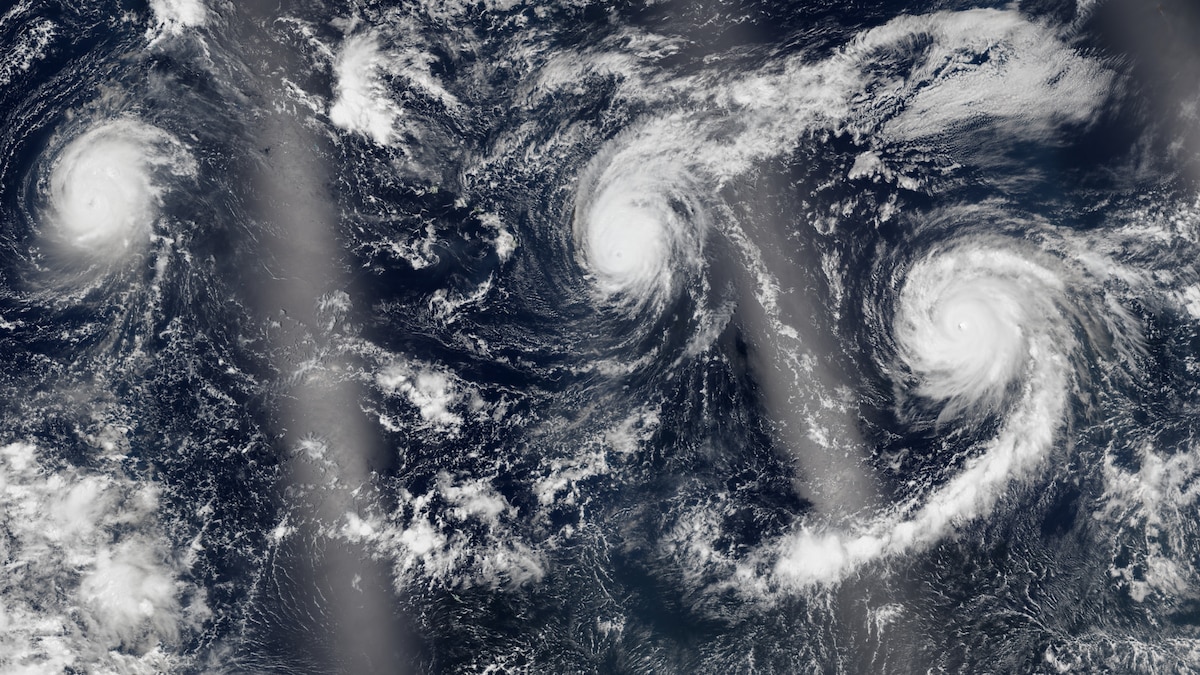
NOAA forecasts a 25% chance of a "very strong" El Niño, with Pacific Ocean temperatures potentially rising by at least 1.5 degrees Celsius above average. This heightened climate risk signals increased instability in global markets, raising concerns for property insurers and agricultural commodity futures due to potential drought and intense cyclones.
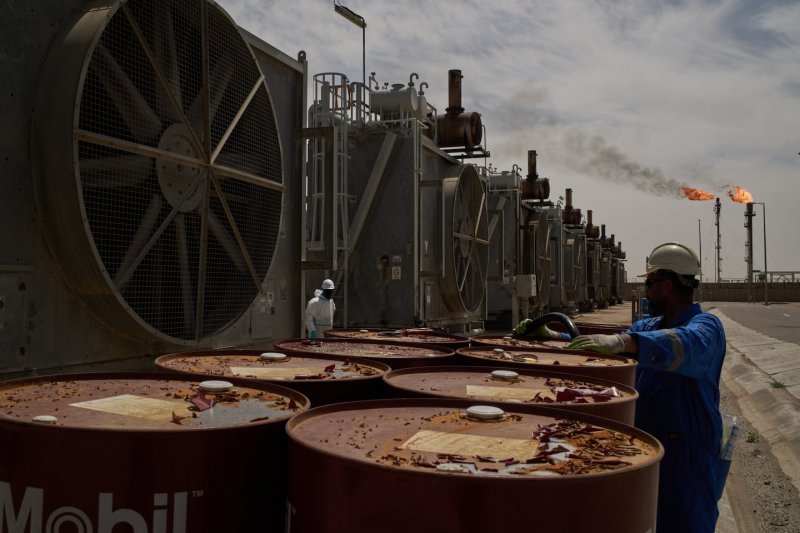
A major conference in Colombia aimed to set concrete timelines for phasing out fossil fuels outside of traditional UN frameworks. The most significant finding is the push by Pacific Island nations for a legally binding international treaty, which matters because it seeks to move beyond voluntary pledges toward enforceable global climate action.
Federal agencies are preparing to impose their own operational guidelines on the Colorado River this summer if state negotiations fail. This shift means federal authority could override existing interstate compacts, directly impacting water rights and regional energy stability due to severe drought conditions.

North India is facing record heatwaves with temperatures predicted to exceed 40 degrees Celsius, prompting official yellow alerts from the IMD. This severe weather poses a significant public health risk, as sustained high temperatures can increase hospital admissions for heat exhaustion by up to 35 percent. Coverage currently lacks specific data on local cooling centers or immediate medical response capabilities.
