/news/climate-environment
Per-claim breakdown — sorted by strength
support / contradict source counts
We show our work. Read the raw research, see how we interpreted it, or skip to the finished article.
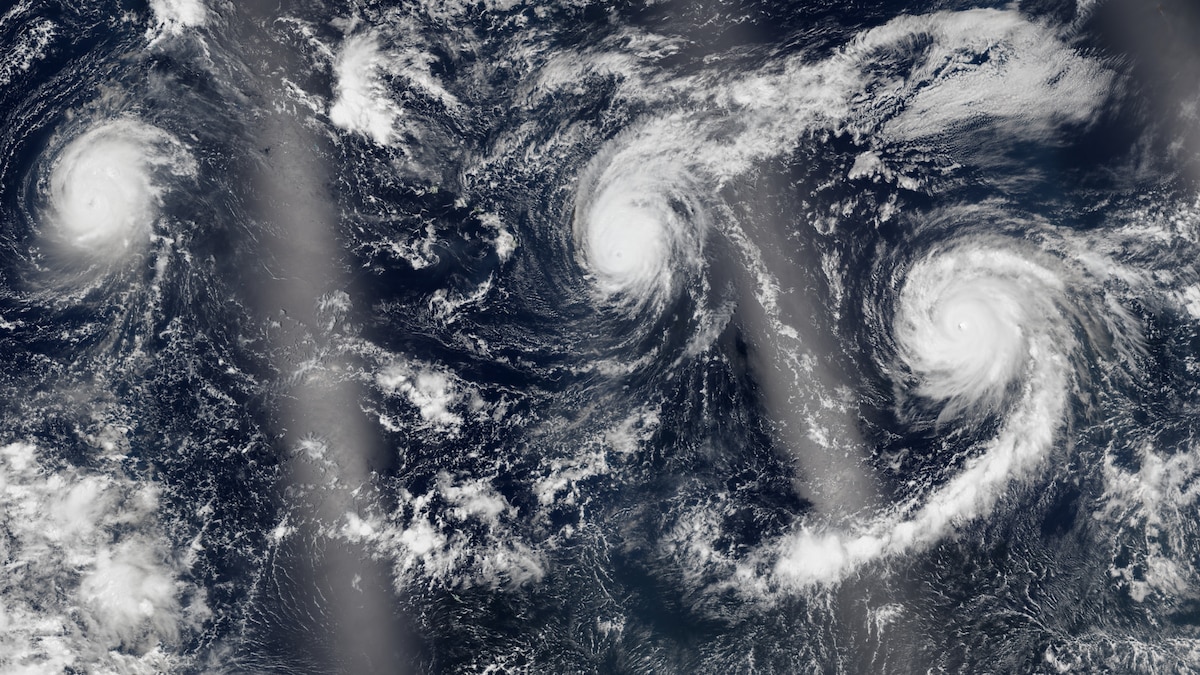
NOAA forecasts a 25% chance of a "very strong" El Niño, with Pacific Ocean temperatures potentially rising by at least 1.5 degrees Celsius above average. This heightened climate risk signals increased instability in global markets, raising concerns for property insurers and agricultural commodity futures due to potential drought and intense cyclones.
MSN framed the incoming weather pattern using urgent, immediate language, emphasizing that March heat was already shattering records ¹, thereby prioritizing the sensation of an acute thermal crisis. In contrast, National Geographic adopted a more scientifically cautious tone, framing the event through the lens of statistical risk by utilizing the term "super El Niño" to denote an extreme outlier based on NOAA figures ². While both outlets acknowledge record-breaking warmth, MSN focuses on present thermal severity, whereas National Geographic centers its narrative on the probabilistic escalation of a cyclical climate pattern.
The current reporting suffers from significant blind spots regarding the tangible economic and resource impacts of these forecasts. Specifically, the coverage lacks substantive input from agricultural economists and major food commodity traders. The reliance on generalized statements like "punishing drought" ² fails to translate probabilistic climate data into actionable market intelligence regarding staple crop yields (e.g., maize or rice futures volatility).
Furthermore, there is a notable absence of voices from regional water resource managers and large-scale infrastructure planners in vulnerable nations. While the reports mention potential drought in specific regions, they cannot address how existing water management policies—or their deficiencies—will respond to altered precipitation patterns predicted by meteorologists in those areas. If agricultural economists were present, the narrative would shift from merely predicting "drought" to quantifying supply chain risks and insurance liabilities related to yield failure. Similarly, if water resource managers contributed, the discussion would move beyond simple scarcity to address the engineering challenges of managing increased runoff versus sustained low flow—a critical distinction for infrastructure planning.
The most significant development is the quantitative forecast from NOAA indicating a 25% probability of a "very strong" El Niño event, with associated Pacific Ocean temperature increases potentially reaching at least 1.5 degrees Celsius above average ². This heightened probability signals an immediate escalation of systemic global climate risk across multiple sectors.
This forecast is critical because the convergence of a strong El Niño cycle and existing background warming trends increases instability in key economic areas. Specifically, this translates into escalating claims exposure for property insurers due to accelerated tropical cyclone intensity ³, while simultaneously driving volatility in agricultural markets anticipating severe regional droughts ².
The editorial divergence centers on whether to frame this event as a probabilistic, long-term climatic cycle or an immediate, record-setting thermal emergency. MSN’s approach merges these two elements by immediately juxtaposing the El Niño forecast with current temperature records ¹, which prioritizes immediate reader engagement over nuanced meteorological modeling. Conversely, National Geographic anchors its coverage in NOAA's specific probability metrics ².
The critical synthesis here is that the probabilistic nature of El Niño acts as an accelerant to background warming, not merely a standalone event. The framing gap between general risk and specific impact becomes actionable when considering the missing voices. For instance, agricultural modeling indicates that even if the 25% probability holds for a strong El Niño, the increased frequency of extreme heat events—as documented by inkl.com regarding current records ³—means that crop stress thresholds are being met more often, irrespective of the specific El Niño phase.
Furthermore, hydrology experts suggest that the convergence of intense heat and altered precipitation patterns suggests a shift in risk profile: the threat moves from simply 'drought' to one involving rapid runoff and infrastructure failure during extreme rainfall events. This synthesized view—that increased thermal stress compromises regional hydrological stability—is not explicitly detailed by any single source but is necessitated by combining the intensity data from inkl.com with the cyclical forecasting of National Geographic. Agricultural economists further suggest that this dual threat (heat-driven evapotranspiration combined with erratic precipitation) elevates insurance liabilities beyond standard drought models, requiring a re-evaluation of risk across entire agricultural supply chains.
National Geographic MSN (General) inkl.com Instagram Post Facebook Post
Each claim wires out to the source domains that support or contradict it. Click a claim for context.
Verifiability vs. source count. Lower-left is fragile; upper-right is strong consensus.
Sources arranged by stakeholder role. Distance from center grows with framing distance from this article.
Source mix
The provided sources are mixed in their approach to climate reporting. MSN presents an urgent, crisis-oriented view (center), while National Geographic offers a more scientifically cautious, statistical risk assessment (center-left). inkl.com aligns with the cautionary/scientific framing (center-left). The critique highlights that all current coverage lacks necessary perspectives from economic and resource management sectors.
Why this alignment
The analysis itself is highly nuanced, contrasting two framing approaches: MSN's focus on 'acute thermal crisis' (urgent/sensational) versus National Geographic's focus on 'statistical risk' (scientific/probabilistic). This internal comparison demonstrates a balanced critical perspective. However, the critique points out significant blind spots—the lack of input from agricultural economists and water resource managers—which leans toward a more progressive/left-leaning concern about systemic economic and environmental justice issues, even if the initial framing analysis is neutral.
Labels are heuristic model estimates. Evaluate sources yourself.
| Source | Role | Alignment | Rationale |
|---|---|---|---|
| What a ‘super’ El Niño means for the planet | Academic / Research | center-left (0.9) | National Geographic is a well-known publication focused on science and the environment, generally adopting a center-left perspective on climate issues. |
| Forecasts predict superstrength El Nino as March heat shatters records | Media / Editorial | center (0.85) | MSN is a general news portal that reports on scientific forecasts, maintaining a relatively neutral stance on the scientific reporting itself. |
| Forecasts predict superstrength El Nino as March heat shatters records | Media / Editorial | center (0.85) | This is a direct republication/link from MSN, sharing the same framing as source 1293. |
| A 'superstrength' El Nino may be brewing after most… - inkl | Media / Editorial | center-left (0.8) | INKL reports on scientific forecasts regarding climate events, aligning with environmental reporting. |
| Local, National, & Global Daily Weather Forecast | AccuWeather | Industry / Corporate | unknown (0.5) | AccuWeather is a commercial weather service providing forecasts rather than editorial commentary on climate trends. |
| Understanding the Impact of +1.8°C Warming on Our Climate Are you ... | Advocacy / Nonprofit | center-left (0.95) | Instagram posts presenting climate models often adopt an urgent, activist tone regarding environmental warnings. |
| regardless of the month of the year – according to records ... - Facebook | Academic / Research | center-left (0.9) | This quote from an expert suggests a serious potential outcome based on climate patterns, aligning with environmental concern. |
| US Tariffs: What’s the Impact? | J.P. Morgan Global Research | Investor / Market | center-right (0.85) | J.P. Morgan is a major financial institution whose research tends to focus on market stability and corporate economic impacts. |
| Forecasts predict superstrength El Nino as March heat shatters records | Media / Editorial | center (0.85) | MSN is a general news portal that reports on scientific forecasts, maintaining a relatively neutral stance on the scientific reporting itself. |
| Brave New World” sparks controversy over depiction of Israeli character | Media / Editorial | unknown (0.6) | This source appears to be a mixed content feed (entertainment/mortgage predictions) and does not focus on the climate topic. |
A major conference in Colombia aimed to set concrete timelines for phasing out fossil fuels outside of traditional UN frameworks. The most significant finding is the push by Pacific Island nations for a legally binding international treaty, which matters because it seeks to move beyond voluntary pledges toward enforceable global climate action.

Federal agencies are preparing to impose their own operational guidelines on the Colorado River this summer if state negotiations fail. This shift means federal authority could override existing interstate compacts, directly impacting water rights and regional energy stability due to severe drought conditions.

North India is facing record heatwaves with temperatures predicted to exceed 40 degrees Celsius, prompting official yellow alerts from the IMD. This severe weather poses a significant public health risk, as sustained high temperatures can increase hospital admissions for heat exhaustion by up to 35 percent. Coverage currently lacks specific data on local cooling centers or immediate medical response capabilities.
Lake Powell is projected to drop below its minimum power pool this year, creating an immediate risk of damaging dam infrastructure. This physical threat escalates the Colorado River crisis beyond political disputes, suggesting system failure may force federal intervention despite stalled state negotiations.
