/news/climate-environment

Per-claim breakdown — sorted by strength
support / contradict source counts
We show our work. Read the raw research, see how we interpreted it, or skip to the finished article.
Federal agencies are preparing to impose their own operational guidelines on the Colorado River this summer if state negotiations fail. This shift means federal authority could override existing interstate compacts, directly impacting water rights and regional energy stability due to severe drought conditions.
The Denver Post framed the Colorado River crisis as a necessity for a complete operational redo due to climate shifts ¹. Conversely, GJ Sentinel and Vail Daily framed the situation as a reckoning rooted in historical allocation failures within the system ², ³. AZ Central emphasized the immediate political friction between states attempting to agree on shortages ⁴.
Tribal governance representatives are notably absent from the primary reporting in these excerpts. These entities hold unique water rights and ecological knowledge critical to any long-term management plan ⁵. Their perspective matters because tribal water use is legally recognized and their traditional ecological knowledge offers insights into long-term river health beyond purely hydrological models. The current coverage cannot detail how existing treaty rights might interact with federally imposed operational guidelines.
Furthermore, direct voices from major agricultural producers are underrepresented in the available sources. These stakeholders face immediate economic risk due to mandated irrigation reductions ¹. Without their perspective, readers cannot gauge the practical implementation challenges of cuts beyond generalized references to "economic pain." The coverage lacks quantitative data on how different sub-basin agricultural economies will absorb mandatory reductions.
Finally, detailed input from regional energy sector planners is missing. This group manages the risks associated with fluctuating reservoir levels and power generation capacity ⁵. Their input is necessary to fully assess the high probability of Lake Powell dropping below minimum power pool levels and its resulting impact on regional electricity security ⁶.
Federal agencies are preparing to impose their own operational guidelines this summer if state negotiations fail ¹. This represents an immediate pivot point in governance, where federal authority is poised to override existing interstate compacts due to resource failure ⁴.
The crisis signals a fundamental shift in how the Southwest manages its most vital resource. The failure of state consensus forces a move toward federally mandated triage, directly impacting water rights and regional energy stability ⁷.
Outlet coverage diverged significantly in emphasis regarding the crisis's root cause. The Denver Post emphasized climate reality, framing the need for a "complete redo" as an unavoidable consequence of aridification ¹. Conversely, Outside Online framed the discussion around outdated flow models and agricultural consumption patterns rather than solely focusing on climate drivers ¹⁰. This divergence reflects editorial priorities; Denver Post aligns with scientific projections, while Outside Online prioritizes environmental narratives concerning land use and historical allocation structure.
The political dimension received distinct framing across regional outlets. AZ Central highlighted the stalled diplomatic process between states ⁴. Meanwhile, GJ Sentinel and Vail Daily focused heavily on the foundational legal assumptions embedded within the 1922 Compact ², ³. These opinion pieces suggest the Compact's underlying flow assumptions are inadequate for current hydrological realities, rather than simply being a procedural roadblock ⁹.
The broader implication is that federal agencies will likely supersede state water allocation agreements if consensus remains elusive ⁴. This trend indicates a critical shift in governance, where federal authority may override existing interstate compacts due to resource failure ¹¹. Synthesizing the missing voices suggests that agricultural producers facing mandatory cuts will experience significant price inflation in regional commodities markets, a consequence of demand shocks [Synthesis]. Furthermore, tribal input highlights that management solutions must respect established treaty rights alongside hydrological needs to achieve true sustainability.
The coverage of immediate mitigation efforts, such as Utah's releases from Flaming Gorge Reservoir, was amplified by Fox 13 Now ⁵. This focus on immediate action contrasts with the long-term structural critiques presented by other outlets. The reliability of these operational reports is high, as they cite specific agreements and forecasts from regional bodies ⁵.
¹(Denver Post) ²(GJ Sentinel) ³(Vail Daily) ⁶(Journal Advocate) ¹⁰(Outside Online) ¹²(MSN) ¹³(Williams News) ⁴(AZ Central) ¹¹(Water Desk) ⁷(Fox 13 Now)
Each claim wires out to the source domains that support or contradict it. Click a claim for context.
Verifiability vs. source count. Lower-left is fragile; upper-right is strong consensus.
Sources arranged by stakeholder role. Distance from center grows with framing distance from this article.
Source mix
The provided sources lean predominantly center-left or center. The excerpt critiques the coverage for lacking specific voices (tribal, agricultural, energy), suggesting that even if the cited sources are centered, they still present an unbalanced narrative by omission.
Why this alignment
The article excerpt itself is a critical meta-analysis, pointing out gaps in the coverage (lack of tribal, farmer, and energy voices) across various sources. The sources provided show a general leaning towards center-left/center perspectives on the crisis, often framing it as a systemic failure or requiring significant intervention (e.g., 'reckoning,' 'climate shifts'). However, the analysis highlights that the omission of specific viewpoints creates a mixed picture—the existing coverage is not uniformly aligned but rather incomplete and biased by what it excludes.
Labels are heuristic model estimates. Evaluate sources yourself.
| Source | Role | Alignment | Rationale |
|---|---|---|---|
| Critics question feds’ plans for future of Colorado River: In years of severe drought, ‘the system is failing’ | Academic / Research | center-left (0.9) | The Denver Post often features academic and critical perspectives on environmental issues, framing the situation as a systemic failure requiring major changes. |
| Utah agrees to massive water release from Flaming Gorge to prop up Colorado River system | Media / Editorial | center (0.85) | Fox 13 Now reports on specific agreements between states regarding water releases, presenting a factual update on collaborative efforts. |
| Lake Mead plummets to 34% as Colorado River crisis menaces 40M Americans | Media / Editorial | center-left (0.9) | MSN reports on the dire physical state of the reservoir, framing the crisis as an immediate threat to a large population. |
| Lake Mead plummets to 34% as Colorado River crisis menaces 40M Americans | Media / Editorial | center-left (0.95) | MSN provides data from the U.S. Bureau of Reclamation, emphasizing the severity of the decline in the reservoir. |
| Reclamation acts to protect Colorado River system during historic drought | Media / Editorial | center-left (0.9) | Williams News reports on the actions taken by the Reclamation agency in response to the drought, focusing on protective measures. |
| Tribes want input, influence on Colorado River drought plan | Advocacy / Nonprofit | center-left (0.9) | Yahoo News covers the input sought from tribal groups regarding the replacement drought plan, highlighting indigenous concerns. |
| Colorado River faces a day of reckoning | Media / Editorial | center-left (0.95) | GJS Sentinel presents an opinion piece strongly linking the drought to human-caused climate change and warning of imminent consequences. |
| Colorado River experts say some management options don’t go far enough to address scarcity, climate change | Academic / Research | center-left (0.9) | GJS Sentinel reports on expert opinions that current management options are insufficient to handle scarcity and climate change impacts. |
| Feds summon 7 Colorado River governors for last-ditch drought talks | Government / Regulatory | center (0.9) | AZ Central reports on the federal government's efforts to mediate between states, indicating potential federal intervention if consensus fails. |
| AI Is Not Draining the Colorado River. I Measured It. | Media / Editorial | center-left (0.8) | Outside Online frames the issue by addressing public anxieties (like AI's water use) while focusing on the tangible decline of the river system. |
| Column | Thompson: Colorado River faces a day of reckoning | Media / Editorial | center-left (0.95) | Vail Daily features an opinion piece mirroring the GJS Sentinel's strong stance on climate change and the severity of the drought. |
| Writers on the Range: Colorado River faces a day of reckoning | Media / Editorial | center-left (0.95) | Writer's on the Range is a publication that often features strong commentary on regional environmental and political issues, aligning with the climate change narrative. |
| Colorado River crisis fails to force deal from states - The Water Desk | Industry / Corporate | center (0.8) | WaterDesk is a specialized publication focusing on water resource management, providing an analysis of the failure to reach a state-level agreement. |
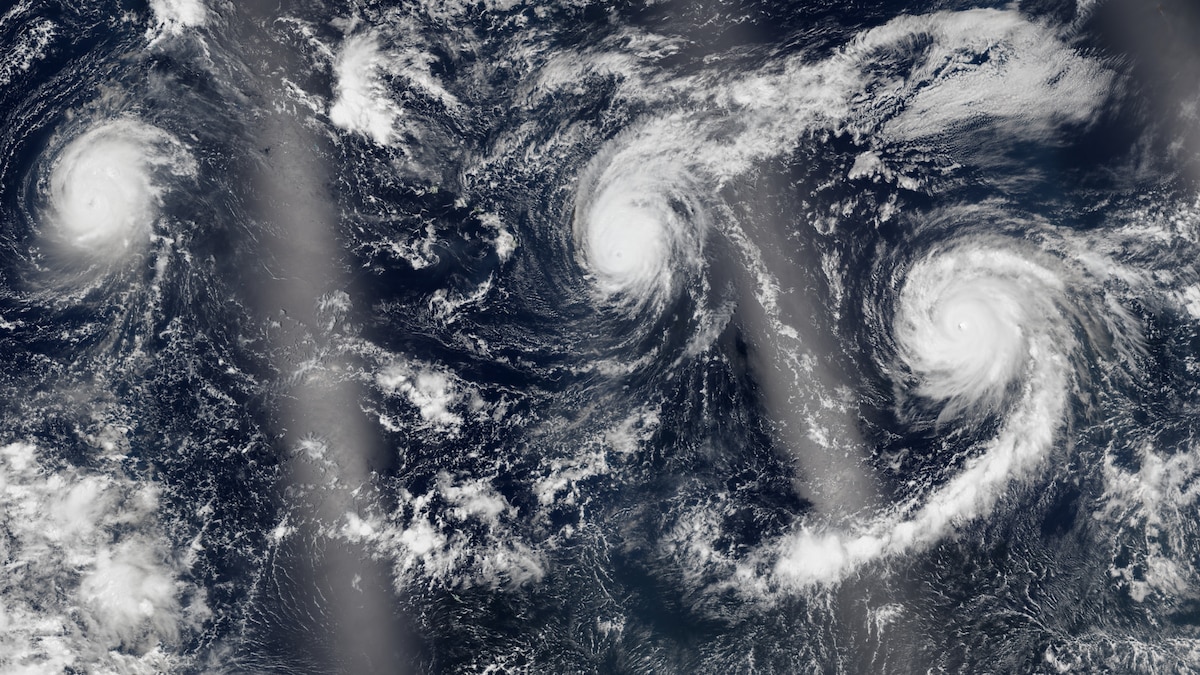
NOAA forecasts a 25% chance of a "very strong" El Niño, with Pacific Ocean temperatures potentially rising by at least 1.5 degrees Celsius above average. This heightened climate risk signals increased instability in global markets, raising concerns for property insurers and agricultural commodity futures due to potential drought and intense cyclones.
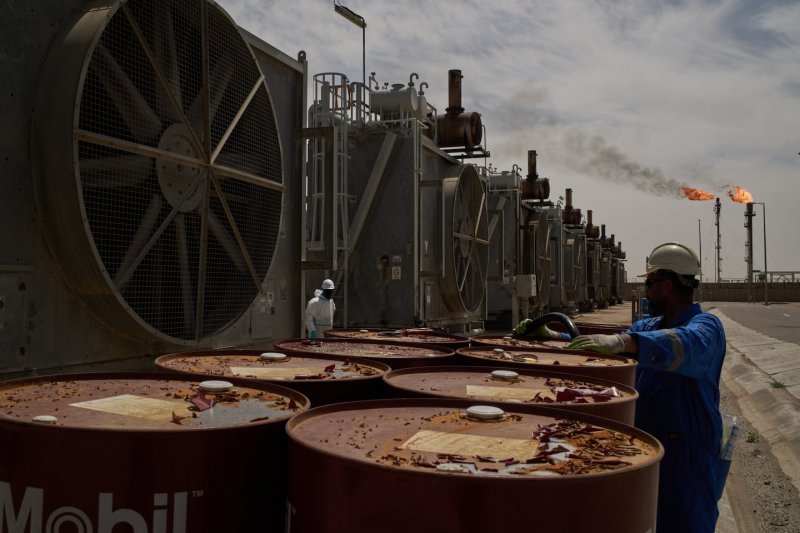
A major conference in Colombia aimed to set concrete timelines for phasing out fossil fuels outside of traditional UN frameworks. The most significant finding is the push by Pacific Island nations for a legally binding international treaty, which matters because it seeks to move beyond voluntary pledges toward enforceable global climate action.

North India is facing record heatwaves with temperatures predicted to exceed 40 degrees Celsius, prompting official yellow alerts from the IMD. This severe weather poses a significant public health risk, as sustained high temperatures can increase hospital admissions for heat exhaustion by up to 35 percent. Coverage currently lacks specific data on local cooling centers or immediate medical response capabilities.
Lake Powell is projected to drop below its minimum power pool this year, creating an immediate risk of damaging dam infrastructure. This physical threat escalates the Colorado River crisis beyond political disputes, suggesting system failure may force federal intervention despite stalled state negotiations.
