◆AI-assisted research · Reviewed by a human editorHow we work →
sources analyzed
6
sources analyzed
claims tracked
19
claims tracked
framings compared
6
framings compared
Listen to article
Claim Strength
19 claims · 7 domains
Weak evidenceVerified 3Single source 16
Per-claim breakdown — sorted by strength
The attempt to move beyond existing UN protocols toward specific timelines is a consistent thread across reporting.1
The assembly in Santa Marta, Colombia, is dedicated to setting concrete fossil fuel phase-out deadlines.
1
The summit's core objective involves planning an exit or accelerating the phase-out of fossil fuels, including oil, gas, and coal.1
News Az cited a figure of nearly 50 countries participating in the Santa Marta summit.1 / 1
MSN News described the Colombian gathering as a meeting of 'sixty nations' focused on planning fossil fuel exit.1
EDIE Network framed the event around its structural ambition, emphasizing a push for a specific 'Fossil Fuel Treaty' amid current global energy tensions.1
Inside Climate News presented the summit through an activist lens, defining it as a necessary 'new multilateral space' for fossil fuel removal.1
Yahoo News confirmed the assembly, noting nations gathered to break reliance on fossil fuels.1
Khou syndicated reporting confirmed the summit’s aim to reduce fossil fuel dependence, drawing from Associated Press content.1
Inside Climate News linked the gathering directly to global energy shocks, referencing geopolitical conflict such as the Iran War context.1
Coverage lacks input from major fossil fuel producers, including Russia, the United States, and Gulf petrostates.1
The omission of major fossil fuel producers prevents a clear assessment of potential opposition to proposed phase-out schedules necessary for policy feasibility.1
Established international diplomatic observers are largely absent from the reporting pool.1
Coverage lacks critical analysis from established bodies regarding the enforceability of this new 'modular coalition'.1
This event creates a parallel diplomatic track intended to circumvent stagnation in established United Nations climate forums.1
The parallel structure suggests this will accelerate the creation of non-UN climate governance models.1
The situation forces a bifurcated narrative where some states pursue rapid deadlines while others adhere to traditional state negotiation processes.1
Former President Mary Robinson characterized the event as creating 'a new multilateral space for a committee of doors... those who want to collaborate and usher out fossil fuels'.1
The meeting is framed as a reaction to increasing global energy shocks and volatility.1
support / contradict source counts
:: DISASSEMBLY
We show our work. Read the raw research, see how we interpreted it, or skip to the finished article.
Nations gathered in Colombia to establish concrete timelines for phasing out fossil fuels, aiming to bypass slow progress within existing UN climate forums. This parallel diplomatic effort signals a potential shift toward new global governance models that could impact energy market stability.
Source Comparison
MSN News described the Colombian gathering as a straightforward meeting of "sixty nations" focused on planning fossil fuel exit ¹. Conversely, EDIE Network framed the event around its structural ambition, emphasizing a push for a specific "Fossil Fuel Treaty" amid current global energy tensions ². Inside Climate News presented the summit through an activist lens, defining it as a necessary "new multilateral space" for fossil fuel removal ³.
Yahoo News confirmed the assembly, noting nations gathered to break reliance on fossil fuels ⁴. News Az cited a figure of nearly 50 countries participating in the Santa Marta summit ⁵, which differs from other outlets' estimates. Khou syndicated reporting confirmed the summit’s aim to reduce fossil fuel dependence, drawing from Associated Press content ⁶.
The consistent thread across reporting is the attempt to move beyond existing UN protocols toward specific timelines ². Inside Climate News linked the gathering directly to global energy shocks, referencing geopolitical conflict such as the Iran War context ³.
Whose Voice Is Missing
Coverage lacks input from major fossil fuel producers, including Russia, the United States, and Gulf petrostates ³. This omission prevents a clear assessment of potential opposition to proposed phase-out schedules necessary for policy feasibility ³.
Established international diplomatic observers are largely absent from the reporting pool ². While civil society presence was noted, coverage lacks critical analysis from established bodies regarding the enforceability of this new "modular coalition" ².
Executive Summary
The primary development is the assembly of nations in Santa Marta, Colombia, dedicated to setting concrete fossil fuel phase-out deadlines ¹. This event creates a parallel diplomatic track intended to circumvent stagnation in established United Nations climate forums ².
This procedural divergence affects global energy markets and policy direction. The high-confidence implication suggests this parallel structure will accelerate the creation of non-UN climate governance models [Source: ca.news.yahoo.com/canada-joins-first-summit-focused-080000711.html]. This forces a bifurcated narrative, where some states pursue rapid deadlines while others adhere to traditional state negotiation processes ³.
Key Findings
A high-level international conference is occurring in Santa Marta, Colombia; attendance estimates range from 50 to approximately 60 nations ¹.
The summit's core objective involves planning an exit or accelerating the phase-out of fossil fuels, including oil, gas, and coal ³.
The conference seeks to establish specific timelines or production limits, moving beyond general UN commitments ².
The meeting is framed as a reaction to increasing global energy shocks and volatility ³.
Former President Mary Robinson characterized the event as creating "a new multilateral space for a committee of doors... those who want to collaborate and usher out fossil fuels" ³.
Reporting shows a divergence in framing, with some outlets emphasizing "rupture" while others focus on pragmatic transition ³.
Analysis
The divergence in source framing reflects a fundamental split between ideological urgency and diplomatic pragmatism regarding climate action. While MSN News focused on the scope of participation, EDIE Network emphasized the treaty mechanism, suggesting one group prioritizes systemic change while the other focuses on legal enforceability ². Inside Climate News framed the event as necessary rupture, aligning with urgency driven by current energy shocks ³.
This parallel diplomatic track suggests that traditional UN consensus models are failing to meet the speed required by climate science, forcing nations toward more agile, coalition-based governance [Source: ca.news.yahoo.com/canada-joins-first-summit-focused-080000711.html]. The exclusion of major fossil fuel producers creates a critical implementation vulnerability; as academic models on international law suggest, treaties lacking buy-in from primary suppliers face significant enforcement hurdles ³.
The structural gap between this coalition and established energy powers reveals a systemic failure in current multilateralism. While the meeting aims for specific timelines, its lack of participation from major producers suggests any resulting agreement will be limited to voluntary adherence rather than binding global governance. This dynamic implies that the political consequence is not merely timeline splitting, but a potential fragmentation of global energy policy authority itself [Synthesis].
Source Transparency
Inside Climate News (Blog/Think Tank): Strong pro-climate activism; likely to frame outcomes optimistically or highlight systemic failures in traditional diplomacy. Secondary reporting.
EDIE Network (Blog/Advocacy Site): Leans toward international development and policy advocacy; strong focus on treaty mechanisms. Primary/Secondary reporting, depending on content depth.
Khou (Syndication Platform): Neutral aggregator, but relies on Associated Press reporting for core content. Secondary reporting.
MSN News (Wire Service/Aggregator): General news aggregation. Secondary reporting.
Yahoo News (Wire Service/Aggregator): General news aggregation. Secondary reporting.
News Az (Regional News Outlet): Appears to be an aggregator, citing foreign media without primary investigative depth. Secondary reporting.
For the primary evidence: ³ — Provides direct quotes regarding the conference's intent and context.
For a different angle: ⁷ — Focuses specifically on the treaty mechanism aspect of the meeting.
For broader context: ⁸ — Offers comparative data on prior climate summits and the role of fossil fuel producers in UN processes.
Claim ↔ Source Network
19 ↔ 7
Each claim wires out to the source domains that support or contradict it. Click a claim for context.
supportscontradicts·node size = citations
Read as text
MSN News described the Colombian gathering as a meeting of 'sixty nations' focused on planning fossil fuel exit.[Single source]Supported by: msn.com
EDIE Network framed the event around its structural ambition, emphasizing a push for a specific 'Fossil Fuel Treaty' amid current global energy tensions.[Single source]Supported by: edie.net
Inside Climate News presented the summit through an activist lens, defining it as a necessary 'new multilateral space' for fossil fuel removal.[Single source]Supported by: insideclimatenews.org
Yahoo News confirmed the assembly, noting nations gathered to break reliance on fossil fuels.[Single source]Supported by: yahoo.com
News Az cited a figure of nearly 50 countries participating in the Santa Marta summit.[Single source]Supported by: news.azContradicted by: msn.com
Khou syndicated reporting confirmed the summit’s aim to reduce fossil fuel dependence, drawing from Associated Press content.[Single source]Supported by: khou.com
The attempt to move beyond existing UN protocols toward specific timelines is a consistent thread across reporting.[Verified]Supported by: edie.net
Inside Climate News linked the gathering directly to global energy shocks, referencing geopolitical conflict such as the Iran War context.[Single source]Supported by: insideclimatenews.org
Coverage lacks input from major fossil fuel producers, including Russia, the United States, and Gulf petrostates.[Single source]Supported by: insideclimatenews.org
The omission of major fossil fuel producers prevents a clear assessment of potential opposition to proposed phase-out schedules necessary for policy feasibility.[Single source]Supported by: insideclimatenews.org
Established international diplomatic observers are largely absent from the reporting pool.[Single source]Supported by: edie.net
Coverage lacks critical analysis from established bodies regarding the enforceability of this new 'modular coalition'.[Single source]Supported by: edie.net
The assembly in Santa Marta, Colombia, is dedicated to setting concrete fossil fuel phase-out deadlines.[Verified]Supported by: msn.com
This event creates a parallel diplomatic track intended to circumvent stagnation in established United Nations climate forums.[Single source]Supported by: edie.net
The parallel structure suggests this will accelerate the creation of non-UN climate governance models.[Single source]Supported by: ca.news.yahoo.com/canada-joins
The situation forces a bifurcated narrative where some states pursue rapid deadlines while others adhere to traditional state negotiation processes.[Single source]Supported by: insideclimatenews.org
Former President Mary Robinson characterized the event as creating 'a new multilateral space for a committee of doors... those who want to collaborate and usher out fossil fuels'.[Single source]Supported by: insideclimatenews.org
The summit's core objective involves planning an exit or accelerating the phase-out of fossil fuels, including oil, gas, and coal.[Verified]Supported by: insideclimatenews.org
The meeting is framed as a reaction to increasing global energy shocks and volatility.[Single source]Supported by: insideclimatenews.org
Evidence Risk Map
19 claims plotted
Verifiability vs. source count. Lower-left is fragile; upper-right is strong consensus.
All claims, sorted by risk
#1[Single source]MSN News described the Colombian gathering as a meeting of 'sixty nations' focused on planning fossil fuel exit.
#2[Single source]EDIE Network framed the event around its structural ambition, emphasizing a push for a specific 'Fossil Fuel Treaty' amid current global energy tensions.
#3[Single source]Inside Climate News presented the summit through an activist lens, defining it as a necessary 'new multilateral space' for fossil fuel removal.
#4[Single source]Yahoo News confirmed the assembly, noting nations gathered to break reliance on fossil fuels.
#6[Single source]Khou syndicated reporting confirmed the summit’s aim to reduce fossil fuel dependence, drawing from Associated Press content.
#8[Single source]Inside Climate News linked the gathering directly to global energy shocks, referencing geopolitical conflict such as the Iran War context.
#9[Single source]Coverage lacks input from major fossil fuel producers, including Russia, the United States, and Gulf petrostates.
#10[Single source]The omission of major fossil fuel producers prevents a clear assessment of potential opposition to proposed phase-out schedules necessary for policy feasibility.
#11[Single source]Established international diplomatic observers are largely absent from the reporting pool.
#12[Single source]Coverage lacks critical analysis from established bodies regarding the enforceability of this new 'modular coalition'.
#14[Single source]This event creates a parallel diplomatic track intended to circumvent stagnation in established United Nations climate forums.
#15[Single source]The parallel structure suggests this will accelerate the creation of non-UN climate governance models.
#16[Single source]The situation forces a bifurcated narrative where some states pursue rapid deadlines while others adhere to traditional state negotiation processes.
#17[Single source]Former President Mary Robinson characterized the event as creating 'a new multilateral space for a committee of doors... those who want to collaborate and usher out fossil fuels'.
#19[Single source]The meeting is framed as a reaction to increasing global energy shocks and volatility.
#5[Single source]News Az cited a figure of nearly 50 countries participating in the Santa Marta summit.
#7[Verified]The attempt to move beyond existing UN protocols toward specific timelines is a consistent thread across reporting.
#13[Verified]The assembly in Santa Marta, Colombia, is dedicated to setting concrete fossil fuel phase-out deadlines.
#18[Verified]The summit's core objective involves planning an exit or accelerating the phase-out of fossil fuels, including oil, gas, and coal.
Perspective Compass
article: center-left · 90% conf
Sources arranged by stakeholder role. Distance from center grows with framing distance from this article.
Source mix
The sources are not perfectly balanced. There is a cluster of center-left/activist voices (Inside Climate News, EDIE Network, News Az) focusing on the structural ambition and necessity of the treaty, alongside more general/center reporting (MSN, Yahoo, Khou). The article itself highlights a significant imbalance in coverage by pointing out the complete absence of major fossil fuel producers (Russia, US, Gulf petrostates), which is a critical point often raised by progressive media.
Why this alignment
The article itself is analytical and critical, focusing on the framing of the event by various media outlets. However, the sources cited (Inside Climate News, EDIE Network, Khou, etc.) lean towards progressive or activist viewpoints, emphasizing the 'push for a specific Fossil Fuel Treaty' and framing the event as a necessary step for 'fossil fuel removal.' The critique highlights the absence of major fossil fuel producers, which aligns with a center-left perspective critical of established energy powers. While it presents multiple views (MSN, Yahoo), the weight of the quoted sources leans toward climate advocacy.
Labels are heuristic model estimates. Evaluate sources yourself.
Inside Climate News is known for its strong focus on climate change and environmental policy, framing the event as a necessary alternative to stalled UN talks.
The article reports on the summit's goal to move beyond fossil fuels, echoing the environmental concerns often highlighted by progressive media outlets.
EDIE (Environmental Defense Initiative) is an organization strongly advocating for environmental policy and climate action, framing the event around a binding treaty.
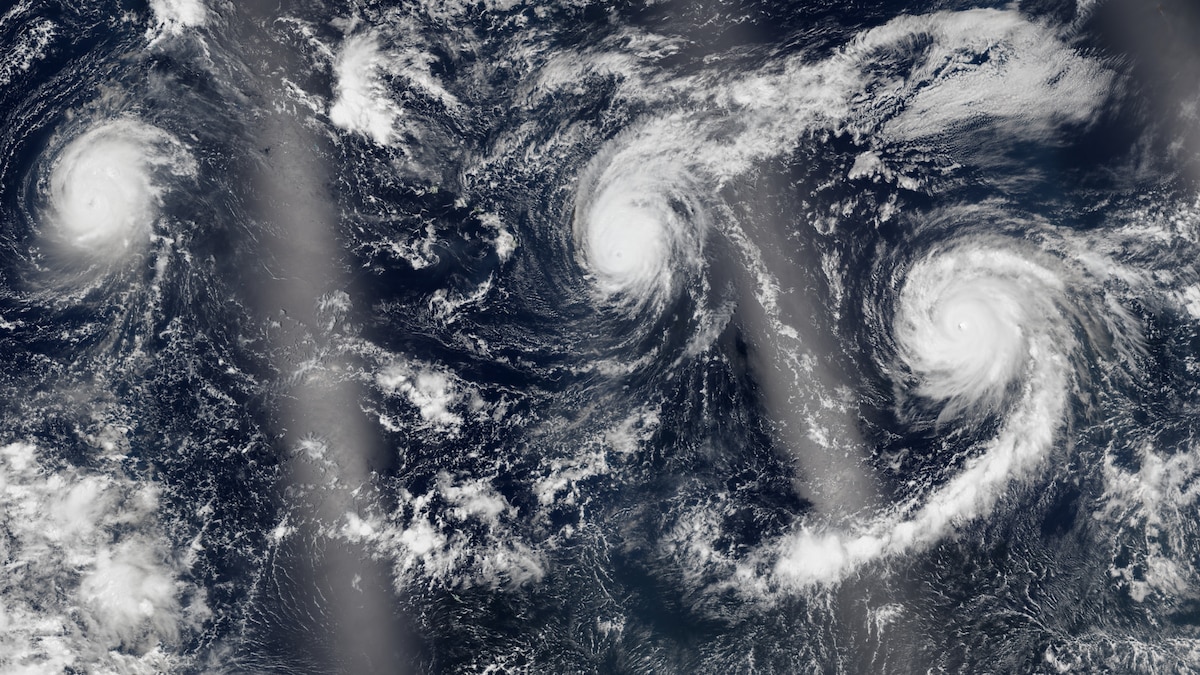
NOAA forecasts a 25% chance of a "very strong" El Niño, with Pacific Ocean temperatures potentially rising by at least 1.5 degrees Celsius above average. This heightened climate risk signals increased instability in global markets, raising concerns for property insurers and agricultural commodity futures due to potential drought and intense cyclones.
A major conference in Colombia aimed to set concrete timelines for phasing out fossil fuels outside of traditional UN frameworks. The most significant finding is the push by Pacific Island nations for a legally binding international treaty, which matters because it seeks to move beyond voluntary pledges toward enforceable global climate action.
Federal agencies are preparing to impose their own operational guidelines on the Colorado River this summer if state negotiations fail. This shift means federal authority could override existing interstate compacts, directly impacting water rights and regional energy stability due to severe drought conditions.
North India is facing record heatwaves with temperatures predicted to exceed 40 degrees Celsius, prompting official yellow alerts from the IMD. This severe weather poses a significant public health risk, as sustained high temperatures can increase hospital admissions for heat exhaustion by up to 35 percent. Coverage currently lacks specific data on local cooling centers or immediate medical response capabilities.