/news/climate-environment
Per-claim breakdown — sorted by strength
support / contradict source counts
We show our work. Read the raw research, see how we interpreted it, or skip to the finished article.
Genomic sequencing now offers tools to map how ecosystems may adapt to escalating climate change pressures. Researchers confirm genetic analysis can locate traits enabling survival in diverse environments, according to a report from Nature (https://www.nature.com/articles/s41467-022-34206-8). Scientists caution that these biological advancements cannot replace immediate global emissions reductions, states devdiscourse.com (https://www.devdiscourse.com/article/science-environment/3869550-genomics-natures-blueprint-for-climate-adaptation).
Genomic tools are vital for tracking adaptation within natural systems like seagrass meadows and redwood forests, reports the Associated Press (https://apnews.com/article/climate-change-dna-adaptation-heat-waves-wildfires-7c34ca1d3a09065b9f9ab617dd1a6e25). Research indicates these methods offer pathways to bolster ecological resilience against shifting climate patterns, according to Nature (https://www.nature.com/articles/s41467-022-34206-8). Experts stress that genetic intervention must align with broader policy shifts toward reducing greenhouse gas emissions, states devdiscourse.com (https://www.devdiscourse.com/article/science-environment/3869550-genomics-natures-blueprint-for-climate-adaptation).
Genomics offers a dual pathway for climate response in conservation efforts, devdiscourse.com describes (https://www.devdiscourse.com/article/science-environment/3869550-genomics-natures-blueprint-for-climate-adaptation). One view frames genomics as providing concrete tools to map biological survival potential, such as tracking hybrid eelgrass populations reported by the Associated Press (https://apnews.com/article/climate-change-dna-adaptation-heat-waves-wildfires-7c34ca1d3a09065b9f9ab617dd1a6e25). This perspective supports genomics as a necessary component of the evolving conservation toolkit, according to Science (https://www.science.org/doi/10.1126/sciadv.adw0562).
Scientific literature notes limitations tempering technological promise, Cell reports (https://www.cell.com/trends/ecology-evolution/fulltext/S0169-5347(22)00277-4). Researchers note the complexity of distinguishing true adaptive variation from neutral genetic drift within populations, that same journal noted (https://www.cell.com/trends/ecology-evolution/fulltext/S0169-5347(22)00277-4). The most robust consensus emphasizes genomic progress must occur alongside global emission reductions, devdiscourse.com stresses (https://www.devdiscourse.com/article/science-environment/3869550-genomics-natures-blueprint-for-climate-adaptation).
The critical bottleneck for climate action lies in bridging molecular data with policy implementation frameworks. While science identifies genetic markers indicating potential survival, governing bodies must translate that data into actionable management plans. Ticotimes observed the difference between scientific identification and governance strategy through Costa Rica’s EbA implementation (https://ticotimes.net/2025/07/18/rural-costa-rica-adopts-ecosystem-based-approach-to-climate-resilience). This gap requires policy to integrate the fine-scale biological insights provided by genomics into broad, enforceable climate mitigation strategies.
Associated Press framed the topic around a "Race Against Climate Change," emphasizing immediate scientific responses (https://apnews.com/article/climate-change-dna-adaptation-heat-waves-wildfires-7c34ca1d3a09065b9f9ab617dd1a6e25). DevDiscourse presented the narrative as a "Blueprint for Climate Adaptation," suggesting genomics offers definitive survival guides (https://www.devdiscourse.com/article/science-environment/3869550-genomics-natures-blueprint-for-climate-adaptation). MSN News adopted a dramatic framing, focusing on DNA tracking in the "Race Against Climate Change" (https://www.msn.com/en-us/weather/topstories/local-scientists-are-using-dna-to-track-evolution-s-race-against-climate-change/ar-AA20IBpY). Ticotimes framed the concept through human governance, specifically focusing on "Ecosystem-Based Adaptation" in local policy (https://ticotimes.net/2025/07/18/rural-costa-rica-adopts-ecosystem-based-approach-to-climate-resilience).
Fisheries managers and commercial aquaculture representatives are absent from the current reporting. Their input is necessary to address how genomic adaptation intersects with sustainable harvesting or managed cultivated species. Policy makers overseeing international climate agreements are also missing from this discussion. They could clarify regulatory hurdles for implementing transboundary ecological interventions based on genetic data. Furthermore, indigenous community leaders whose traditional knowledge guides land stewardship remain unrepresented. Their perspective is vital as local observation often complements high-throughput genomic analysis of resilience traits.
Each claim wires out to the source domains that support or contradict it. Click a claim for context.
Verifiability vs. source count. Lower-left is fragile; upper-right is strong consensus.
Sources arranged by stakeholder role. Distance from center grows with framing distance from this article.
Source mix
The sources are heavily skewed towards center-left scientific publications (Nature, devdiscourse.com, AP News) detailing the potential of genomics for adaptation. However, the article's central thesis—that genomics must be paired with 'immediate global emissions reductions'—introduces a strong policy counterpoint that pulls the overall tone toward a mixed perspective.
Why this alignment
The article presents a nuanced view: while it highlights the scientific advancements in genomics for tracking ecosystem adaptation to climate change (a progressive/center-left scientific focus), it strongly emphasizes that these biological tools 'cannot replace immediate global emissions reductions' (a policy-oriented, more urgent/center-right caution). This balance between technological optimism and necessary systemic action leads to a mixed alignment.
Labels are heuristic model estimates. Evaluate sources yourself.
| Source | Role | Alignment | Rationale |
|---|---|---|---|
| Genomics: Nature's Blueprint for Climate Adaptation | Academic / Research | center-left (0.95) | The article from DevDiscourse discusses how conservation genomics is a vital tool to help ecosystems adapt to accelerating climate change by identifying beneficial traits. |
| Rural Costa Rica Adopts Ecosystem-Based Approach to Climate Resilience | Advocacy / Nonprofit | center-left (0.9) | Ticotimes reports on rural Costa Rica adopting ecosystem-based approaches to build resilience against intensifying climate change pressures. |
| Local scientists are using DNA to track evolution’s race against climate change | Media / Editorial | center-left (0.9) | MSN reports on local scientists in Southern California using DNA analysis to track evolution's response to climate change, particularly for eelgrass restoration. |
| Integrating population genomics and environmental data to predict adaptation to climate change in post-bottleneck Tibetan macaques | Science Advances | Academic / Research | center-left (0.98) | This is a peer-reviewed article in Science Advances detailing the use of integrated genomic and environmental data to predict adaptation in Tibetan macaques. |
| How genomics can help biodiversity conservation - ScienceDirect | Academic / Research | center-left (0.97) | This ScienceDirect article discusses the collaboration between scientists and practitioners to integrate genetic knowledge into conservation planning to ensure species persistence. |
| Genomic insights into local adaptation and future climate-induced vulnerability of a keystone forest tree in East Asia | Nature Communications | Academic / Research | center-left (0.98) | Nature Communications details how genotype-environment association approaches are used to find genetic markers associated with climate adaptation in a forest tree. |
| Evolutionary Genomics Unravels the Responses and Adaptation to Climate Change in a Key Alpine Forest Tree Species | Molecular Biology and Evolution | Oxford Academic | Academic / Research | center-left (0.98) | This Molecular Biology and Evolution article uses comprehensive genomic data to dissect the genetic basis of local adaptation and predict future climate vulnerability in an alpine tree. |
| Re-thinking the environment in landscape genomics: Trends in Ecology & Evolution | Academic / Research | center (0.9) | This Trends in Ecology & Evolution article discusses the complexities of landscape genomics, noting that neutral processes can sometimes mimic adaptive patterns. |
| Genomics - Global - World Health Organization (WHO) | Government / Regulatory | center (0.85) | The WHO page provides a general overview of genomics, focusing on its evolving potential for human health. |
| Genomic vulnerability assessment reveals the potential benefits of ... | Academic / Research | center-left (0.95) | This PMC article states that plant species rely on genetic variation to survive climate change when they cannot track their ecological niche. |
| Understanding climate change response in the age of genomics - Lancaster - 2022 - Journal of Animal Ecology - Wiley Online Library | Academic / Research | center-left (0.9) | This Journal of Animal Ecology article discusses how movement behaviors can bias predictions of adaptation to future environmental change due to global temperature increases. |
| Scientist use DNA in efforts to help species adapt to climate change ... | Media / Editorial | center-left (0.95) | AP News reports that scientists are using conservation genomics to guide restoration efforts as climate change outpaces ecosystem adaptation. |
| Partner spotlight: Centre for Pathogen Genomics celebrates two years … | Government / Regulatory | center (0.8) | This WHO news item highlights a partnership involving pathogen genomics research at the University of Melbourne. |
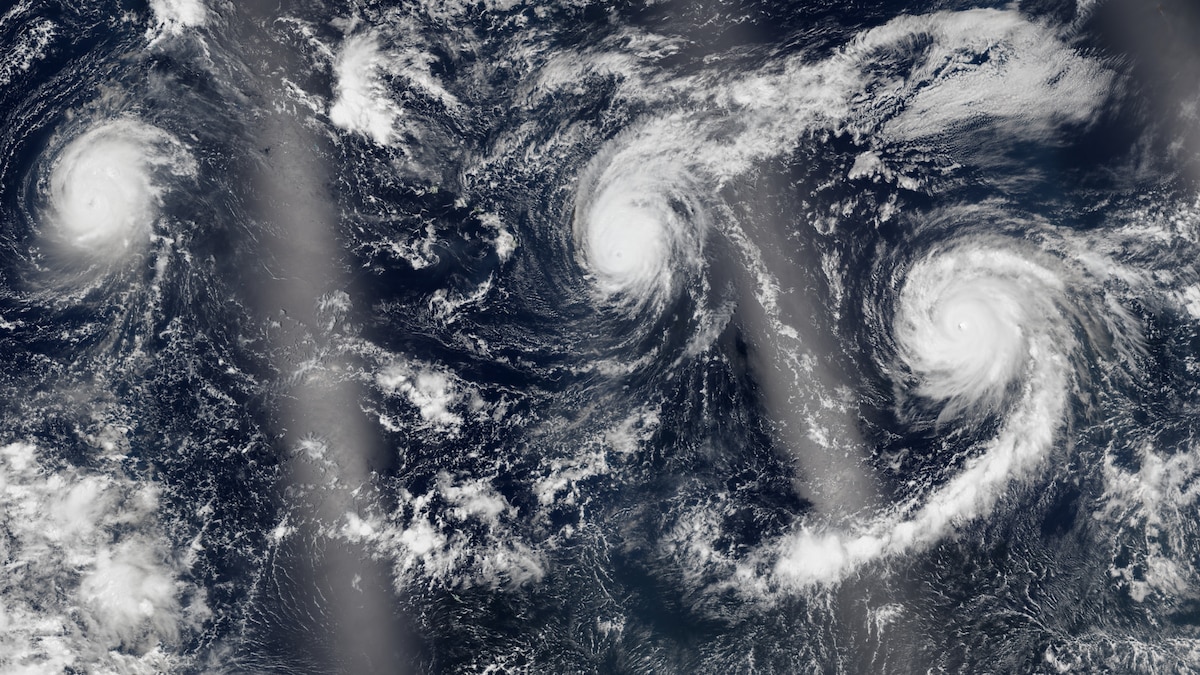
NOAA forecasts a 25% chance of a "very strong" El Niño, with Pacific Ocean temperatures potentially rising by at least 1.5 degrees Celsius above average. This heightened climate risk signals increased instability in global markets, raising concerns for property insurers and agricultural commodity futures due to potential drought and intense cyclones.

A major conference in Colombia aimed to set concrete timelines for phasing out fossil fuels outside of traditional UN frameworks. The most significant finding is the push by Pacific Island nations for a legally binding international treaty, which matters because it seeks to move beyond voluntary pledges toward enforceable global climate action.

Federal agencies are preparing to impose their own operational guidelines on the Colorado River this summer if state negotiations fail. This shift means federal authority could override existing interstate compacts, directly impacting water rights and regional energy stability due to severe drought conditions.

North India is facing record heatwaves with temperatures predicted to exceed 40 degrees Celsius, prompting official yellow alerts from the IMD. This severe weather poses a significant public health risk, as sustained high temperatures can increase hospital admissions for heat exhaustion by up to 35 percent. Coverage currently lacks specific data on local cooling centers or immediate medical response capabilities.
