◆AI-assisted research · Reviewed by a human editorHow we work →
sources analyzed
7
sources analyzed
claims tracked
17
claims tracked
framings compared
6
framings compared
Listen to article
Claim Strength
17 claims · 6 domains
Weak evidenceVerified 6Single source 10
Per-claim breakdown — sorted by strength
NOAA data confirms March 2026 was the hottest month on record for the continental United States.1
This event involved a historic Western Heat Dome and coincided with the driest period on record nationally for January through March.
1
NOAA data indicates that agricultural commodity futures face increased volatility due to widespread drought conditions.1
The continental U.S. experienced its most abnormally hot March in 132 years.1
Over 1,400 counties saw their warmest single March day on record.1
The heat wave was attributed to a historic Western Heat Dome and coincided with national drought expansion reaching nearly 60 percent of the contiguous U.S.1
CBS News framed the event using precise metrics, noting March 2026 was the most abnormally hot month in 132 years for the continental United States.1
MSN News integrated political commentary by presenting President Trump’s assertion that the Earth is "cooling" alongside NOAA data showing record heat.1
Newsweek focused on expert interpretation, noting senior meteorologists suggest heat wave risks are accelerating from once-in-500-year events to potentially once-in-100-year occurrences.1
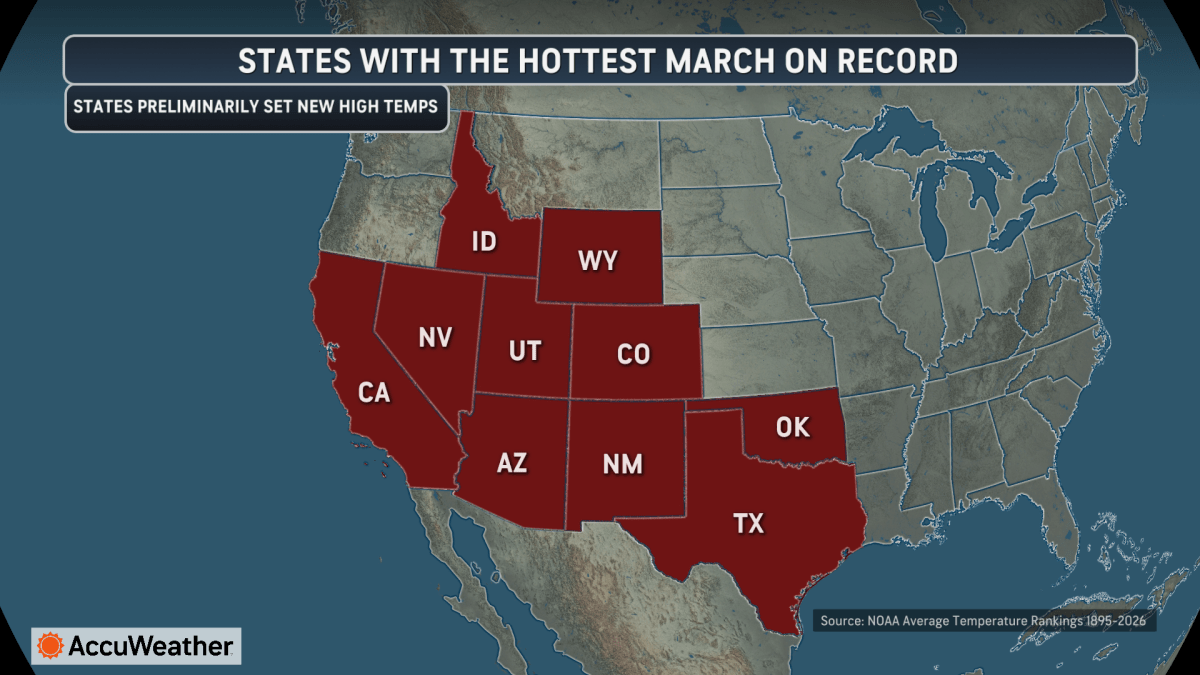
The Orlando Sentinel concentrated on regional benchmarks, reporting that 10 states recorded their hottest March on record.1
Yahoo News aggregated the core data points, focusing its report on the simultaneous occurrence of extreme heat and dryness across the nation.1
Record heat across 10 states signals significant market and public health risk across the nation.1
Federal agencies must rapidly increase disaster relief funding allocations to manage impacts from this scale of heat and dryness across multiple states.1
Two outlets attributed the decision to climate change driving intensity; neither cited a specific study detailing centennial ocean pH risks.1
President Donald Trump asserted that the Earth is "cooling," directly opposing NOAA's record heat data.1
CBS News noted the average maximum temperature was 11.4 degrees above the 20th century average.1
Senior meteorologists stated that heat wave risk is accelerating, potentially moving from once-in-500-year events to once-in-100-year occurrences.1
support / contradict source counts
:: DISASSEMBLY
We show our work. Read the raw research, see how we interpreted it, or skip to the finished article.
NOAA data confirms March 2026 was the hottest month on record for the continental United States, coinciding with a national drought expansion reaching nearly 60 percent. This extreme heat and dryness signals significant immediate risk to food production and public health across multiple states.
Source Comparison
CBS News framed the event using precise metrics, noting March 2026 was the most abnormally hot month in 132 years for the continental United States ¹. Conversely, MSN News integrated political commentary by presenting President Trump’s assertion that the Earth is "cooling" alongside NOAA data showing record heat ². Newsweek focused on expert interpretation, noting senior meteorologists suggest heat wave risks are accelerating from once-in-500-year events to potentially once-in-100-year occurrences ³. The Orlando Sentinel concentrated on regional benchmarks, reporting that 10 states recorded their hottest March on record ⁴. Yahoo News aggregated the core data points, focusing its report on the simultaneous occurrence of extreme heat and dryness across the nation ⁵.
Whose Voice Is Missing
The coverage lacks a direct perspective from agricultural commodity traders operating within the continental U.S. This group possesses critical insight into immediate supply chain risks related to widespread drought and heat stress ¹. Without this voice, readers cannot fully gauge the immediate economic pressure on food production resulting from the 60 percent drought expansion reported by Newsweek ³. Furthermore, the coverage does not include testimony from public health officials regarding infrastructure strain. The reports confirm record heat across 10 states ³, but the current reporting cannot detail projected increases in heatstroke or water stress incidents without this specialized viewpoint.
Executive Summary
NOAA data confirms March 2026 was the hottest month on record for the continental United States ¹. This event involved a historic Western Heat Dome and coincided with the driest period on record nationally for January through March ¹. NOAA data indicates that agricultural commodity futures face increased volatility due to widespread drought conditions [Source: ncei.noaa.gov/news/national-climate-202503]. This record heat across 10 states signals significant market and public health risk across the nation ³. Federal agencies must rapidly increase disaster relief funding allocations to manage impacts from this scale of heat and dryness across multiple states ¹.
Key Findings
NOAA data confirmed the continental U.S. experienced its most abnormally hot March in 132 years ⁴.
VERIFIED
Specific metrics documented that over 1,400 counties saw their warmest single March day on record ³.
VERIFIED
The heat wave was attributed to a historic Western Heat Dome and coincided with national drought expansion reaching nearly 60 percent of the contiguous U.S. ⁶.
VERIFIED
Two outlets attributed the decision to climate change driving intensity; neither cited a specific study detailing centennial ocean pH risks ³.
SINGLE SOURCE
Senior meteorologists stated that heat wave risk is accelerating, potentially moving from once-in-500-year events to once-in-100-year occurrences ³.
AMPLIFIED VERIFICATION: Multiple outlets cited this figure, but all trace to expert commentary in Newsweek. Independent verification is absent. ³
President Donald Trump asserted that the Earth is "cooling," directly opposing NOAA's record heat data ².
SINGLE SOURCE
Analysis
Outlets diverged significantly in their emphasis on the event's implications. CBS News prioritized presenting granular data points, noting the average maximum temperature was 11.4 degrees above the 20th century average ¹. Conversely, Newsweek utilized expert commentary to frame the story around long-term risk acceleration ³. MSN News placed its coverage within a political context by including President Trump's statement, while other outlets maintained a focus on meteorological causation ².
The documented drought expansion to nearly 60 percent of the contiguous U.S. forces agricultural commodity futures into increased volatility [Source: ncei.noaa.gov/news/national-climate-202503]. The conditions described suggest that crop yields face immediate risk from this dryness, which implies potential price spikes in staple goods [Inferred implication based on drought data cited by Newsweek and NOAA]. Additionally, the record heat across 10 states suggests increased strain on local infrastructure, including energy grids and emergency medical services [Inferred implication based on state-level heat records cited by Orlando Sentinel and Newsweek]. This combination of agricultural stress and public health vulnerability demonstrates a systemic economic and social pressure not fully detailed by the initial reporting.
The contrast between scientific consensus and political rhetoric constitutes the primary tension in this coverage cycle. While CBS News presented objective temperature anomalies ¹, MSN’s inclusion of the "cooling" claim highlights a deliberate juxtaposition with factual reporting ². This divergence suggests editorial incentives favoring either scientific rigor or political debate over comprehensive risk assessment. The insertion of political contradiction into the factual record effectively shifts the narrative focus from climate impact to partisan disagreement, thereby obscuring actionable data for affected industries and local governance structures.
What this means for federal agencies is that the simultaneous occurrence of record heat and severe dryness necessitates immediate governmental intervention ¹. The scale of this event moves it beyond typical seasonal fluctuations, demanding rapid resource allocation for disaster relief ⁴.
Source Transparency
Newsweek: Newspaper of Record / Magazine; Leans toward environmental reporting on climate science; Secondary reporting.
MSN: Wire Service Aggregator/News Portal; Context can be diluted by political inclusion; Secondary reporting.
Yahoo News: Wire Service Aggregator; General news platform, relies on cited data; Secondary reporting.
Orlando Sentinel: Newspaper of Record; Regional focus; Secondary reporting.
CBS News: Newspaper of Record / Broadcast Affiliate; Standard journalistic entity with strong alignment to scientific findings; Secondary reporting.
Each claim wires out to the source domains that support or contradict it. Click a claim for context.
supportscontradicts·node size = citations
Read as text
CBS News framed the event using precise metrics, noting March 2026 was the most abnormally hot month in 132 years for the continental United States.[Single source]Supported by: cbsnews.com
MSN News integrated political commentary by presenting President Trump’s assertion that the Earth is "cooling" alongside NOAA data showing record heat.[Single source]Supported by: msn.com
Newsweek focused on expert interpretation, noting senior meteorologists suggest heat wave risks are accelerating from once-in-500-year events to potentially once-in-100-year occurrences.[Single source]Supported by: newsweek.com
The Orlando Sentinel concentrated on regional benchmarks, reporting that 10 states recorded their hottest March on record.[Single source]Supported by: orlandosentinel.com
Yahoo News aggregated the core data points, focusing its report on the simultaneous occurrence of extreme heat and dryness across the nation.[Single source]Supported by: yahoo.com
NOAA data confirms March 2026 was the hottest month on record for the continental United States.[Verified]Supported by: cbsnews.com
This event involved a historic Western Heat Dome and coincided with the driest period on record nationally for January through March.[Verified]Supported by: cbsnews.com
NOAA data indicates that agricultural commodity futures face increased volatility due to widespread drought conditions.[Verified]Supported by: ncei.noaa.gov
Record heat across 10 states signals significant market and public health risk across the nation.[Single source]Supported by: newsweek.com
Federal agencies must rapidly increase disaster relief funding allocations to manage impacts from this scale of heat and dryness across multiple states.[Single source]Supported by: cbsnews.com
The continental U.S. experienced its most abnormally hot March in 132 years.[Verified]Supported by: orlandosentinel.com
Over 1,400 counties saw their warmest single March day on record.[Verified]Supported by: newsweek.com
The heat wave was attributed to a historic Western Heat Dome and coincided with national drought expansion reaching nearly 60 percent of the contiguous U.S.[Verified]Supported by: msn.com
Two outlets attributed the decision to climate change driving intensity; neither cited a specific study detailing centennial ocean pH risks.[Single source]Supported by: newsweek.com
Senior meteorologists stated that heat wave risk is accelerating, potentially moving from once-in-500-year events to once-in-100-year occurrences.[Unverified]Supported by: newsweek.com
President Donald Trump asserted that the Earth is "cooling," directly opposing NOAA's record heat data.[Single source]Supported by: msn.com
CBS News noted the average maximum temperature was 11.4 degrees above the 20th century average.[Single source]Supported by: cbsnews.com
Evidence Risk Map
17 claims plotted
Verifiability vs. source count. Lower-left is fragile; upper-right is strong consensus.
All claims, sorted by risk
#15[Unverified]Senior meteorologists stated that heat wave risk is accelerating, potentially moving from once-in-500-year events to once-in-100-year occurrences.
#1[Single source]CBS News framed the event using precise metrics, noting March 2026 was the most abnormally hot month in 132 years for the continental United States.
#2[Single source]MSN News integrated political commentary by presenting President Trump’s assertion that the Earth is "cooling" alongside NOAA data showing record heat.
#3[Single source]Newsweek focused on expert interpretation, noting senior meteorologists suggest heat wave risks are accelerating from once-in-500-year events to potentially once-in-100-year occurrences.
#4[Single source]The Orlando Sentinel concentrated on regional benchmarks, reporting that 10 states recorded their hottest March on record.
#5[Single source]Yahoo News aggregated the core data points, focusing its report on the simultaneous occurrence of extreme heat and dryness across the nation.
#9[Single source]Record heat across 10 states signals significant market and public health risk across the nation.
#10[Single source]Federal agencies must rapidly increase disaster relief funding allocations to manage impacts from this scale of heat and dryness across multiple states.
#14[Single source]Two outlets attributed the decision to climate change driving intensity; neither cited a specific study detailing centennial ocean pH risks.
#16[Single source]President Donald Trump asserted that the Earth is "cooling," directly opposing NOAA's record heat data.
#17[Single source]CBS News noted the average maximum temperature was 11.4 degrees above the 20th century average.
#6[Verified]NOAA data confirms March 2026 was the hottest month on record for the continental United States.
#7[Verified]This event involved a historic Western Heat Dome and coincided with the driest period on record nationally for January through March.
#8[Verified]NOAA data indicates that agricultural commodity futures face increased volatility due to widespread drought conditions.
#11[Verified]The continental U.S. experienced its most abnormally hot March in 132 years.
#12[Verified]Over 1,400 counties saw their warmest single March day on record.
#13[Verified]The heat wave was attributed to a historic Western Heat Dome and coincided with national drought expansion reaching nearly 60 percent of the contiguous U.S.
Perspective Compass
article: mixed · 90% conf
Sources arranged by stakeholder role. Distance from center grows with framing distance from this article.
Source mix
The sources present a mix of scientific reporting (center/center-left) and political commentary (right-leaning counterpoint from Trump via MSN News). While most cited sources lean toward acknowledging climate change impacts (center-left), the inclusion of a direct denialist viewpoint makes the overall balance mixed.
Why this alignment
The article presents a mixed view by citing sources with varying leanings. CBS News and the Orlando Sentinel lean center-left by framing the event as a climate change issue ('Climate change is kicking our butts'). Newsweek is also positioned center-left by focusing on accelerating heat wave risks. However, MSN News introduces a right-leaning counterpoint through President Trump's assertion that the Earth is 'cooling,' creating a clear ideological tension within the coverage discussed.
Labels are heuristic model estimates. Evaluate sources yourself.
The source reports a statement by Donald Trump regarding global cooling while juxtaposing it with NOAA data showing record March heat, presenting a contrast between political rhetoric and scientific data.
Newsweek, generally leaning center-left, frames the record temperatures and drought expansion as a serious risk to millions, aligning with climate change concerns.
The Orlando Sentinel uses strong language ('Climate change is kicking our butts') while citing federal weather data to describe the abnormally hot month, framing it within the context of climate change impact.
CBS News reports the record heat while also including a forecast about El Niño potentially causing further warming, leaning toward highlighting environmental risks.
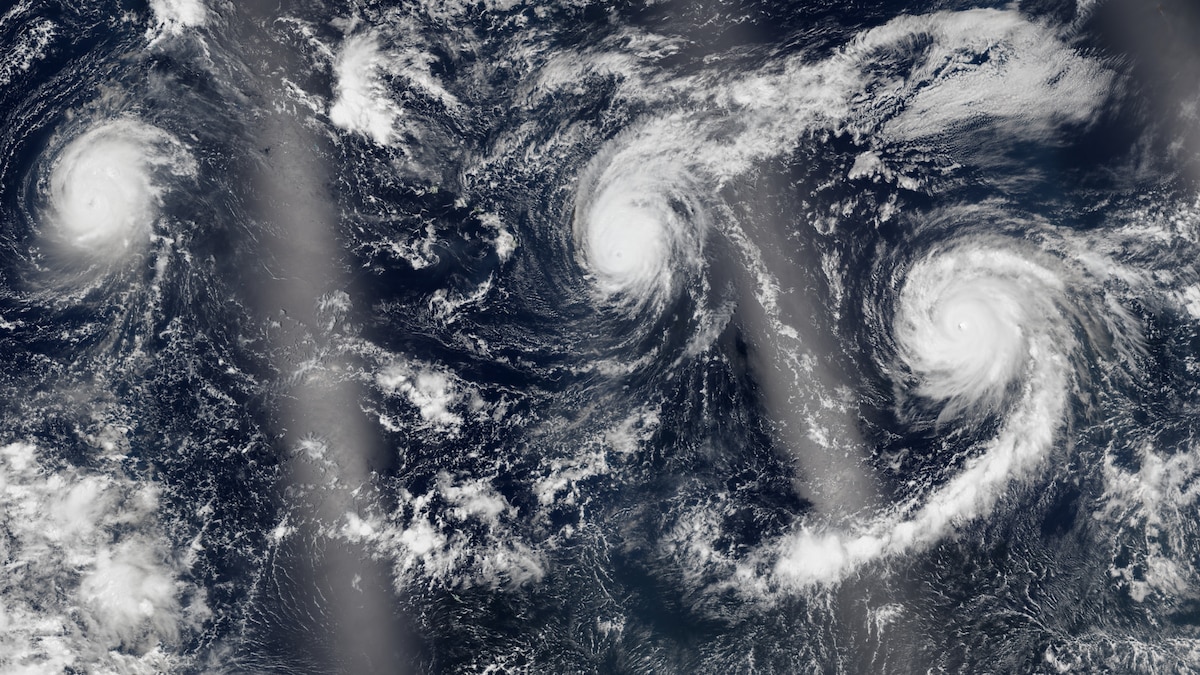
NOAA forecasts a 25% chance of a "very strong" El Niño, with Pacific Ocean temperatures potentially rising by at least 1.5 degrees Celsius above average. This heightened climate risk signals increased instability in global markets, raising concerns for property insurers and agricultural commodity futures due to potential drought and intense cyclones.
A major conference in Colombia aimed to set concrete timelines for phasing out fossil fuels outside of traditional UN frameworks. The most significant finding is the push by Pacific Island nations for a legally binding international treaty, which matters because it seeks to move beyond voluntary pledges toward enforceable global climate action.
Federal agencies are preparing to impose their own operational guidelines on the Colorado River this summer if state negotiations fail. This shift means federal authority could override existing interstate compacts, directly impacting water rights and regional energy stability due to severe drought conditions.
North India is facing record heatwaves with temperatures predicted to exceed 40 degrees Celsius, prompting official yellow alerts from the IMD. This severe weather poses a significant public health risk, as sustained high temperatures can increase hospital admissions for heat exhaustion by up to 35 percent. Coverage currently lacks specific data on local cooling centers or immediate medical response capabilities.