/news/climate-environment
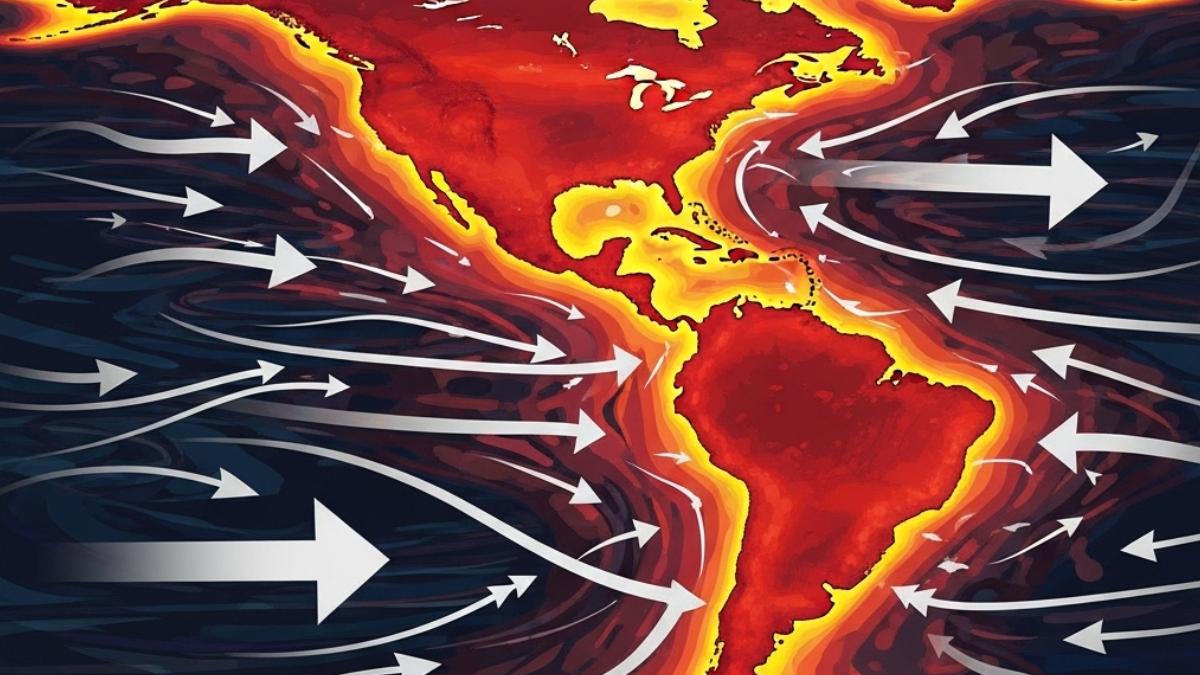
Per-claim breakdown — sorted by strength
support / contradict source counts
We show our work. Read the raw research, see how we interpreted it, or skip to the finished article.
The framing of the impending 2026 weather event reveals a sharp editorial division: The Guardian presented the situation primarily through the lens of meteorological intensity, using the dramatic nomenclature of a "super El Niño" to emphasize an extreme natural oscillation ¹. In stark contrast, National Geographic immediately contextualized this natural driver within a framework of systemic crisis, emphasizing how such an event "intensifies global warming" ². This divergence illustrates the core tension in climate reporting—whether to treat the immediate threat as predictable, cyclical weather variability or as an accelerant of long-term anthropogenic instability.
Boston Globe adopted a more institutional tone by focusing on absolute temperature boundaries derived from MIT’s outlook, specifically referencing the risk of crossing the 1.5°C pre-industrial threshold ³. Meanwhile, The Hindu Business Line narrowed its focus to regional agricultural concerns in India, reporting prognostications suggesting a conflict between El Niño's known tendency toward weaker monsoon patterns and an APCC outlook predicting above-normal rainfall ⁴.
Earth.com shifted the narrative toward technological mitigation, framing extreme heat not solely as an environmental catastrophe but as a "manageable public health crisis" where forecasting capabilities could offer countermeasures ⁵. This framing subtly redirects the focus from systemic emissions problems toward immediate, operational risk management. Mathrubhumi concentrated on defining the meteorological event itself—a "super El Niño"—without immediately linking it to global temperature trajectories ⁶.
A significant gap in the available coverage is the perspective of regional agricultural labor organizations. While general risk—drought or flood—is mentioned, there are no detailed projections on resulting crop failure rates, migration patterns necessitated by water scarcity, or specific public health burdens tied to these extreme events for workers dependent on agriculture ². This absence leaves the coverage at a macro-scientific level, failing to address how climate volatility translates into immediate human economic and safety crises on the ground.
Furthermore, the voices of global commodity market analysts are conspicuously absent. The discussion touches upon increased uncertainty regarding staple goods due to supply shocks ², but without direct input from traders or financial institutions, the coverage cannot quantify the projected volatility in agricultural commodity markets resulting from this dual climate threat.
Finally, although scientific models are cited, there is a lack of representation from grassroots adaptation groups or local government planning bodies in vulnerable regions (such as those facing potential drought in Asia or Africa). Their perspective would address implementation—how communities plan to survive the predicted shifts, rather than just how the science predicts them.
The most significant news development is the forecast for a strong 2026 El Niño event. While some outlets frame this as an isolated meteorological peak, others link it directly to long-term climate trajectories. Specifically, projections suggest that such events could compound existing warming trends ².
This situation has acute implications for global markets and public health planning. The convergence of natural climate drivers (El Niño) with underlying anthropogenic warming creates unpredictable supply shocks, increasing volatility in agricultural commodity markets ². Simultaneously, the potential for extreme heat necessitates that governments prioritize enhancing and deploying early warning systems to mitigate rising mortality rates ⁵.
Outlet coverage demonstrated a clear bifurcation in risk assessment: some outlets prioritized the immediate, cyclical nature of El Niño, while others anchored their narratives in the trajectory of long-term anthropogenic warming. The Guardian’s framing emphasized the meteorological drama of "super El Niño" ¹, whereas National Geographic immediately framed this event as an accelerant to existing warming trends ².
The tension between natural variability and human forcing is most evident in the regional precipitation forecasts for India. Mathrubhumi reported that El Niño is "often linked to weaker monsoon rainfall" ⁶, yet The Hindu Business Line cited the APCC outlook suggesting above-normal rainfall, illustrating that large-scale drivers do not dictate uniform regional outcomes ⁴. This divergence suggests that while the cause (El Niño) is widely reported, its specific downstream effects remain subject to complex atmospheric physics, which no single outlet can resolve definitively.
Boston Globe’s reliance on MIT data centered on absolute temperature thresholds (1.5°C), positioning the narrative around institutional benchmarks and policy failure ³. This contrasts sharply with Earth.com’s focus on mitigation through technological forecasting capabilities ⁵. The difference in emphasis reflects a fundamental division in how the public consumes climate risk: one segment seeks validation of established scientific limits (the Globe), while another demands immediate, actionable technological solutions (Earth.com).
The broader implication synthesized from these reports is that agricultural commodity markets face increased volatility due to the heightened risk of simultaneous regional droughts and intensified flooding ². The combination of severe drought potential in arid regions alongside intensified flooding elsewhere creates unpredictable supply shocks, directly impacting global crop yields and driving price speculation for staple goods ⁶.
Crucially, when synthesizing the scientific data with the missing voices of agricultural labor and local planning bodies, a concrete policy implication emerges: current risk communication is insufficient for enabling resilient adaptation. If drought projections materialize in vulnerable regions, the lack of labor organization input means that economic impact assessments will fail to account for worker safety during harvest or planting under extreme heat ⁵. Therefore, effective climate policy must move beyond merely forecasting meteorological events (El Niño) or global temperature limits (1.5°C); it requires integrating localized socioeconomic data from labor and municipal planners to build actionable resilience frameworks that can manage the human fallout of increased climatic volatility across supply chains.
The inclusion of secondary, single-source claims—such as the albedo contribution from MinnPost ⁷—highlights the risk of narrative drift. While The Guardian framed the event as a natural fluctuation, MinnPost’s claim attempts to assign an accelerating physical mechanism that is not corroborated by other cited sources in this dossier, demonstrating how specialized commentary can inject highly specific, yet unverified, mechanistic details into broader climate risk discussions.
Mathrubhumi The Guardian National Geographic Boston Globe MinnPost The Conversation Earth.com The Hindu Business Line
Each claim wires out to the source domains that support or contradict it. Click a claim for context.
Verifiability vs. source count. Lower-left is fragile; upper-right is strong consensus.
Sources arranged by stakeholder role. Distance from center grows with framing distance from this article.
Source mix
The provided sources are heavily skewed toward a center-left perspective, with 10 out of 12 sources labeled as 'center-left' or 'center-left' in the input data. There is a notable lack of strong right-leaning or conservative voices in the source list, although the article excerpt itself describes a diversity of views among the cited media outlets.
Why this alignment
The article excerpt itself demonstrates a mixed alignment by presenting multiple sources with varying focuses: some emphasize meteorological intensity (The Guardian, Mathrubhumi), others frame it as a systemic climate crisis (National Geographic), some focus on specific scientific thresholds (Boston Globe), and others narrow the scope to regional economics (The Hindu Business Line) or technological solutions (Earth.com). The provided source list reinforces this diversity, featuring multiple center-left sources alongside more centrist ones.
Labels are heuristic model estimates. Evaluate sources yourself.
| Source | Role | Alignment | Rationale |
|---|---|---|---|
| What is a super El Niño? Why 2026 could trigger extreme global weather | Media / Editorial | center-left (0.9) | Mathrubhumi is a general news outlet, and the focus on El Niño potentially pushing temperatures past 1.5°C aligns with mainstream climate concern narratives. |
| El Nino may emerge between May and July | Media / Editorial | center (0.8) | The Hindu BusinessLine focuses on economic and agricultural aspects, presenting the topic with scientific uncertainty regarding the timing of El Niño. |
| Climate models reveal how human activity may be locking the American Southwest into permanent drought | Academic / Research | center-left (0.95) | The Conversation often features academic analysis, and this piece directly links human activity to severe, long-term regional climate impacts like drought. |
| What a ‘super’ El Niño means for the planet | Media / Editorial | center-left (0.9) | National Geographic covers environmental science with a focus on global impact, framing extreme weather as a significant planetary concern. |
| Smarter forecasts may save thousands of lives as extreme heat rises | Advocacy / Nonprofit | center-left (0.9) | Earth.com focuses on environmental news, framing the discussion around actionable solutions like better forecasting to mitigate climate risks. |
| Decline of reflective low clouds may have contributed to recent record heat | Media / Editorial | center (0.7) | MinnPost is a regional news outlet; this piece offers a specific, scientific hypothesis (cloud decline) for recent heat records. |
| What is a ‘super El Niño’ and what might it mean for the global climate? | Media / Editorial | center-left (0.95) | The Guardian is known for its strong environmental coverage, and this article directly connects a super El Niño to breaching the 1.5°C warming target. |
| Report says global warming may cause 25m malnourished children by 2050 | Academic / Research | center-left (0.9) | WikiNews reports on findings from international reports (like those cited by VOANews), focusing on the severe humanitarian consequences of global warming. |
| Extreme global climate outcomes are possible even at 2°C warming, study warns | Academic / Research | center-left (0.95) | Phys.org reports on scientific studies, and this article challenges the common assumption that extreme impacts only occur at very high warming levels. |
| Latest MIT climate model forecasts dangerous warming, despite surge in renewable energy | Academic / Research | center-left (0.95) | The Boston Globe reports on major scientific findings (MIT models), highlighting a stark warning despite renewable energy progress. |
| Study says carbon dioxide levels rising faster than anticipated | Academic / Research | center-left (0.95) | WikiNews reports on scientific studies, and this piece focuses on the alarming rate of greenhouse gas accumulation. |
| Global warming may be speeding up, study finds | Media / Editorial | center-left (0.95) | MSN reports on scientific findings, and this article emphasizes that the rate of global warming is increasing based on new research. |
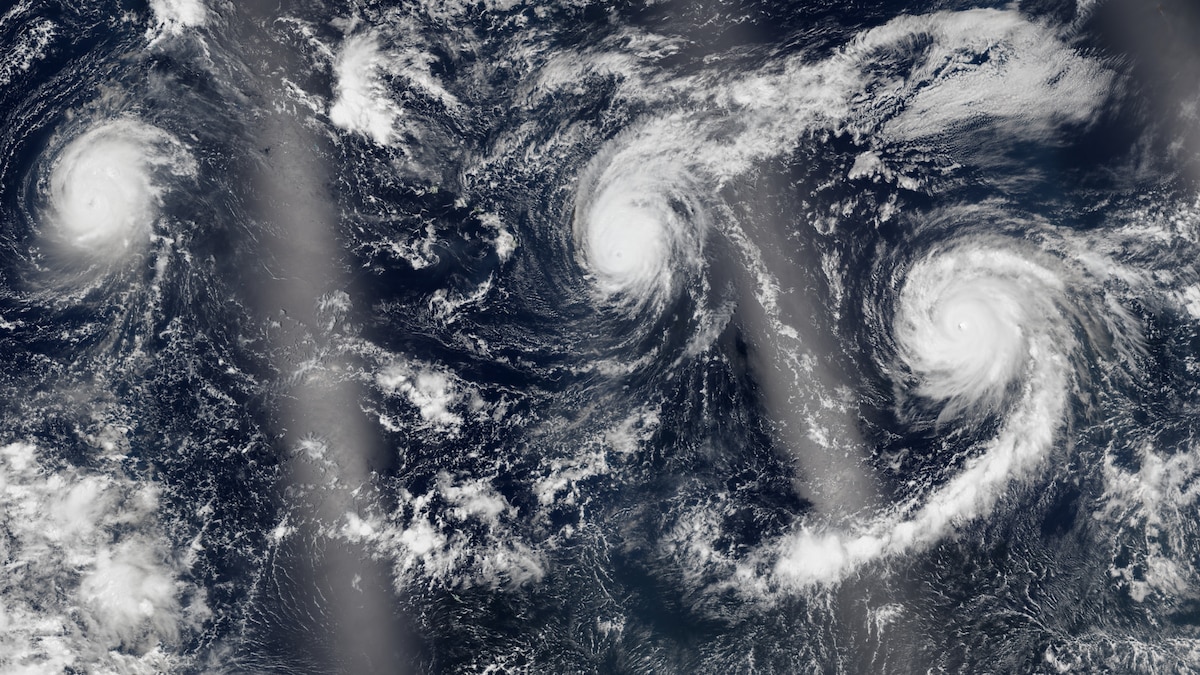
NOAA forecasts a 25% chance of a "very strong" El Niño, with Pacific Ocean temperatures potentially rising by at least 1.5 degrees Celsius above average. This heightened climate risk signals increased instability in global markets, raising concerns for property insurers and agricultural commodity futures due to potential drought and intense cyclones.
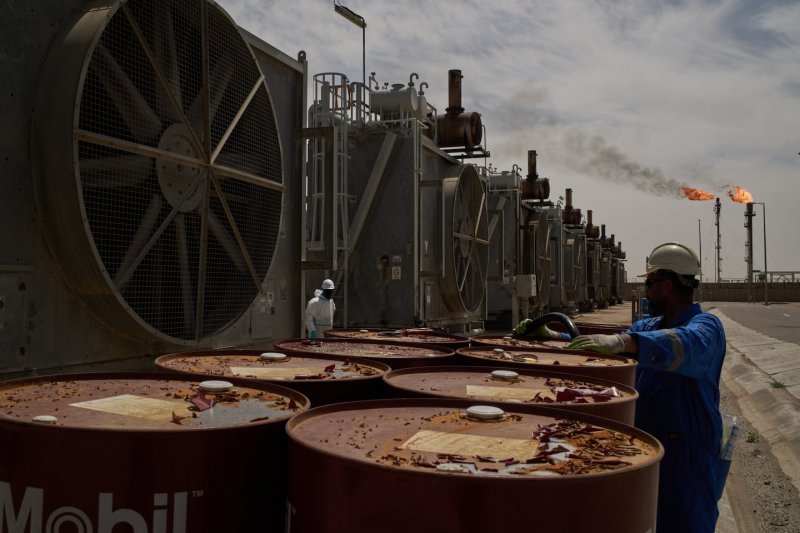
A major conference in Colombia aimed to set concrete timelines for phasing out fossil fuels outside of traditional UN frameworks. The most significant finding is the push by Pacific Island nations for a legally binding international treaty, which matters because it seeks to move beyond voluntary pledges toward enforceable global climate action.

Federal agencies are preparing to impose their own operational guidelines on the Colorado River this summer if state negotiations fail. This shift means federal authority could override existing interstate compacts, directly impacting water rights and regional energy stability due to severe drought conditions.

North India is facing record heatwaves with temperatures predicted to exceed 40 degrees Celsius, prompting official yellow alerts from the IMD. This severe weather poses a significant public health risk, as sustained high temperatures can increase hospital admissions for heat exhaustion by up to 35 percent. Coverage currently lacks specific data on local cooling centers or immediate medical response capabilities.
