/news/climate-environment
Per-claim breakdown — sorted by strength
support / contradict source counts
We show our work. Read the raw research, see how we interpreted it, or skip to the finished article.
The continental United States experienced its most abnormally hot March in 132 years of recorded data, with average temperatures reaching 50.85°F (10.47°C) ¹. This extreme thermal event coincided with the driest period on record for the contiguous U.S., creating severe drought conditions ². This convergence of climatic extremes presents dual challenges: an immediate public health hazard due to extreme weather, and a long-term vulnerability stemming from the absence of national regulations protecting workers from dangerous heat exposure ³.
Record-breaking March temperatures across the U.S., coupled with severe drought, underscore intensifying global warming trends and climate volatility ⁴. Meteorological data confirms unprecedented heat events—including the breaking of over 19,800 daily and 2,000 monthly records nationally ¹—but the narrative reveals a critical policy deficiency. Specifically, the lack of federal mandates safeguarding outdoor and indoor laborers against heat exposure transforms abstract climate risk into an immediate, actionable public safety crisis ³.
The climatic data from March highlights several critical points regarding the current environmental state of the United States:
The core tension in the current reporting lies at the intersection of scientific attribution and legislative response, creating a disparity between observed environmental reality and established public safety protocols.
Sources present two distinct interpretations regarding the cause of this extreme heat:
Conclusion on Causation: The evidence confirms the physical reality of record heat and drought ¹. However, the available data does not yet provide sufficient consensus to definitively attribute these specific weather patterns solely to human activity, as noted by AP News ¹.
The contrast between the severity of the climate data and the lack of protective policy is highly significant. The record heat establishes an elevated baseline for thermal stress events ¹. Yet, the absence of national heat protection regulations—despite documented fatalities (436 deaths between 2011 and 2021) ³—means that the abstract threat of climate change translates directly into a preventable occupational health crisis for vulnerable workers.
Synthesis: The data compels an analysis that moves beyond mere climate discussion; it demands immediate legislative focus. Current policy frameworks fail to adequately mitigate the acute, human cost associated with these intensifying environmental pressures. Therefore, the scientific observation of extreme weather must be analytically linked to the regulatory vacuum surrounding occupational safety.
The reporting landscape regarding this event is characterized by distinct institutional priorities:
The narrative framing differs based on the audience engagement strategy employed by each publication:
The current reporting, while covering climate science and labor law, neglects several critical stakeholders whose input would provide a more comprehensive assessment of the situation:
Each claim wires out to the source domains that support or contradict it. Click a claim for context.
Verifiability vs. source count. Lower-left is fragile; upper-right is strong consensus.
Sources arranged by stakeholder role. Distance from center grows with framing distance from this article.
Source mix
The sources are heavily weighted towards center-left and center perspectives. The narrative is not purely scientific (center) but emphasizes the resulting social and regulatory failures (center-left), suggesting a slight leaning toward policy advocacy over neutral reporting.
Why this alignment
The article focuses on extreme weather events (record heat and drought) linked to climate trends, which is a common theme in center-left environmental reporting. Crucially, it pivots from the climate science to highlight a 'critical policy deficiency'—the lack of federal regulations protecting workers from heat—which frames the issue as a matter of social justice and regulatory failure, aligning strongly with center-left progressive concerns.
Labels are heuristic model estimates. Evaluate sources yourself.
| Source | Role | Alignment | Rationale |
|---|---|---|---|
| Record heat in March signals intensifying climate change in the US | Media / Editorial | center-left (0.9) | MSN often reports on environmental and climate issues with a focus on scientific warnings. |
| ‘Climate change is kicking our butts.’ March smashes heat records for continental US | Media / Editorial | center (0.95) | AP News provides factual reporting based on federal weather data. |
| The US just experienced its hottest March on record | Media / Editorial | center (0.95) | Yahoo News reports on the factual record-breaking nature of the month. |
| Record March heat fuels severe US drought | Media / Editorial | center-left (0.9) | MSN focuses on the consequences of extreme weather events, linking heat to environmental stress. |
| Will the regulation shielding workers from heat be finalized before the election? | Advocacy / Nonprofit | center-left (0.7) | Mother Jones is known for its progressive environmental and social justice focus. |
| Record March heat fuels severe US drought | Media / Editorial | center-left (0.9) | MSN reports on the environmental consequences of extreme weather. |
| March Was The Record Warmest In Dozens Of US Cities From Texas To California | Media / Editorial | center (0.95) | Yahoo News reports on the widespread nature of the temperature records across various cities. |
| DeBriefed 21 February 2025: Brazil joins oil bloc ahead of COP30; US ’pulled’ from IPCC meeting; Cooling cities with ’smart’ surfaces | Academic / Research | center-left (0.8) | The Financial Analyst often covers geopolitical and environmental policy shifts. |
| Record-smashing heat spreads: 'Basically the entire US is going to be hot' | Media / Editorial | center-left (0.9) | WBIR (World Business Intelligence Review) reports on significant weather events with an emphasis on their scale. |
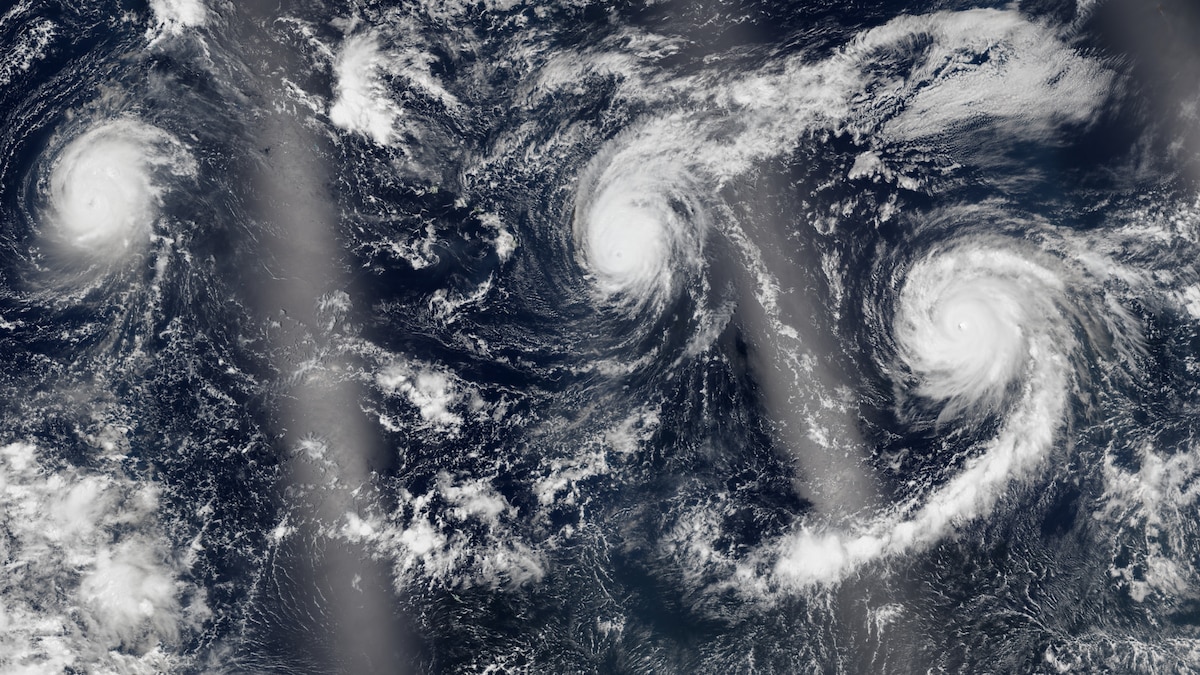
NOAA forecasts a 25% chance of a "very strong" El Niño, with Pacific Ocean temperatures potentially rising by at least 1.5 degrees Celsius above average. This heightened climate risk signals increased instability in global markets, raising concerns for property insurers and agricultural commodity futures due to potential drought and intense cyclones.
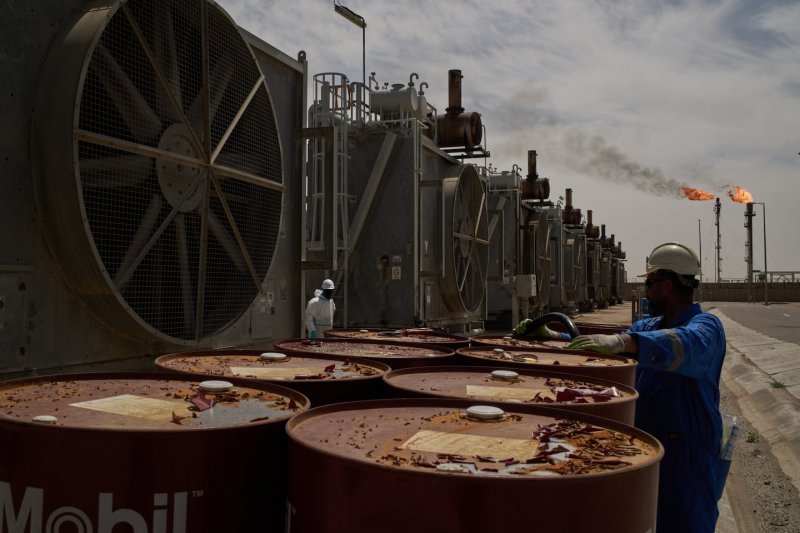
A major conference in Colombia aimed to set concrete timelines for phasing out fossil fuels outside of traditional UN frameworks. The most significant finding is the push by Pacific Island nations for a legally binding international treaty, which matters because it seeks to move beyond voluntary pledges toward enforceable global climate action.

Federal agencies are preparing to impose their own operational guidelines on the Colorado River this summer if state negotiations fail. This shift means federal authority could override existing interstate compacts, directly impacting water rights and regional energy stability due to severe drought conditions.

North India is facing record heatwaves with temperatures predicted to exceed 40 degrees Celsius, prompting official yellow alerts from the IMD. This severe weather poses a significant public health risk, as sustained high temperatures can increase hospital admissions for heat exhaustion by up to 35 percent. Coverage currently lacks specific data on local cooling centers or immediate medical response capabilities.
